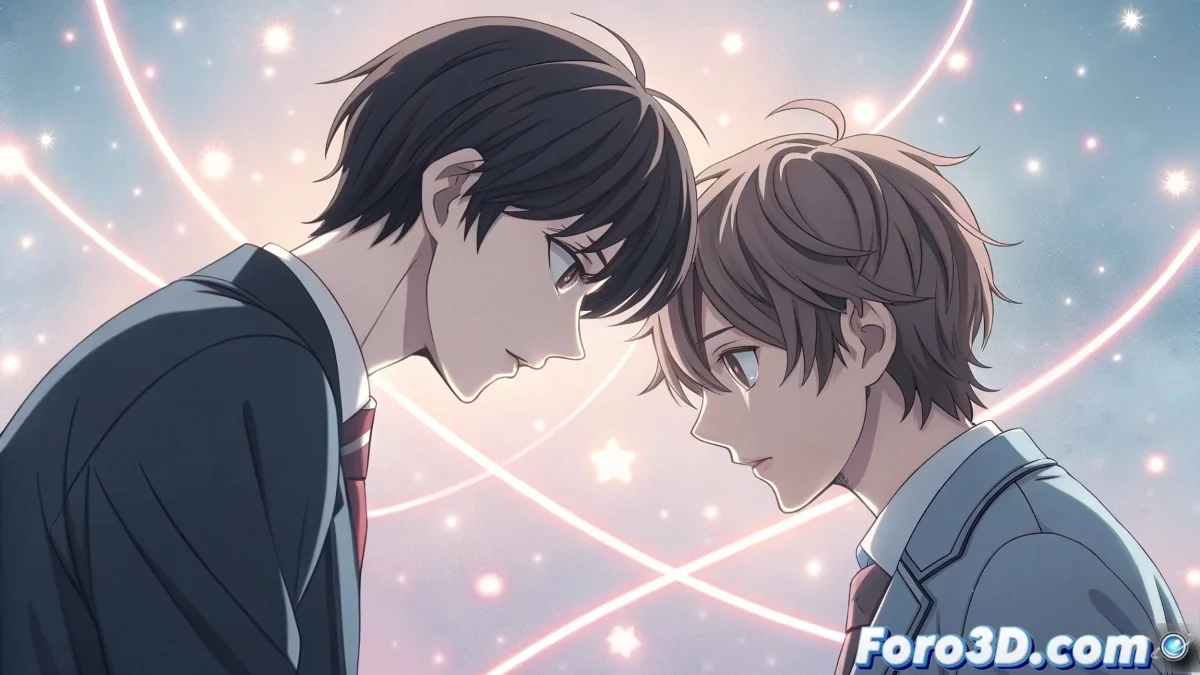
When Hate and Love Share a Blurry Border
The Boys' Love genre is enriched with the arrival of Let Me Hate You: Asanaga and Yanagi, a work that explores the thin line between aversion and attraction in a university relationship charged with emotional chemistry. The series presents two protagonists whose paths cross under less-than-ideal circumstances, establishing a dynamic where every encounter is an explosive mix of resentment and mutual fascination. The academic setting provides the perfect backdrop for this intense romantic drama.
Asanaga, a literature student with a reserved yet intensely passionate character, is forced to collaborate with Yanagi, a fellow faculty member whose carefree attitude and social success hide unexpected depths. What begins as a forced academic partnership gradually transforms into a complex bond where negative emotions serve as a defensive barrier against more vulnerable feelings. The narrative leverages genre tropes while introducing fresh psychological nuances.
Elements That Define the Main Relationship
- Antagonistic chemistry that evolves into irresistible attraction
- Progressive development of mutual trust and vulnerability
- Internal conflicts about sexual identity and social expectations
- Emotional tension maintained through significant misunderstandings
The Anatomy of an Enemies-to-Lovers Relationship
What distinguishes this work within the Boys' Love genre is its realistic treatment of the enemies-to-lovers trope. Instead of relying on artificial dramatic twists, the author builds the relationship's transformation through small moments of genuine connection that arise despite both characters' resistance. Conflict scenes are carefully balanced with moments of unintended tenderness that reveal the protagonists' growing affection for each other.
The most intense hatred is often born from the deepest love
The art perfectly complements the emotional narrative, using detailed facial expressions and subtle body language to communicate what the characters cannot verbalize. The backgrounds of authentic Japanese university scenes add verisimilitude to the setting, while the strategic use of dialogue-free panels allows the romantic tension to build through visual composition. The color palette in the full-color illustrations reflects the characters' emotional evolution.
Appeals for Genre Readers
- Balanced power dynamic that evolves naturally
- Intelligent dialogue full of double meanings and sexual tension
- Secondary characters that enrich the main plot
- Realistic progression of the relationship without forced acceleration
The work demonstrates a mature understanding of the complexities of human relationships, avoiding excessive simplifications while maintaining the romantic essence that defines the genre. Conflicts arise from genuine personality differences and past experiences, not from trivial misunderstandings that could be resolved with a simple conversation. This psychological depth makes the reading a rewarding experience for those seeking more than light romance.
Those who think Boys' Love is a simple genre have probably not experienced the emotional complexity of works like Let Me Hate You 💔