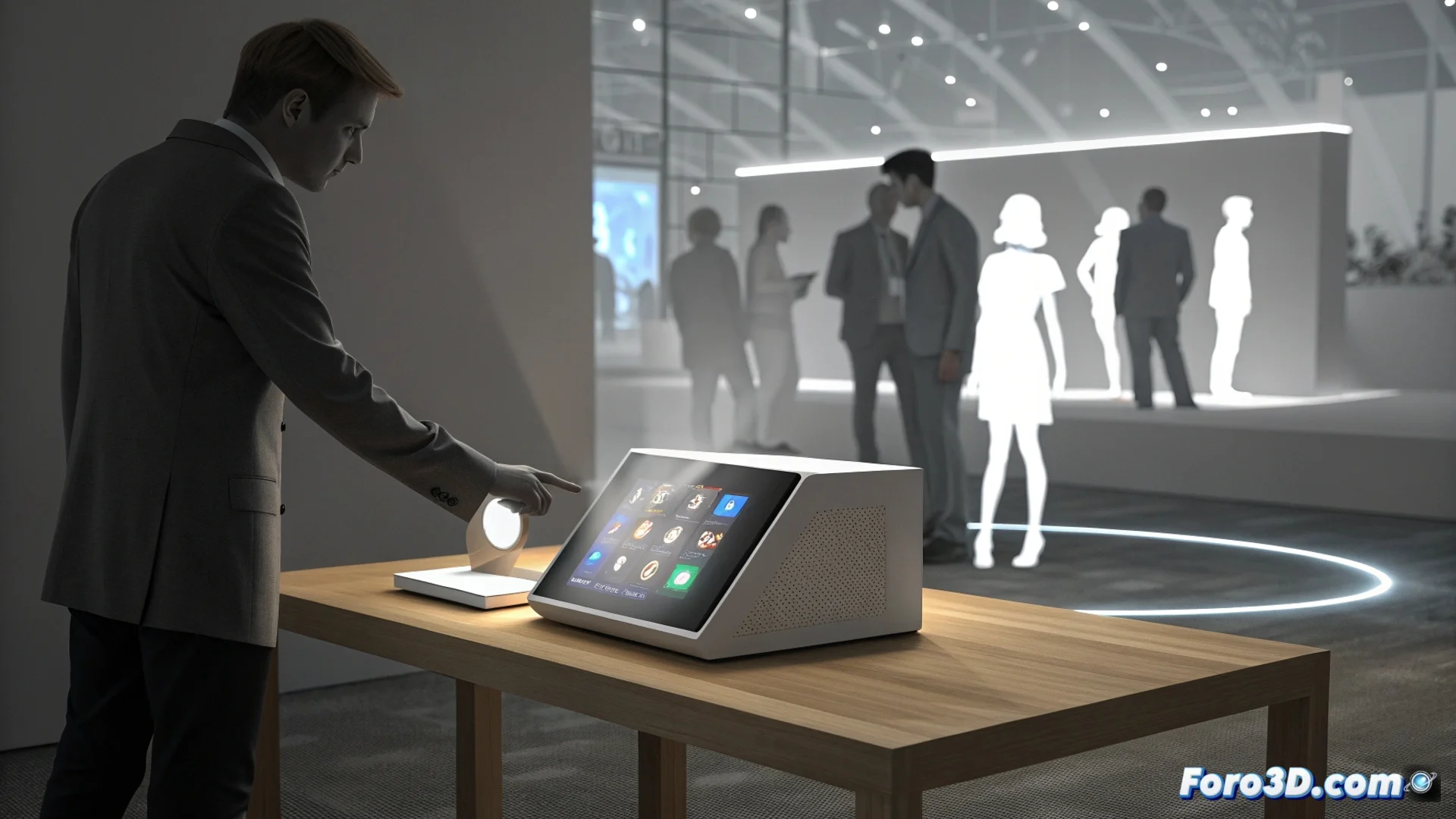
Lenovo Presents AI-Powered Smart Device Concepts
At a recent event, Lenovo has unveiled a series of concept prototypes that aim to redefine interaction with technology through deep integration of artificial intelligence. These devices explore how AI can expand users' capabilities in their daily lives, although for now they are just ideas in the development phase. 🧠
The Neural Center: Personal AI Hub Concept
Standing out among the proposals is the Lenovo Personal AI Hub Concept, known internally as Project Kubit. This device is not a simple assistant, but functions as an intelligent central node designed to manage and coordinate all other devices and services within a home or professional environment. Its purpose is to process complex requests and automate tasks seamlessly across different systems, acting as an intermediary that unifies typically fragmented technology ecosystems.
Key functions of the concept:- Acts as a command center to coordinate smart devices and services.
- Processes complex commands to automate tasks contextually.
- Simplifies user interaction, reducing the need to use multiple applications.
It seems the future will bring us a device that not only thinks, but also organizes all the others that already do.
The Transformative Role of Artificial Intelligence
Contextual AI technology is the core of these concepts. It allows devices to interpret the environment, anticipate user needs, and adapt their operation without requiring constant manual adjustments. Lenovo states that these systems can learn from habits to propose actions or modify settings autonomously, with the ultimate goal of creating a more intuitive and less interrupted user experience.
Capabilities enabled by AI:- Interpret the context of the user and environment in real time.
- Anticipate needs based on learned behavior patterns.
- Adjust settings and propose actions automatically and proactively.
A Future of Integration and Dependency
Lenovo's vision points toward a future where a single central device consolidates control of an increasingly broad technology ecosystem. While this promises to greatly simplify the digital experience, it also raises reflection on dependency on a single point of control, which could become a single point of failure. The company presents these ideas to gauge the market and explore possibilities, without confirming when or if any of these concepts will reach commercialization. 🤖