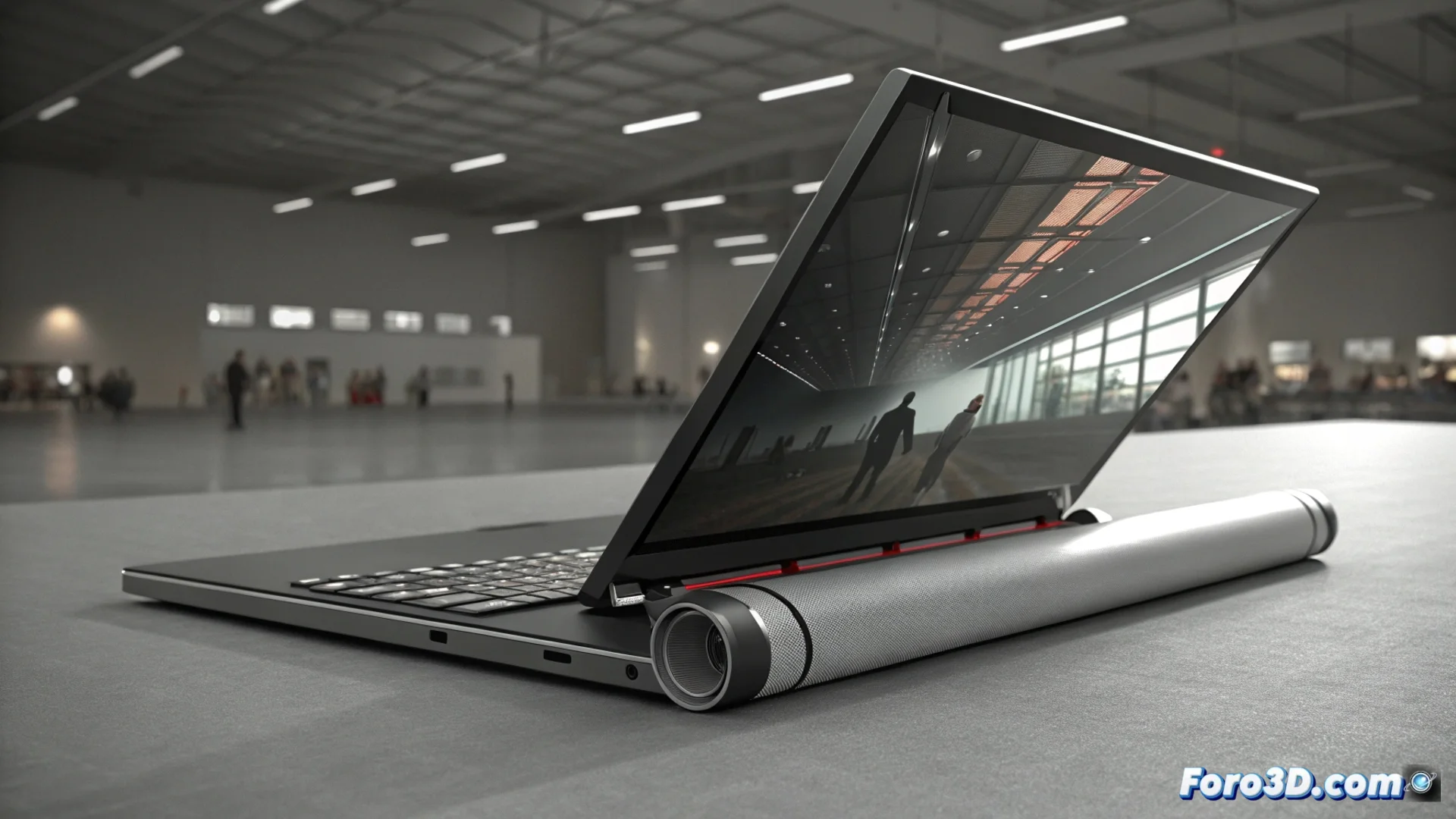
Lenovo Presents AI Design Concepts at an Exhibition
Lenovo has unveiled a series of concept prototypes at an exhibition, showcasing its vision for integrating artificial intelligence directly into the hardware. These concepts aim to create a more intuitive device ecosystem, where technology adapts to the user and not vice versa. 🚀
Redefining the Laptop Form
The centerpiece of the exhibition is the ThinkPad Rollable XD Concept, a laptop that challenges the traditional format. Its flexible screen can be physically extended, instantly increasing the visual workspace. This design allows adjusting the display surface according to what the user needs to do, whether reviewing extensive documents, handling multiple applications, or viewing multimedia content.
Key advantages of the rollable design:- Physically expands the workspace on demand.
- Dynamically adapts to different types of tasks and workflows.
- Aims to make device use more comfortable and increase productivity.
“Where will the rigorous digital footprint now sit right in the center of the extended screen?” – An ironic reflection on the new design challenges.
AI as the Core of Interaction
Beyond the innovative hardware, these concepts integrate AI systems that learn from user habits. The technology can anticipate actions, optimize system performance, and manage resources automatically. Lenovo is exploring how to make artificial intelligence operate naturally on the device, allowing the user to focus on their work without distractions.
AI-powered features in the concepts:- Learn from usage patterns to personalize the experience.
- Anticipate needs and adjust system performance in real time.
- Automatically manage resources like power and processing.
Looking to the Future of Hardware
Lenovo's presentation goes beyond showcasing a single device; it is a statement about its future design approach. The company is thinking about how devices can evolve to deeply integrate AI, creating equipment that not only executes commands but understands context and adapts. The ultimate goal is for the user to produce more and have an inherently more satisfying experience interacting with technology. 💡