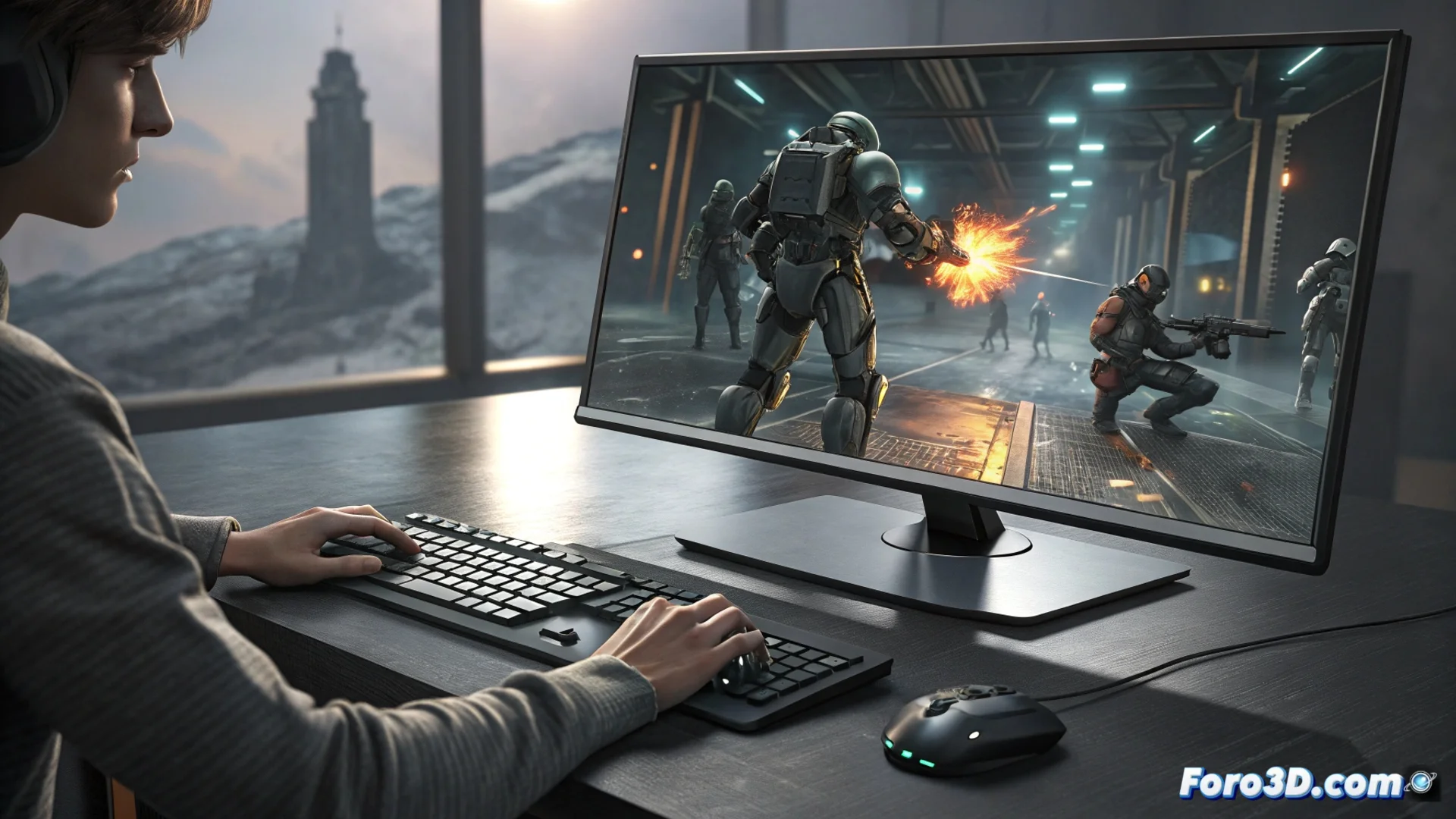
Lenovo Unveils AI Gaming Monitor Prototype
The company Lenovo has showcased a new gaming hardware concept: the AI Frame Gaming Display. This device is not a conventional monitor, as it incorporates an integrated artificial intelligence system designed to actively assist players during their games. Its main function is to process what is happening on screen and provide real-time visual feedback. 🎮
How does the AI operate within the game?
The monitor's AI system operates continuously, analyzing every frame of the video game. It identifies crucial elements such as adversaries, collectible objects, or points of interest, and marks them with overlaid graphical indications. This allows the user to perceive vital information instantly, without needing to manually scan the entire virtual environment. The technology aims to optimize decision-making and player reflexes.
Main features it could include:- Automatic detection and marking of enemies or targets.
- Highlighting of objects, resources, or important areas on the map.
- Providing processed contextual data on the game state.
A monitor that tells you where the enemies are could be the ultimate excuse for losing a game. At least you won't be able to blame not seeing them.
A focus on practical utility
This Lenovo prototype goes beyond just displaying a high-quality image. It adds an intelligent analysis layer that interprets the visual content for the user. The company envisions it as a learning tool that helps players adapt faster to different titles and hone their skills. For now, it is a conceptual project, and no concrete commercialization plans, price, or launch date have been revealed.
Key features of the concept:- Hardware capable of processing AI locally or in the cloud.
- Subtle and non-intrusive visual overlay interface.
- Focus on improving the learning curve and in-game performance.
The future of gaming assistance
The presentation of this prototype signals a trend where gaming hardware evolves to be more interactive and contextual. Integrating AI directly into a peripheral like the monitor raises changes in how players interact with games, receiving real-time processed assistance. Although it is only an initial concept, it opens the door to debates on competitive advantages and the future evolution of video game accessories.