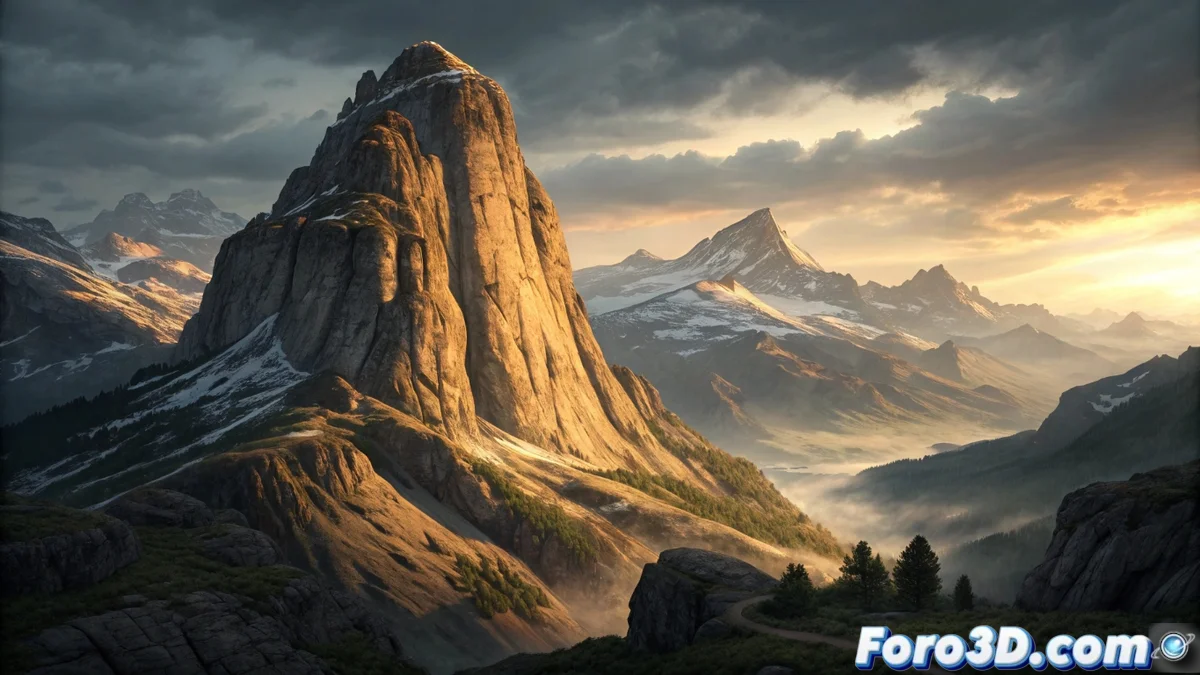
The Legend of the Moor's Handkerchief: Between the Pyrenean Myth and Extreme Climbing
In the rugged peaks of the Aragonese Pyrenees, the wind not only sculpts the rock, but also the stories. One of the most persistent tells of the escape of a Moorish king during the Reconquista, who, in his desperate flight, loses his turban. By a whim of fate or an act of magic, the garment turns to stone on a mountain ridge, forever creating the enigmatic Moor's Handkerchief. This formation is much more than a geological accident; it is a symbol where history, myth, and sporting challenge intertwine. 🏔️
The Curse that Defies Gravity
The legend does not settle for explaining the origin, but adds a supernatural warning. It is rumored that anyone who dares to climb this rock shaped like a folded handkerchief, defying its almost impossible verticality, is doomed to a terrible fall. This mountaineer's curse has served for generations as a folk explanation for real accidents, instilling a respect mixed with fear toward the wall. It is the personification of danger in rock form, a powerful narrative that warns the unwary.
Key Elements of the Curse:- Divine or Magical Origin: The transformation of the turban is attributed to a punishment or supernatural act.
- Preventive Warning: The threat of the fall acts as an ancestral safety law.
- Explanation of Accidents: Oral tradition uses the myth to make sense of real tragedies on the wall.
"Who would risk checking it and angering the ghost of a Moorish king?" – The question that resonates among skeptics and believers.
A Spire Where Science and Tradition Converge
Beyond the tale, the Moor's Handkerchief is a true sanctuary for experienced climbers. It is a limestone spire that rises proudly in the Tena Valley. Geologists offer an explanation based on millions of years of differential erosion, a slow and fascinating process. However, the strength of the Aragonese oral tradition is such that the story of the king and his lost headpiece remains the most vivid and evocative version. This phenomenon is common in the Pyrenees, where the dramatic landscape acts as a canvas for myths that humanize and give meaning to the whimsical shapes of nature.
Perspectives on the Formation:- Geological: Result of erosion processes over millennia on limestone rock.
- Folklore: Mythical explanation linking the landscape to the history of the Reconquista.
- Sporting: Considered a technical challenge and respected by the climbing community.
The Eternal Debate: Curse or Lack of Technique?
As in every good legend, there is a debate between faith and skepticism. Some argue that the famous "terrible fall" is nothing more than the predictable consequence of a beginner attempting to climb a technical wall without the proper equipment or knowledge, such as the correct use of carabiners and ropes. Nevertheless, the power of the narrative lies precisely in that ambiguity. The legend of the Moor's Handkerchief transcends its warning function to become cultural heritage, a reminder of how communities interpret and relate to the most hostile and beautiful elements of their environment. The rock remains, defiant, while the myth continues to captivate mountaineers, historians, and dreamers alike. ⛰️