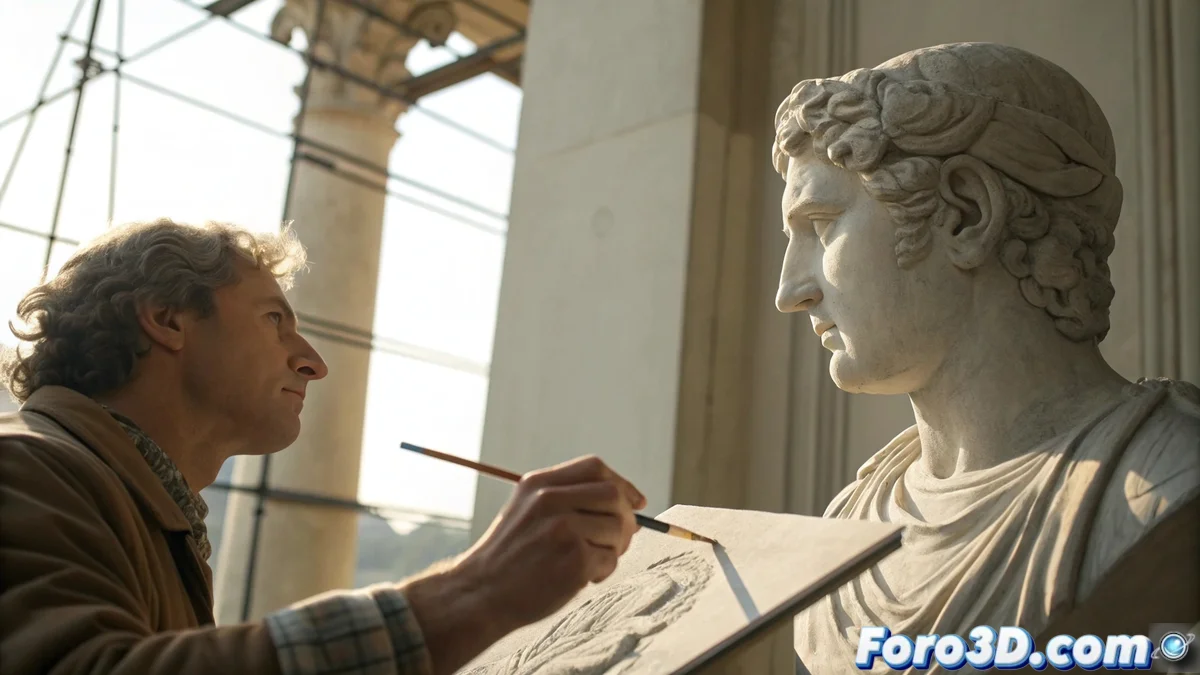
Learning to Draw Through the Study of Artistic References
Studying through references constitutes an essential methodology for building fundamental artistic skills. This practice goes beyond simple visual reproduction, allowing one to internalize principles of composition, anatomy, and perspective that are later applied in original creations 🎨.
Strategic Selection of Study Material
Intelligent selection of references makes a difference in the learning process. It is crucial to select images that represent appropriate challenges for your current level, avoiding both excessive simplicity and unmanageable complexity.
Criteria for Effective References:- Photographs with well-defined lighting to understand volumes and three-dimensional forms
- Works by recognized artists that show creative solutions and distinctive personal styles
- Images with clear structure that allow analysis of the construction from the basic to the details
Copying without understanding is like building with toy blocks: the pieces fit, but the structure collapses at the first creative challenge.
Methodology of Analysis and Practical Application
The process of analytical breakdown transforms copying into a tool for active learning. When studying a reference, you must mentally deconstruct it into structural layers that reveal the artistic decisions behind each element.
Phases of the Study Process:- Analysis of the basic structure and fundamental proportions using guide lines
- Understanding of three-dimensional forms and how light models surfaces
- Study of light and shadow maps, applying tonal values in progressive layers
Implementation in Original Works
The transition towards autonomous creation represents the final stage of the process. The knowledge acquired through the study of references must be applied to solve visual problems in original drawings, developing confidence and technical precision ✏️.