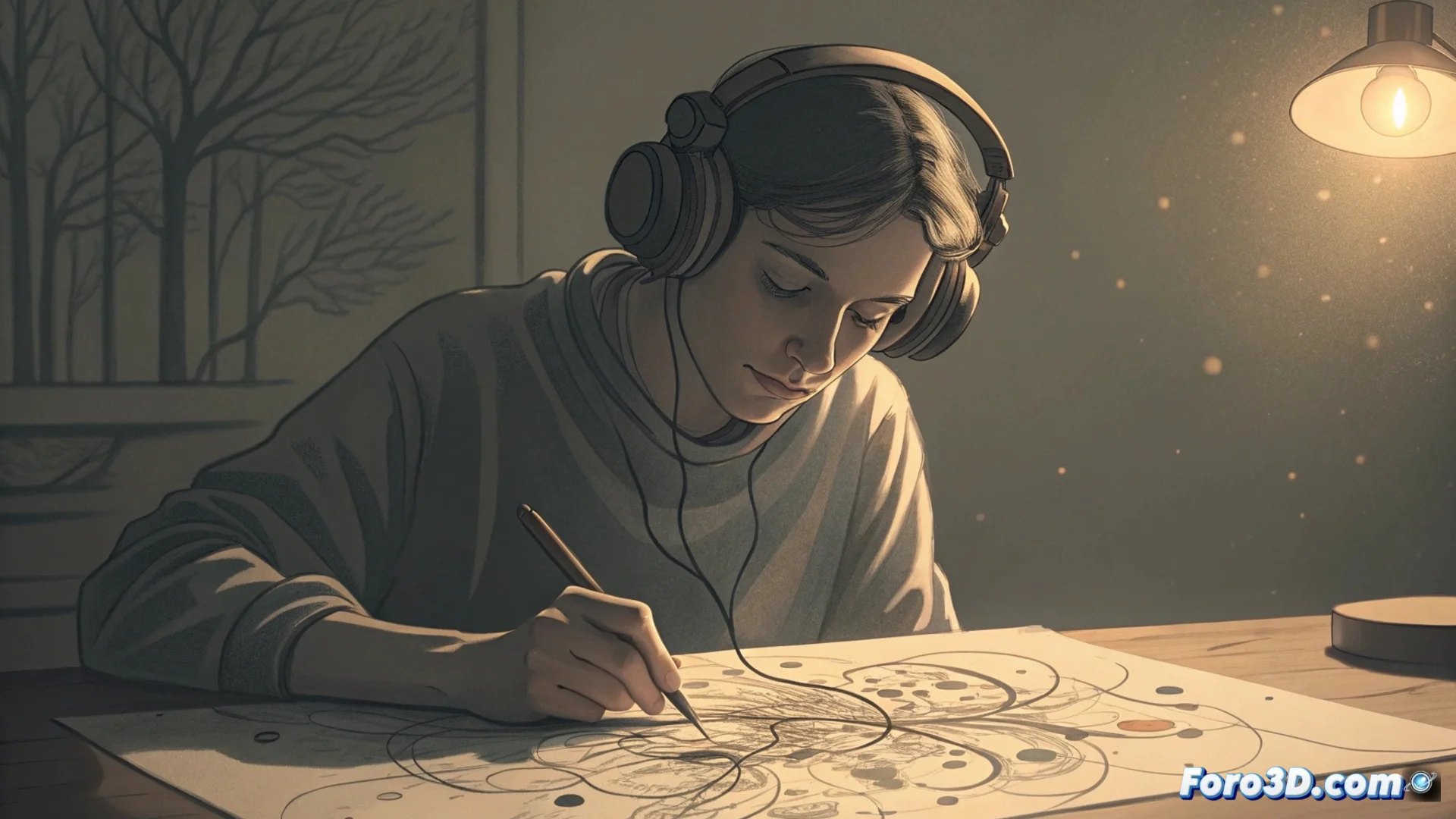
Learn to Draw Using the Soundscape Technique
This artistic method establishes a direct bridge between what you perceive with your ears and what you capture with your hands. Transform sound waves into graphic elements, using vocal-free music such as classical, ambient, or cinematic soundtracks to guide the stroke. The purpose is not to copy reality, but to externalize the mental image generated by hearing. 🎨
Steps to Execute the Soundscape Exercise
To begin, choose an instrumental piece of music and find a quiet space. Close your eyes and focus on the sound, without analyzing the structure. Let high tones suggest thin lines and low tones evoke dense blots. Associate visual forms with each instrument or rhythm you identify. With your eyes still closed, visualize the drawing forming in your mind. Then, open your eyes and immediately draw what you perceived, using pencil, charcoal, or ink. Do not judge or correct; allow your hand to move with the same spontaneity with which you listen.
Key Sequence to Follow:- Select and Listen: Choose instrumental music and prepare for deep listening without distractions.
- Associate Sensations: Connect sounds (highs, lows, rhythms) with specific visual forms, lines, and textures.
- Visualize and Capture: First imagine the drawing with your eyes closed, then open them and transfer it to paper without delay.
The result should not resemble the music, but be its personal translation into another language.
Advantages of Integrating Sound into Your Drawing Practice
This practice trains sensory synesthesia, linking different perceptual channels. It is a powerful tool for breaking creative blocks, as it eliminates the pressure to draw something figurative or recognizable. By doing so, you optimize the fluidity of your line and strengthen the bond between emotion and graphic gesture. It also sharpens your ability to listen attentively and maintain concentration. Many creators use auditory stimuli to discover new directions and dynamic compositions in their projects. 🎵
Main Benefits:- Overcome Blocks: By focusing on translating sensations rather than representing objects, you reduce blank page anxiety.
- Improve the Stroke: The hand moves with more freedom and emotional connection, generating more expressive lines.
- Explore Abstraction: Generate ideas and compositions from a non-visual starting point, expanding your artistic language.
Practical Tips for Your First Sessions
A good starting point is to use orchestral music, where you can clearly differentiate the instruments. If when listening to a violin solo you only perceive a simple line, try to relax more and let your mind wander without restrictions. The goal is to translate the auditory experience in a personal, not literal, way. Experiment with different instrumental genres to see how your abstract drawings change. This technique is not only for creating final art, but also as a powerful warm-up and exploration exercise for any visual project. ✨