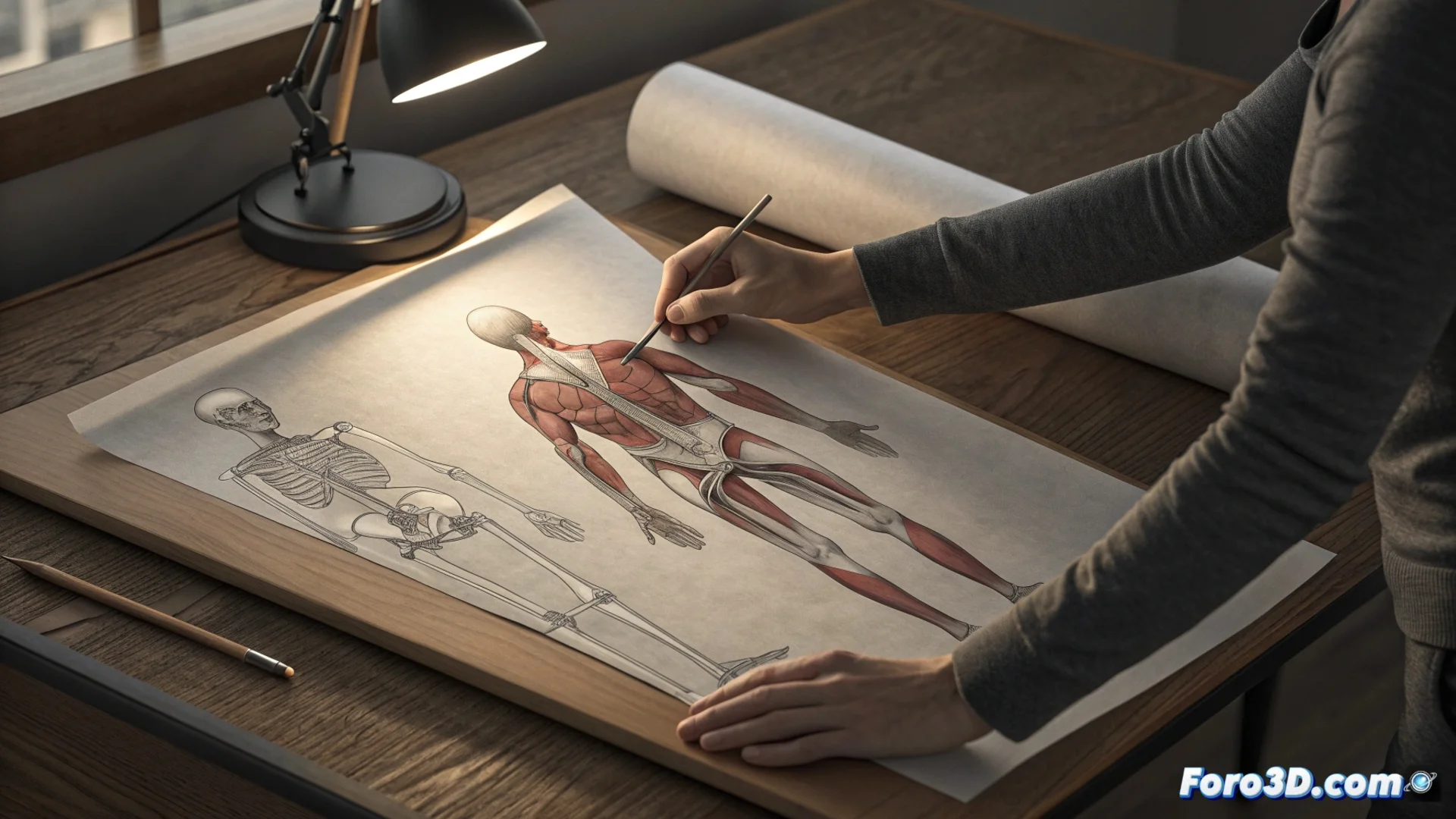
Learn to Draw with Overlapping Semi-Transparent Tracings
Mastering artistic anatomy requires understanding how the figure is built from the inside out. A classic and effective technique uses physical layers of paper to break down and visualize this process in a clear and tangible way. 🎨
Build the Figure from the Inside
The method is based on a system of overlapping layers. You start with a drawing of the skeletal structure that defines the pose on a base paper. This skeleton acts as the fundamental framework on which everything else is supported.
Sequential Layer Process:- Layer 1 - Bones: Draw the skeletal outline with clear lines. This is the base that dictates the posture and proportions.
- Layer 2 - Muscles: Place a semi-transparent paper (like tracing or silk paper) over the skeleton. Here you draw the muscle groups, seeing how they connect and give volume to the bone framework.
- Layer 3 - Skin and Details: Add a third semi-transparent sheet. On this final layer, you define the skin contours, surface features, and clothing, observing how they adapt to the underlying forms.
A well-drawn skeleton prevents your character from looking like a rubber glove filled with pudding. The structure is what holds everything else together, literally.
Advantages of Using Physical Layers
This approach clarifies the relationship between the different body systems. By working this way, you directly perceive how the bones establish the posture, the muscles provide the mass and form, and the skin with the clothing provide the final finish. 🧠
Key Benefits of the Technique:- Easy to Correct: You can adjust or redo a specific layer (like the musculature) without altering or erasing the skeleton or skin drawing.
- Visualize in 3D: The overlap helps you understand depth and how internal forms affect external ones.
- Tangible Learning: It works like a digital layer system, but physically, ideal for studying anatomy in a concrete way.
Integrate the Knowledge into Your Workflow
This methodology is not only useful for practice, but the understanding you gain transfers directly to your digital or traditional drawing. Understanding the interaction between bone, muscle, and skin allows you to build characters with solidity and anatomical credibility, avoiding figures that look flat or poorly supported. ✨