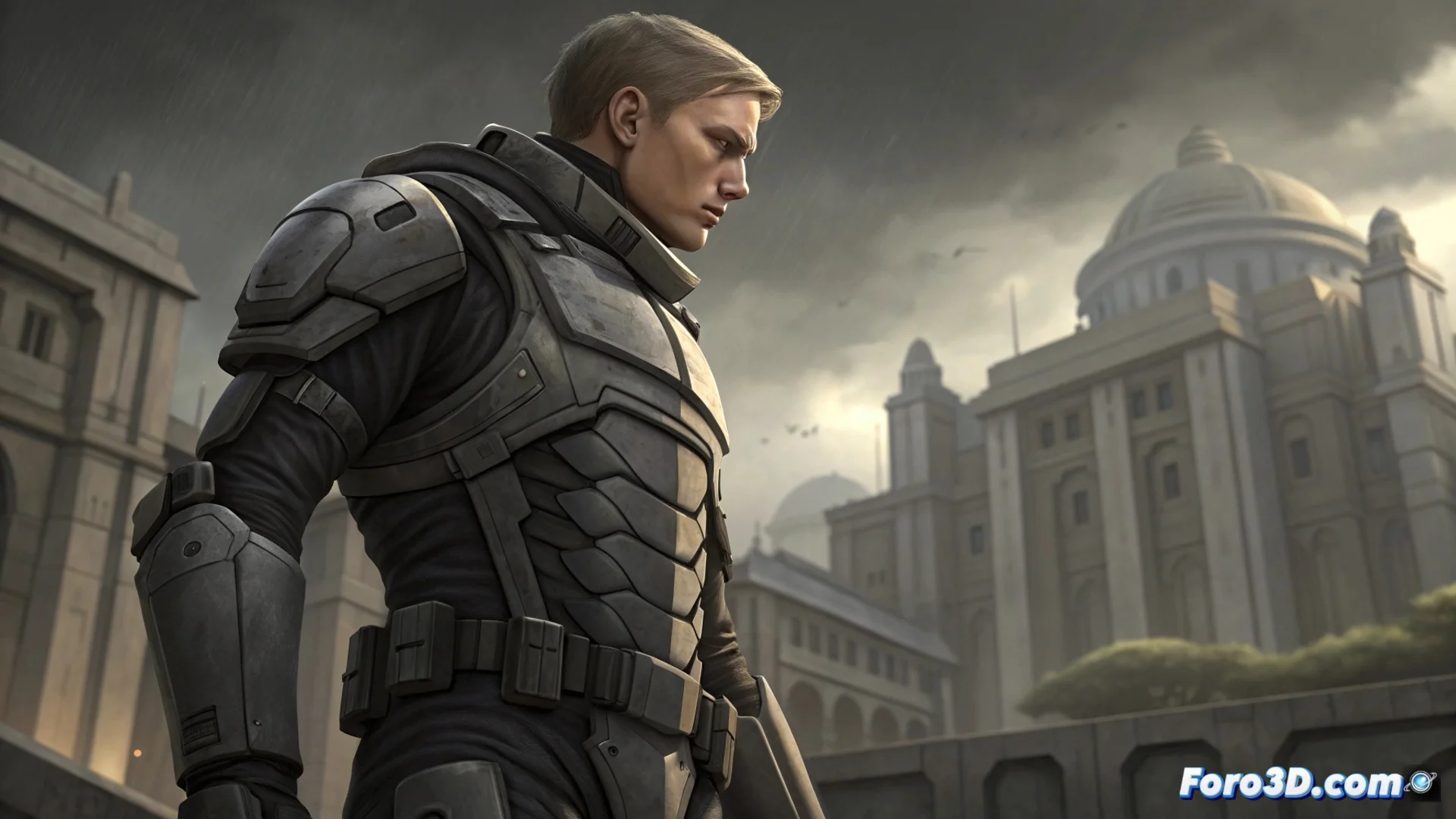
Lazarus: exploring identity in a cybernetic feudal future
A future world is divided among sixteen feudal families that rule with an iron fist. Each clan relies on a Lazarus, an enhanced protector with advanced technology. The plot centers on Forever Carlyle, her family's guardian, who begins to perceive flaws in her own programming and in the order she swore to defend. 🛡️
Visual art that builds a believable world
Michael Lark's artwork establishes a realistic and cinematic tone, where characters' gestures and postures communicate as much as words. Santi Arcas applies a color palette that underscores the gray and oppressive atmosphere of this future. The technology shown is functional and austere, integrating naturally into every panel so the reader immerses effortlessly.
Pillars of the visual style:- Hard realism: A cinematic approach that avoids glamour and prioritizes credibility.
- Oppressive palette: Colors that reinforce the feeling of a suffocating and inescapable system.
- Organic design: Technology appears as a logical extension of the world, not as an adornment.
What happens when your ultimate weapon starts having existential doubts?
A premise that questions the foundations of power
Beyond the action, Lazarus uses its science fiction framework to analyze profound concepts. The work examines free will versus programmed loyalty, and how hereditary structures shape identity. The main conflict arises from Forever's internal clash, between her designated function and an awakening consciousness.
Central themes of the narrative:- Programmed identity: Analyzing to what extent we are what others design us to be.
- Imposed loyalty: Questioning systems that demand blind obedience.
- Emerging consciousness: Following a character's journey as she discovers cracks in her own reality.
Final reflection on structures and consciousness
Lazarus transcends the genre to offer a powerful reflection. It invites us to think about the hierarchies we uphold and how they define us. By following Forever's internal struggle, the comic poses whether it is possible to redefine one's own purpose within a system designed to suppress questions. The true battle is not always physical; sometimes it occurs in the silence of code that begins to fail. 🤖