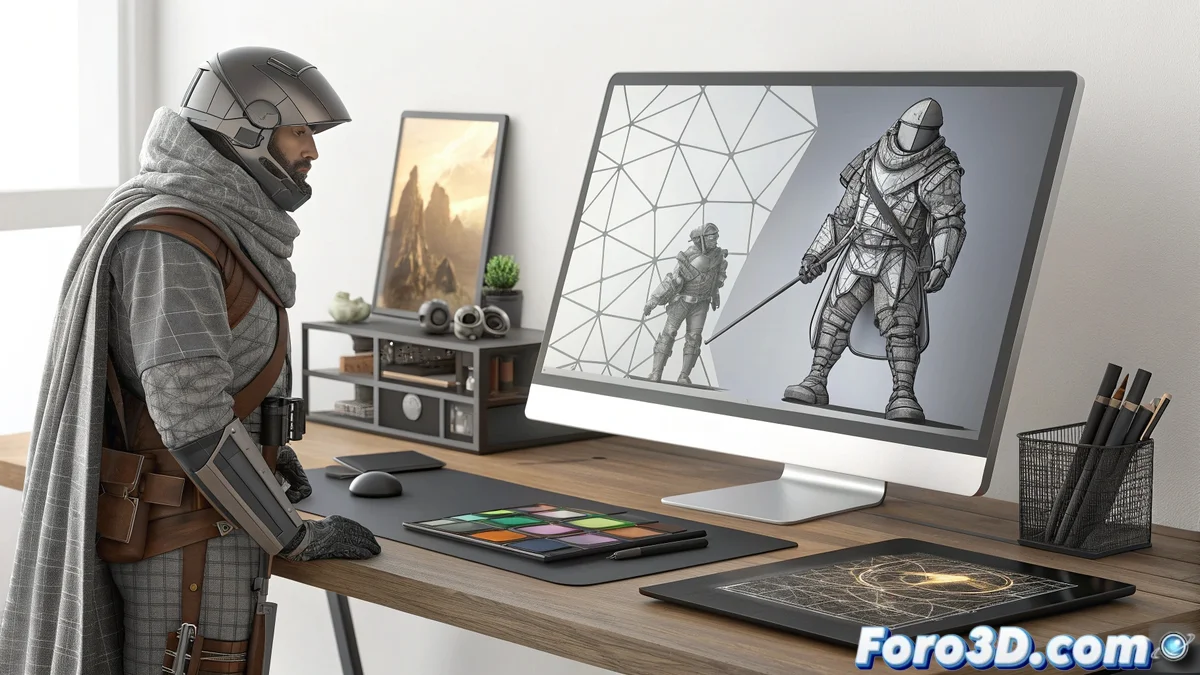
Layered Illustration Technique for a Flexible Workflow
This structured method organizes artistic creation into differentiated phases that optimize both learning and error resolution. We begin with elemental shapes that establish the architecture of the drawing, progress to specific details in independent levels, and culminate with texture application and shadows that provide three-dimensionality and realism. This approach allows modifying any component without compromising previous work, making the creative process more adaptable and controlled 🎨.
Fundamentals with Basic Geometry
The initial phase involves outlining the primary shapes that constitute the subject, using circles, rectangles, and triangles to represent masses and spatial relationships. This simplified structure serves as a guiding framework for all subsequent layers, ensuring that the overall arrangement is consistent before incorporating complexity. Keeping these shapes in an autonomous level enables adjusting the pose or dimensions without needing to redraw elaborated components.
Key advantages of this stage:- Establishes precise proportions through geometric volumes
- Allows quick reconfiguration of composition
- Serves as an unchanging guide for later developments
The geometric base is like the skeleton of your illustration - without a solid structure, the details lack foundation
Progressive Detail Development
Over the elemental shapes layer, we generate a new stratum dedicated to precise contours and distinctive features of the object or character. At this point, facial features, textile wrinkles, or ornamental elements are defined, always respecting the previously established anatomy. Working in segregated layers for these components favors experimentation with different styles or defect correction without risking the fundamental drawing.
Refinement characteristics:- Outlining of characteristic and expressive elements
- Preservation of the underlying geometric structure
- Independent modification capability by levels
Integration of Textures and Volumetry
The final stage focuses on implementing texturing and shading in upper strata, using blending modes like multiply or overlay to incorporate them organically. Textures provide tactile qualities and authenticity, while shading defines the light direction and generates a sense of volume. Adjusting the opacity of these levels allows controlling the intensity of the effects, achieving a professional and coherent result.
It is fascinating how this stratified technique turns the act of drawing into a process similar to building a layer cake, where each stratum is perfectly editable before presenting the final creation. The granular control over each aspect and the reversion capability at any time transform the creative experience into a more intuitive and satisfying flow ✨.