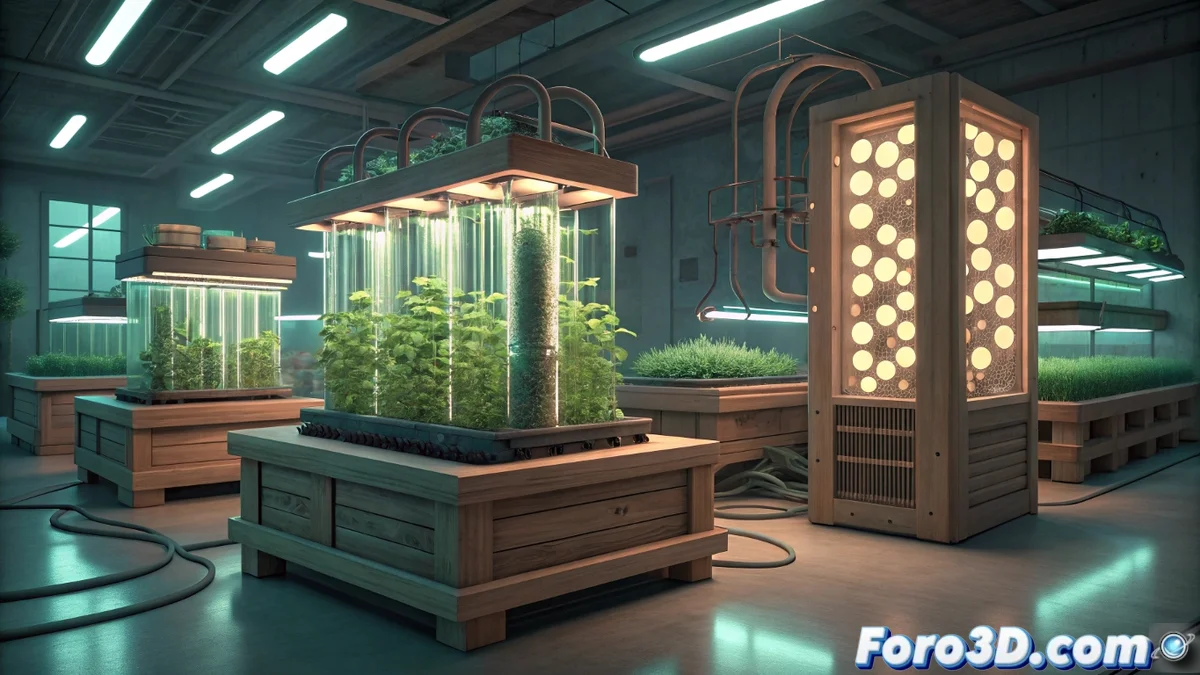
Laboratory-grown wood: a biotechnological revolution
Wood production is undergoing a radical change. Researchers are perfecting techniques to grow this material directly in the laboratory, using plant cells that develop in controlled environments. This advance could transform entire industries and offer a genuinely sustainable alternative. 🌱
Key advantages of biofabricated wood
The main benefit of this biotechnological approach is its positive environmental impact. By generating wood without the need to fell trees, it directly contributes to reducing deforestation. Additionally, the process is significantly faster; while an oak takes decades to mature, woody structures in the laboratory can form in a matter of weeks.
Environmental and operational benefits:- Forest conservation: Eliminates dependence on felling live trees.
- Accelerated production cycle: Controlled growth that reduces time from years to weeks.
- Resource efficiency: Optimized use of water, nutrients, and space, compared to traditional forestry.
Imagine a future where trees grow in glass jars. Laboratories could become the new forests, but with air conditioning.
The scientific process behind the cultivation
The methodology begins with the extraction of cells from wood species like birch. These cells are placed in specialized culture media rich in nutrients and hormones. Under strictly controlled conditions of temperature and light, the cells are induced to differentiate and form complex woody tissues, replicating the structure of natural wood.
Fundamental steps of the process:- Selection and extraction: Obtaining plant stem cells from donor trees.
- Nutrition and growth: Cultivation in bioreactors with precise chemical media.
- Tissue differentiation: Induction to form xylem (the conductive tissue of wood) and other structures.
Implications for the future
This technological innovation not only represents an advance in materials science, but redefines the concept of renewable resources. The ability to produce wood on demand, with potentially customizable properties, opens doors to a circular manufacturing model with low impact. The path from the culture jar to the final product is paving the way for the future of sustainable construction and design. 🔬