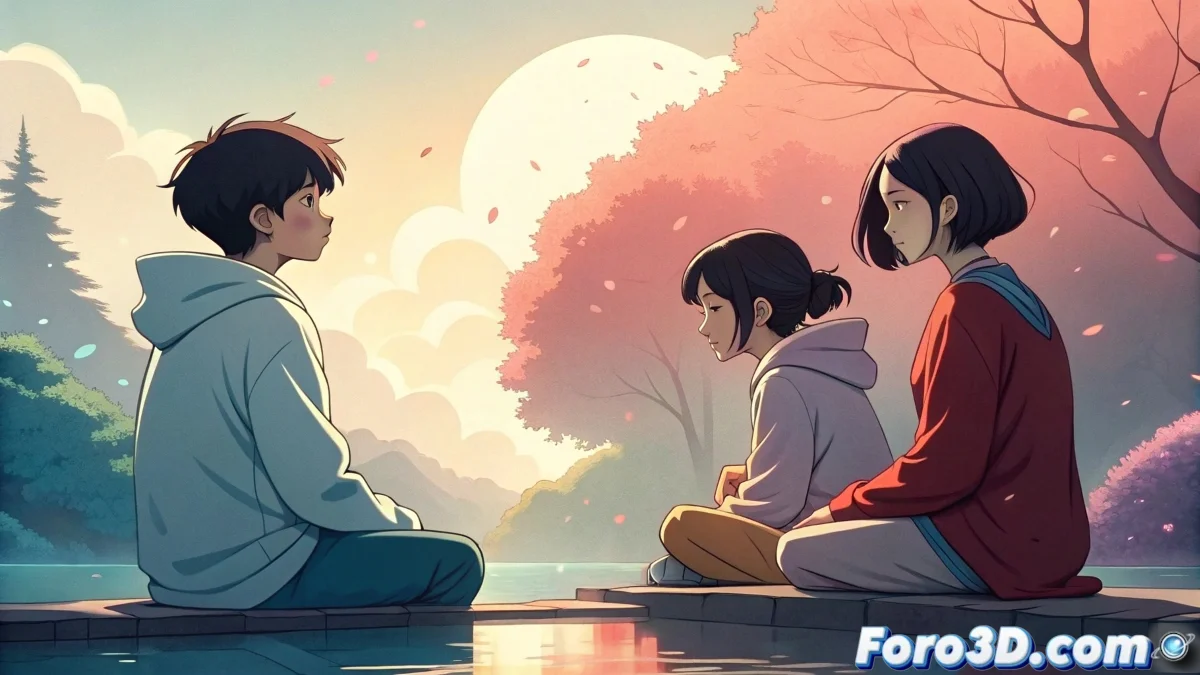
Kimi no Iro: When Emotions Have Color and Animation Has Soul
Kimi no Iro (The Colors Within) represents one of the boldest innovations in contemporary Japanese animation, fusing the traditional artistic sensitivity of anime with emerging artificial intelligence technologies. This film explores the neurological phenomenon of synesthesia through the story of Natsuki, a college student who perceives human emotions as visible colors flowing from people like emotional northern lights. The result is a unique cinematic sensory experience that challenges the limits of what animation can express. 🎨🌈
Synesthesia as Visual Narrative
The film uses the protagonist's neurological condition as a visual metaphor to explore human connection and emotional complexity. Each emotion has its own chromatic palette and specific movement patterns, creating a completely new visual language to represent internal states that are normally invisible.
Technical Revolution in Animation
Kimi no Iro marks a turning point in animated production by seamlessly integrating multiple techniques and technologies.
Fusion of Tradition and Innovation
The studio maintains hand-drawn animation for characters and key backgrounds while employing generative AI algorithms to create emotional color sequences, resulting in an aesthetic that respects anime's heritage while embracing new technical possibilities.
AI as a Creative Tool
The directors worked with machine learning systems trained on impressionist and abstract expressionist artworks to generate emotion visualizations, creating a style that would be impossible to achieve entirely by hand.
Highlighted Technical Innovations:- Integration of traditional 2D animation with 3D renders
- AI algorithms for emotional texture generation
- Dynamic color system that responds to the soundtrack
- Real-time compositing techniques
Emotional Architecture of Colors
The film develops a complex and consistent chromatic system where each emotion has its specific visual representation.
Coded Emotional Palette
Joy manifests as swirls of gold and sky blue, sadness as waves of deep indigo and silver, and anger as bursts of crimson and electric orange. This visual vocabulary is consistently maintained throughout the narrative.
Chromatic Interaction Between Characters
The scenes show how the emotional colors of different characters blend and affect each other, creating abstract visualizations of relational dynamics and empathy.
Kimi no Iro is not about seeing colors—it's about making the invisible visible, about revealing the emotional landscape we all carry inside but rarely show.
Narrative and Character Development
The story follows Natsuki's journey as she learns to navigate her unique gift/condition and discovers unexpected connections between the emotional experiences of the people around her.
The Weight of Enhanced Perception
The film explores the psychological challenges of constantly seeing emotions—from sensory overload to the difficulty of establishing authentic relationships when one can see behind social masks.
Arc of Acceptance and Purpose
Natsuki evolves from seeing her synesthesia as a curse to understanding it as a gift that allows her to connect with others in deeply meaningful ways.
Soundtrack as Narrative Element
The music in Kimi no Iro functions as a bridge between the auditory and the visual, with compositions that reflect and amplify the protagonist's synesthetic experiences.
Emotional Orchestration
Each emotion has its distinctive musical signature that synchronizes with its visual manifestations, creating an immersive multisensory experience for the audience.
Eloquent Silences
The film uses strategic moments of silence to contrast with explosions of color and sound, emphasizing the loneliness and overload that Natsuki experiences.
Unique Narrative Elements:- Visual metaphor for empathy and human connection
- Exploration of neurodiversity as a superpower
- Social critique on emotional suppression
- Celebration of individuality and difference
Impact on the Animation Industry
Kimi no Iro is setting new precedents for technical innovation in anime, demonstrating how AI can be a creative collaborator rather than a threat to traditional artists.
Critical and Audience Reception
The film has received praise for its artistic ambition and technical execution, winning awards at international animation festivals and attracting both anime purists and new audiences.
Influence on Future Productions
Kimi no Iro's hybrid approach is inspiring other studios to experiment with integrating emerging technologies into their production pipelines.
The Future of Emotional Animation
Kimi no Iro suggests an evolutionary path for the animated medium where technology serves to deepen emotional expression rather than simply enhancing realism or visual spectacle.
More than a film, Kimi no Iro is an artistic statement on the unlimited potential of animation to explore the human experience in all its complexity. By making the internal emotional world visible, it reminds us that we all, in a way, live in a world of colors that only we can see—and that perhaps sharing those colors is the most authentic way to connect with others. 🌟🎬