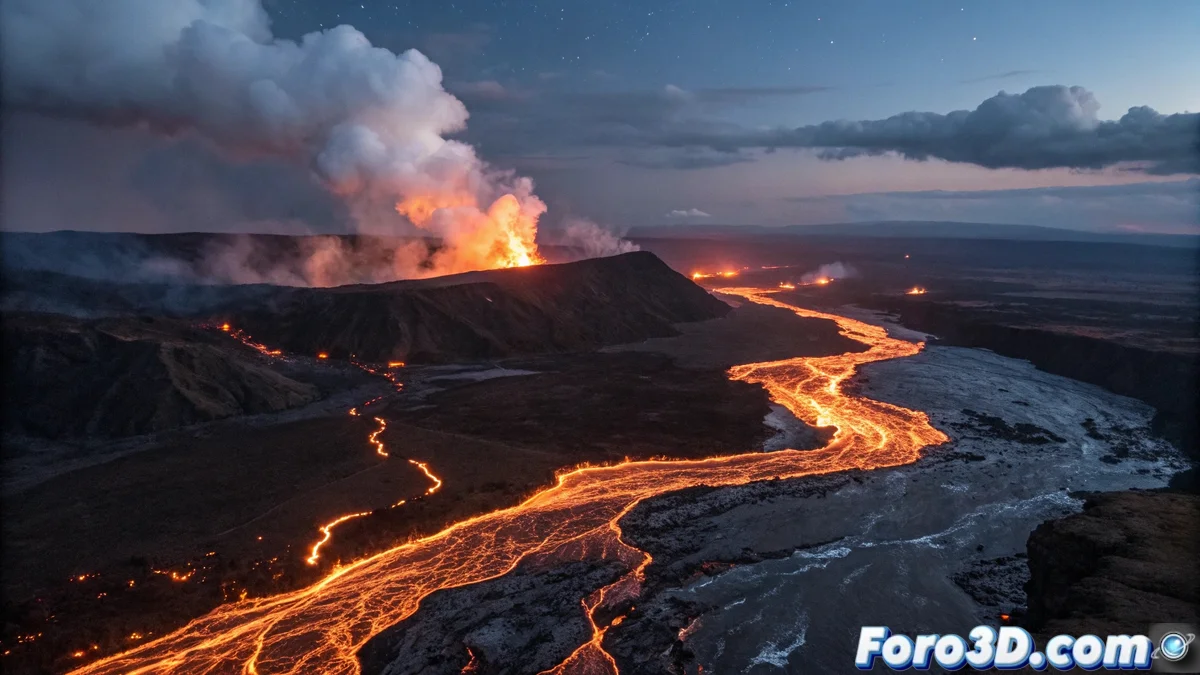
Kilauea Begins Its Thirty-Sixth Eruptive Episode with Spectacular Lava Display
The Kilauea volcano in Hawaii has begun its thirty-sixth eruptive episode within the current cycle, recording a notable increase in volcanic activity that includes impressive magma overflows accumulating progressively in the main caldera and adjacent areas. This geological phenomenon generates an unparalleled visual spectacle while the United States Geological Survey conducts permanent monitoring of the eruptive event's evolution 🌋
USGS Scientific Monitoring System
Although the volcanic activity remains contained within the crater boundaries without posing an immediate threat to nearby populations, USGS research teams continue to meticulously monitor the colossus's behavior using state-of-the-art specialized instrumentation. The observation strategy includes precise measurements of ground deformation, analysis of gas emissions, and thermal recording of molten lava, gathering crucial information to project possible development scenarios.
Implemented Monitoring Methods:- Continuous measurement of ground deformation using high-precision GPS technology
- Real-time analysis of volcanic gas emissions, especially sulfur dioxide
- Permanent thermal recording of moving lava using specialized cameras
It seems Kilauea decided to celebrate its episode 36 with a natural pyrotechnic show that makes human fireworks look like mere sparklers.
Distinctive Features of the Current Eruptive Phase
The lava flows emerge predominantly from active vents located within the summit caldera, forming successive accumulations with the potential to significantly modify the area's topography. The effusive nature characterizing this eruptive stage produces constant sulfur dioxide emissions while imposing columns of vapor and various gases rise from the activity zone, generating variable conditions in the surrounding atmospheric quality.
Highlights of the Eruption:- Emergence of lavic flows mainly from summit caldera vents
- Formation of progressive accumulations with potential to alter local topography
- Production of constant gas emissions, highlighting sulfur dioxide
Visual Impact and Future Prospects
This thirty-sixth eruptive episode of Kilauea serves as an impressive reminder of the geological dynamism that characterizes the Hawaiian islands. Continuous scientific monitoring is essential to understand the evolution of these phenomena and anticipate possible changes in volcanic behavior, while the natural spectacle continues to unfold before the world's eyes 🌄