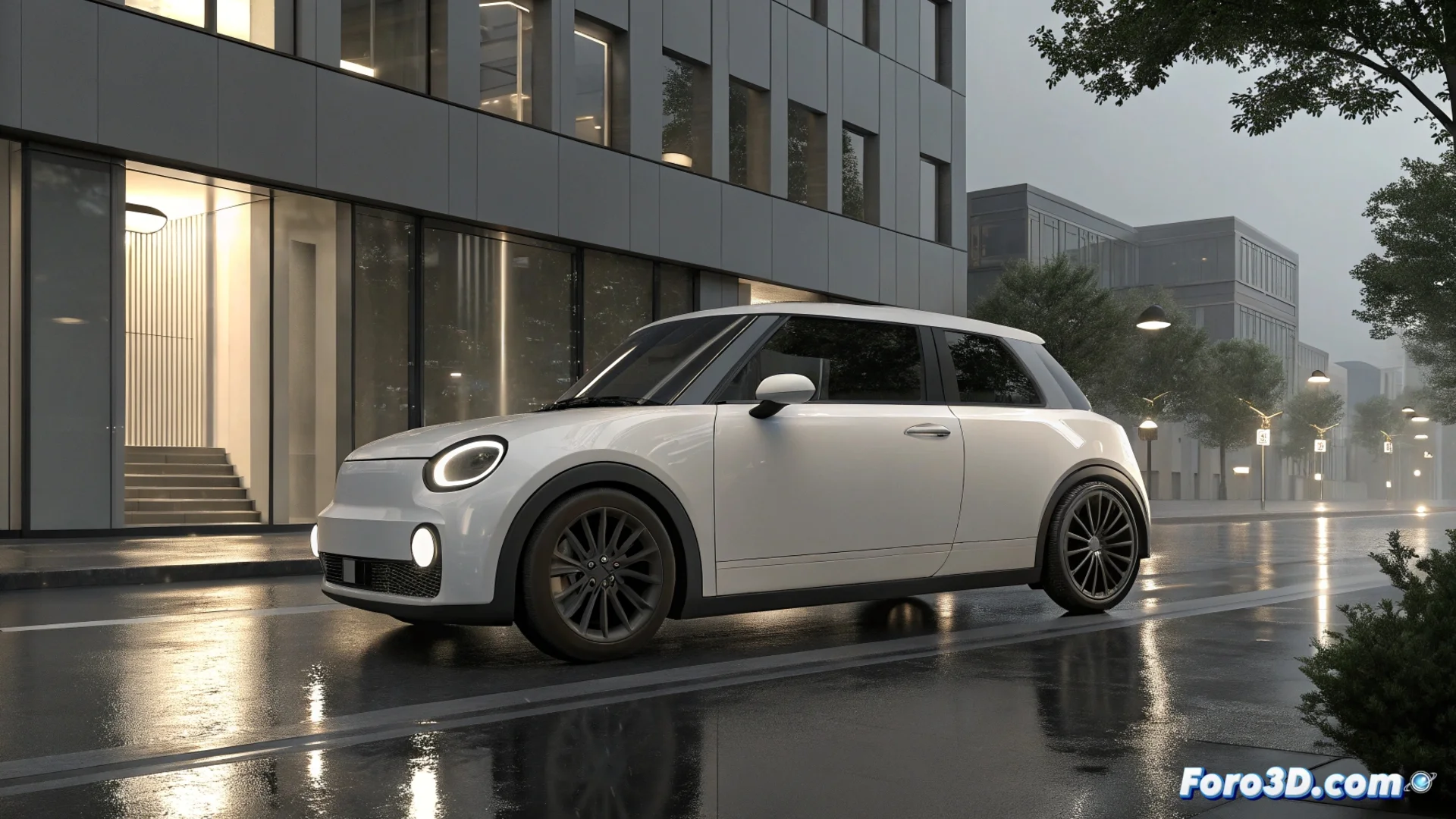
Kia presents the EV1, a prototype that defines its urban electric future
Kia advances with its plan to electrify its range and materializes it with the EV1. This new urban concept, revealed at the Busan International Mobility Show, serves as a beacon that illuminates the aesthetic and functional direction of its upcoming electric cars. The Korean brand seeks to position itself strongly in the zero emissions market with practical solutions for daily city life. 🚗⚡
A design that looks forward
The Kia EV1 breaks with conventions. Its silhouette is based on a monocoque profile where the cabin dominates the length, a decision that prioritizes optimizing space for occupants. At the front, the iconic Tiger Nose grille evolves into a smooth surface that integrates a lighting system with a T-shaped signature. The marked wheel arches and flanks with defined lines give it a solid character, while its short and vertical rear underscores its eminently practical purpose for the urban environment.
Key features of the EV1 concept:- Monocoque architecture: Maximizes the cabin in a compact format.
- T-shaped lighting signature: New interpretation of the brand's visual identity.
- Urban proportions: Vertical and short rear to gain maneuverability and functionality in the city.
It seems that the future of urban mobility lies in designs where the grille no longer serves to ventilate, but to show a digital smile to pedestrians.
Expansion of Kia's electric range
This prototype is not an isolated styling exercise. It reflects Kia's intention to develop and offer a wide variety of electric vehicles in the coming years. The EV1 embodies the goal of creating accessible mobility solutions, adapted to urban routines. Its presentation is framed within a broader strategy to cover multiple segments, from compacts to family models, with electric proposals.
Objectives of Kia's electric strategy:- Launch a complete line of EV models in the near horizon.
- Offer accessible electric vehicles that prioritize efficiency and daily use.
- Cover most market segments with zero-emission technology.