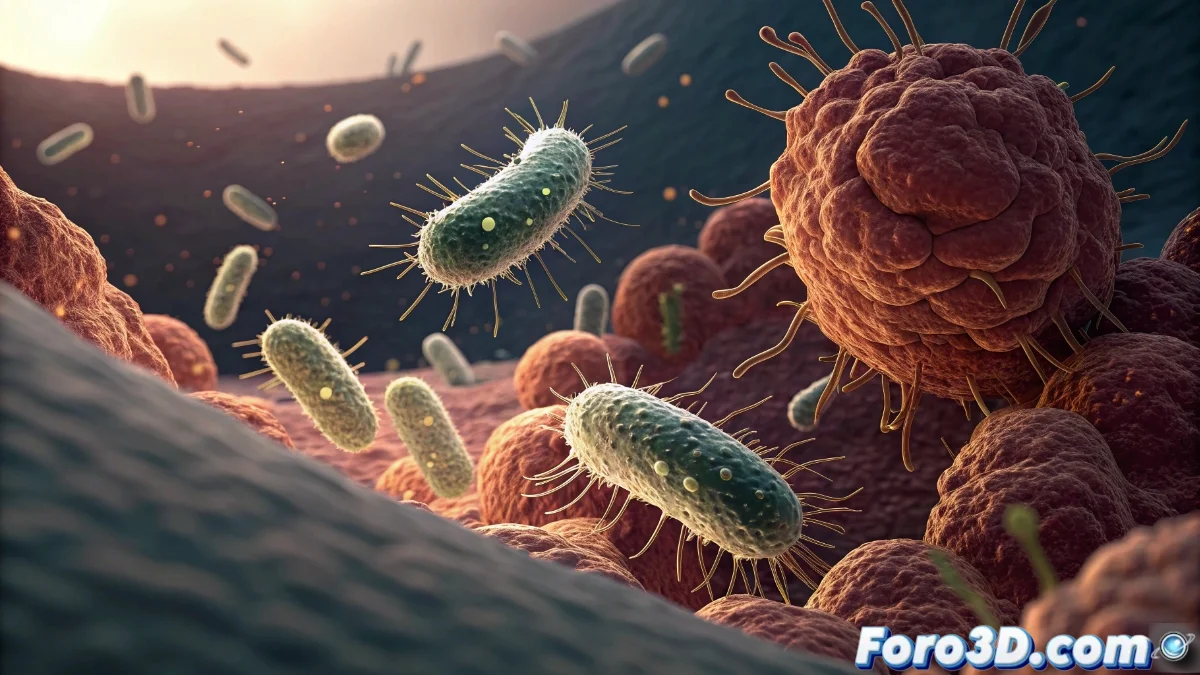
Key Discovery: Aeromonas Bacteria Trigger Ulcerative Colitis
Ulcerative colitis, an inflammatory bowel condition affecting millions worldwide, has just revealed one of its most specific triggering mechanisms. Recent studies establish a direct connection with bacteria of the Aeromonas genus that inhabit our digestive tract 🦠.
Destructive Mechanism Identified
The research demonstrates that certain bacterial strains of Aeromonas produce a specialized toxin that acts like a guided missile against intestinal macrophages. These immune cells perform the essential function of protecting the intestinal lining, maintaining the integrity of this natural barrier. By selectively eliminating these cellular guardians, an environment conducive to the development of the chronic inflammation characteristic of the disorder is created.
Consequences of the Bacterial Attack:- Selective destruction of protective macrophages in the intestinal mucosa
- Severe compromise of the immune system's ability to maintain the intestinal barrier
- Creation of ideal conditions for persistent inflammation and tissue damage
Our findings represent a paradigm shift in understanding the origins of ulcerative colitis, identifying a concrete and mechanistic therapeutic target
New Therapeutic Horizons
This transformative discovery opens completely new perspectives for the development of targeted treatments. Instead of general approaches that affect the entire immune system, the possibility of specific interventions against the responsible bacteria or their toxins is now in sight. Researchers are exploring multiple strategies that could offer more effective solutions with fewer side effects.
Therapeutic Strategies Under Development:- Selective antimicrobial compounds that specifically eliminate problematic strains of Aeromonas
- Development of antitoxins that neutralize the macrophage-destroying substance
- Therapies that restore immune function without altering the overall microbial balance
Future of Intestinal Research
The scientific community is intensifying its efforts to fully characterize the molecular processes by which this toxin eliminates the intestinal defenders. Parallel studies are investigating why some people harbor these problematic strains while others do not, examining genetic and environmental factors that determine susceptibility. Simultaneously, more precise experimental models are being refined to validate new therapeutic approaches before advancing to human clinical trials. The intestinal ecosystem proves to have inhabitants that, instead of building, specialize in demolition 🏗️💥.