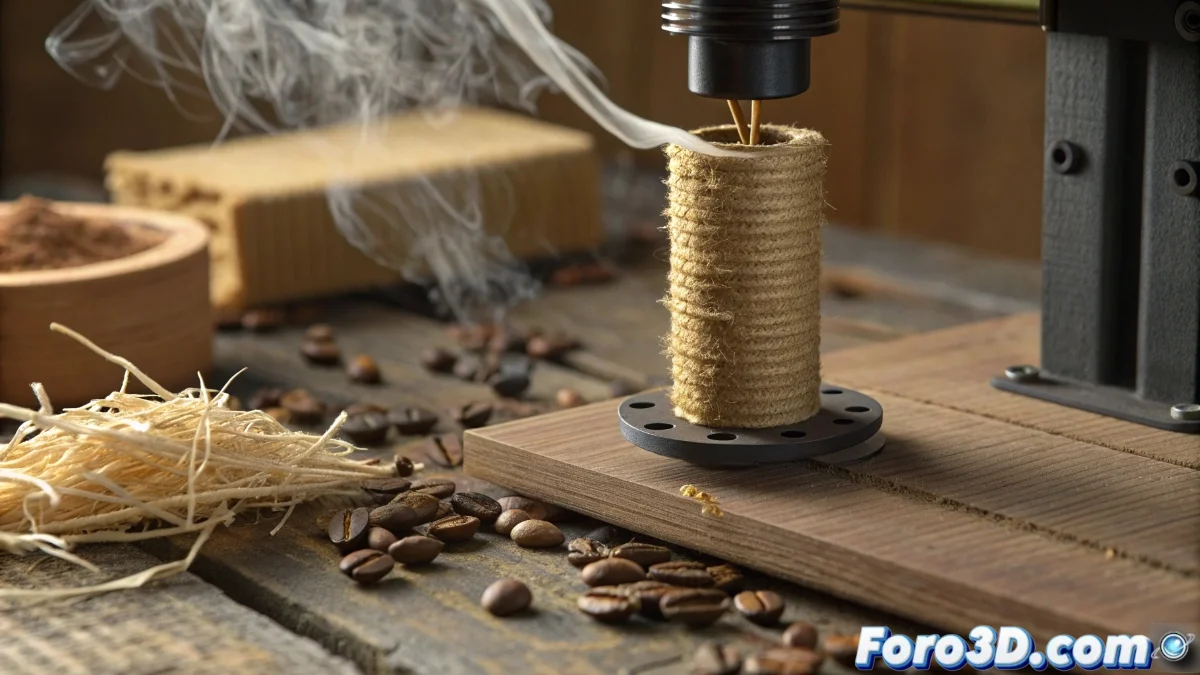
Kexcelled Launches Sustainable Aromatic Filaments for 3D Printing
The company Kexcelled has revolutionized the market with the launch of an innovative range of 3D printing filaments that integrate natural fragrances directly into their composition. This unique technology transforms the printing experience into a multisensory event where sustainability takes on a new olfactory dimension 🌿
Ecological Composition and Environmental Benefits
These specialized filaments use raw materials that would normally end up as waste, incorporating used coffee grounds, residual tea leaves, and fibers from renewable bamboo crops. The combination with biodegradable polymers creates materials that retain their aromatic properties even after the extrusion process, releasing their characteristic essence during printing and in the finished objects.
Key Features of the Materials:- Coffee Filament: made with coffee waste that retains its intense aroma and provides a natural brown tone
- Tea Filament: uses discarded tea leaves that provide relaxing fragrances and earthy colors
- Bamboo Filament: sourced from fast-growing sources that significantly reduce the carbon footprint
Our printers can now create environments that smell better than a morning café, though they definitely don't replace your favorite barista
Practical Applications and Recommended Settings
These aromatic materials open up new creative possibilities for projects where the olfactory component adds functional or aesthetic value. They are ideal for manufacturing objects that benefit from naturally releasing fragrances, while maintaining a printing performance comparable to conventional PLA filaments.
Recommended Uses:- Ambient Diffusers: that release natural aromas without the need for additional essences
- Kitchen Accessories: like coasters and dry food containers with built-in fragrance
- Decorative Elements: that add personality through their characteristic aromas
Technical Considerations and Future of the Materials
For the best results, it is recommended to make minor adjustments to the printer settings, optimizing the temperature to maximize aromatic emission without compromising structural integrity. Layer adhesion remains excellent, allowing the creation of complex parts that retain their olfactory properties long-term. This innovation represents a significant step toward a more sustainable and sensory 3D printing that transforms our relationship with digitally created objects 💫