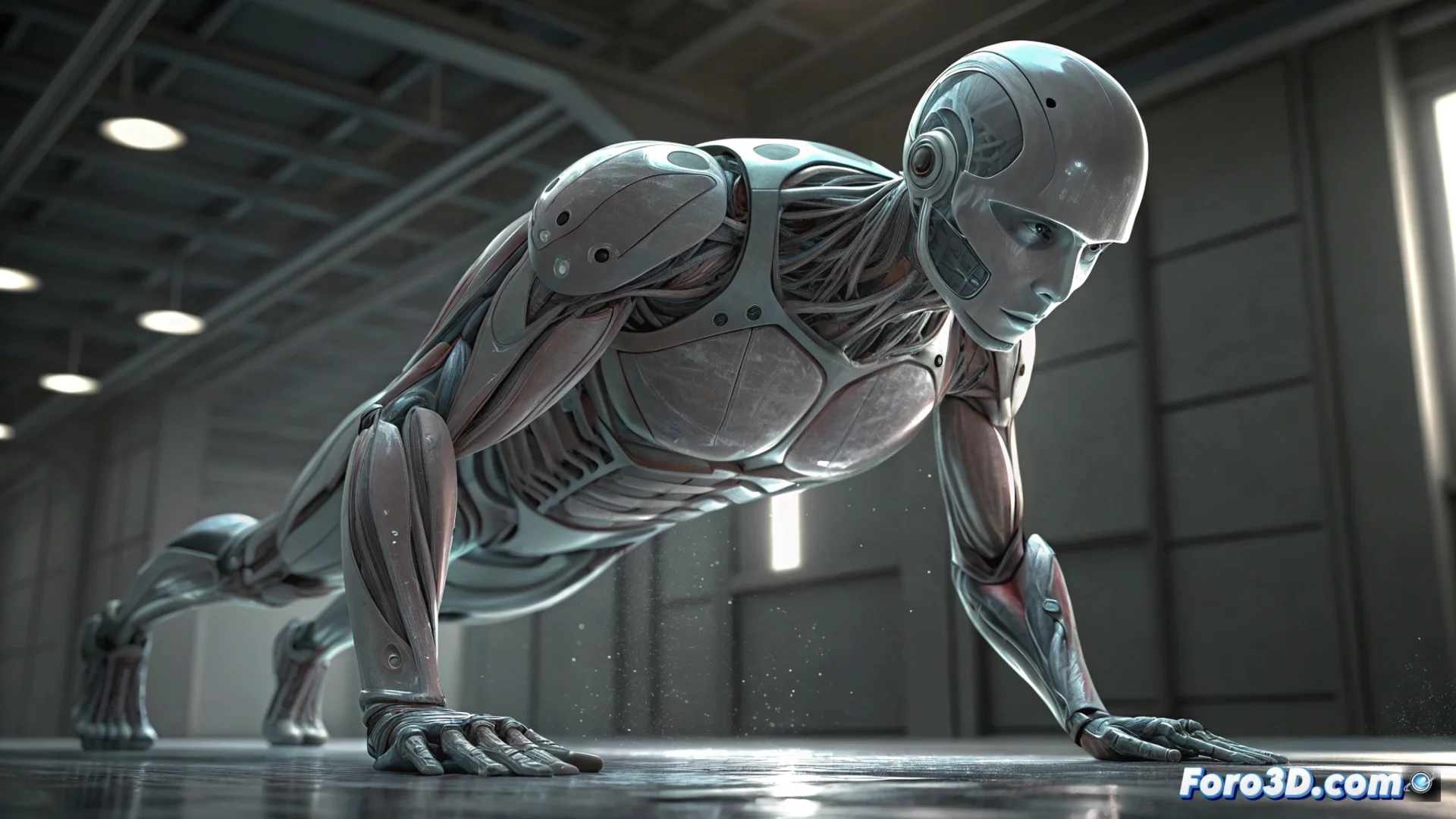
Kengoro: the humanoid robot that sweats like a person
In the JSK Laboratory at the University of Tokyo, engineers are not just building machines, but replicating life. Their most advanced creation, Kengoro, is an effort to precisely copy the complex system of bones, muscles, and tendons of a human being. This radical approach redefines how a robot is designed and controlled, moving away from traditional rigidity. 🤖
A skeleton that sweats to avoid overheating
Kengoro's biggest technical challenge was managing the heat generated by its 108 independent motors. The solution did not come from fans or large heat sinks, but from imitating a biological process. The researchers implemented an evaporative cooling system. Water circulates through the porous aluminum skeletal frame, filters to the surface, and evaporates, efficiently extracting heat, just like sweat cools the body.
Key advantages of 'sweat' cooling:- Allows the robot to operate continuously for longer, even under heavy loads like doing push-ups.
- Eliminates the need for bulky cooling components that would limit movement and design.
- Distributes cooling evenly throughout the structure, protecting critical actuators.
This cooling method is a paradigm shift. We don't add weight; we use the structure itself as a thermal system.
Organic movement thanks to a flexible spine
Prioritizing a bio-inspired anatomy gives Kengoro exceptional movement capabilities. Its flexible spine is key for balancing, absorbing impacts, and performing dynamic gestures that robots with rigid torsos cannot achieve. This versatility opens new frontiers for studying how people move.
Direct applications of this design:- Advance the field of assistive robotics, creating exoskeletons or prostheses with more natural movements.
- Better understand human biomechanics to prevent injuries or improve athletic performance.
- Provide a realistic physical platform for testing control algorithms and simulations.
The future: from imitating movements to replicating sensations
Kengoro represents a leap toward robots that not only look like, but also function like living organisms. The next logical step in this imitation could integrate sensory systems that allow the robot to perceive its environment and internal state in a richer way. The project lays the foundation for machines that interact with the world in a genuinely organic and adaptable way. 🔬