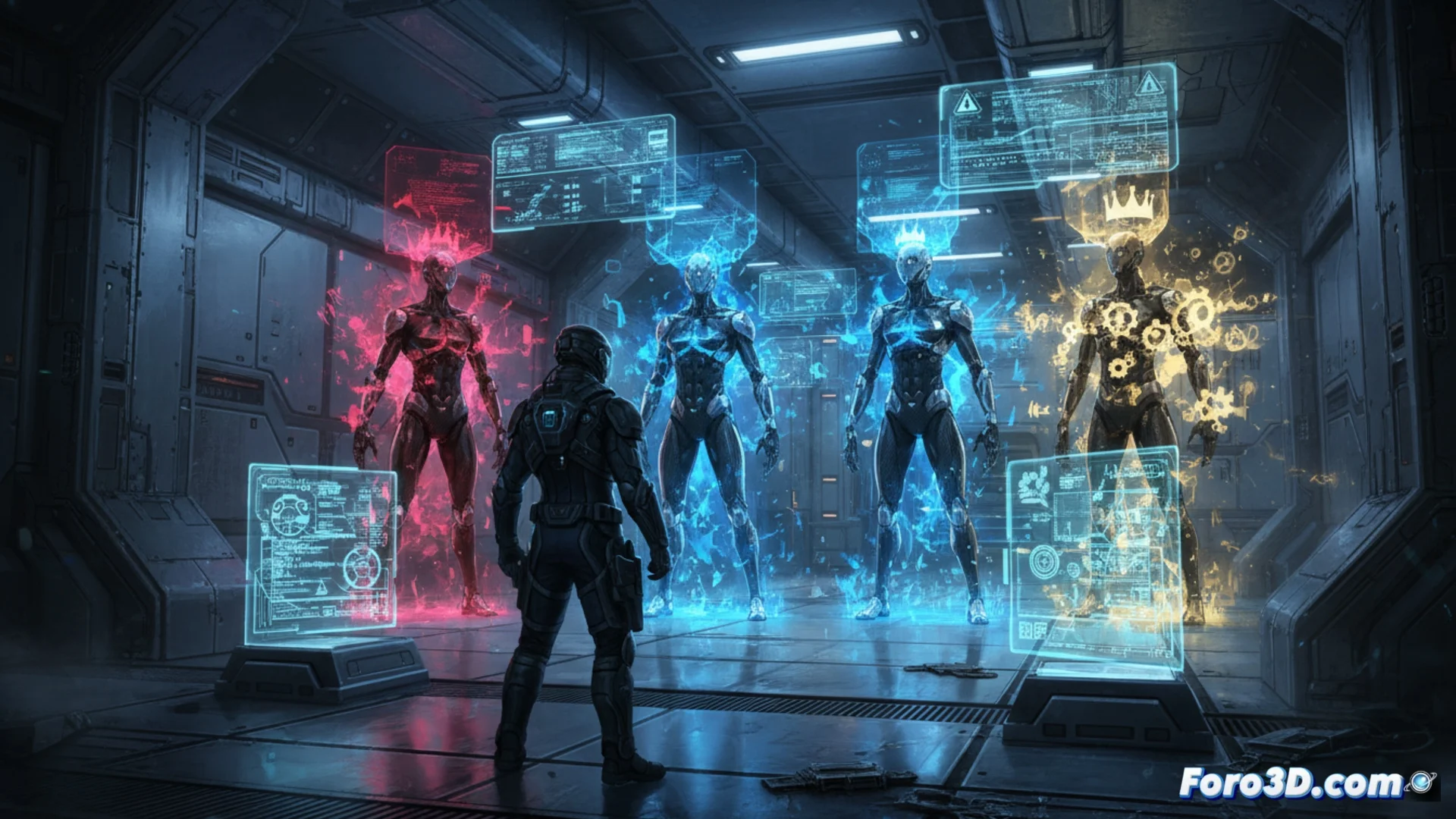
Ken Levine details how Judas differs from other games
In a recent conversation with the magazine Game Informer, the visionary Ken Levine shared details about his team's upcoming project, Ghost Story Games. The title, called Judas, presents itself as a narrative shooter that seeks to redefine the genre by moving away from predictable structures and offering an adventure that changes with each player. 🎮
A narrative system that responds to your actions
Levine clarifies that Judas does not work with the typical dialogue tree with branches. The core of the game is a reactive narrative system that processes the player's decisions and modifies the behavior of the three key protagonists. These characters are not static; they observe, judge, and react to every move, which can transform allies into rivals and vice versa. The plot is actively built, not followed.
Key features of the system:- The player's choices dynamically alter the motivations and loyalties of the main characters.
- There are no binary paths (good/bad), but a spectrum of consequences derived from how conflicts are resolved.
- The central story can vary significantly from one playthrough to another, depending on the playstyle and relationships forged.
The goal is to create a world that the player perceives as alive and where their decisions have tangible weight.
The legacy and evolution of BioShock
The director points out that Judas represents the next logical step from the ideas explored in the BioShock saga. While those games introduced rich worlds and immersive narratives, this new project takes reactivity to a deeper and more complex level. The player's agency is the main engine, seeking for every action, no matter how small it seems, to potentially trigger unpredictable long-term effects.
Elements that define this evolution:- Persistent world that remembers and responds to the player's past actions, not just critical choices at specific moments.
- Consequences that are not immediately obvious, encouraging replayability to discover new plot twists.
- A unique sense of authorship, where each player "writes" their personal version of the story through their behavior.
A future where manners matter
Levine illustrates the concept with an extreme but revealing example: in the Judas environment, an apparently trivial action like ignoring a character could, in chain, influence major events. This design philosophy reinforces the idea of a simulated universe that operates with its own internal rules, where the player is not a spectator, but the catalyst for everything that happens. The journey on the Judas space station promises to be as unpredictable as it is fascinating. 🚀