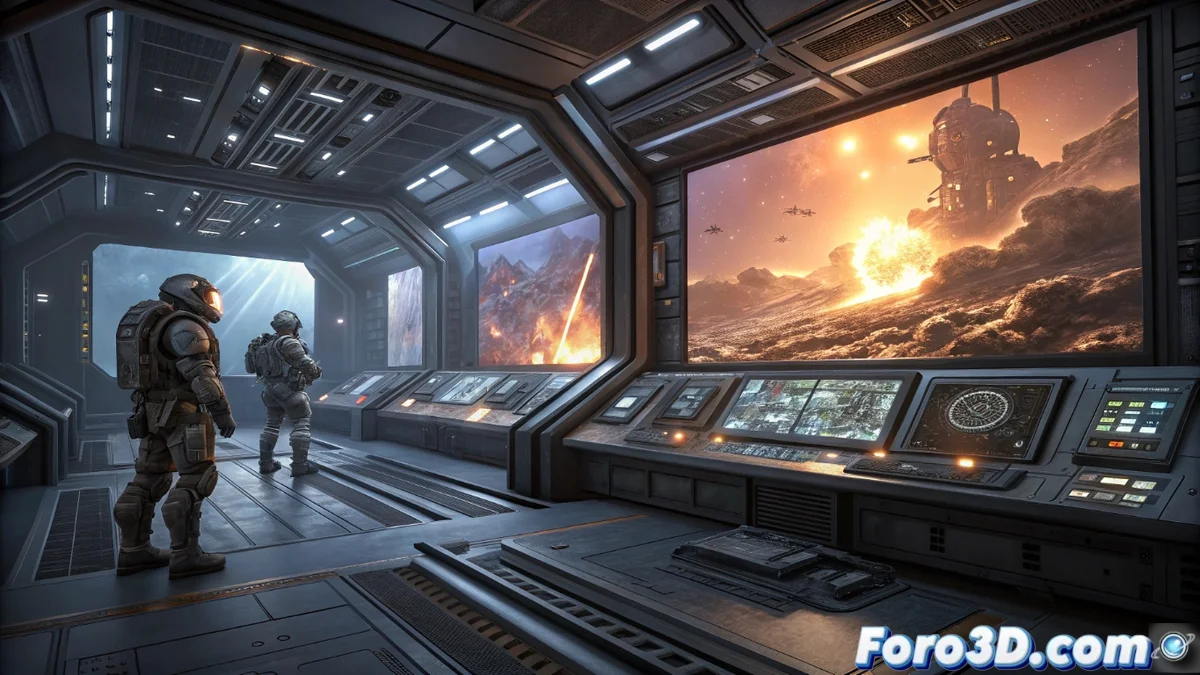
Katana Engine vs Unreal Engine: technical differences and applications
In the universe of visual development, Katana Engine and Unreal Engine embody opposing but complementary philosophies 🎭. While one specializes in visual perfection for cinema, the other dominates immediate interactivity, creating a fascinating technical dilemma for artists and developers.
Technical architecture and development philosophy
The fundamental architecture of each engine reveals its essential purpose. Katana Engine operates as a specialized ecosystem for cinematic pipelines, with deep integration into post-production studios and a nodal system that allows millimeter control over every visual element. In contrast, Unreal Engine builds its architecture around real-time, incorporating revolutionary technologies like Nanite for infinite geometry and Lumen for dynamic global illumination 🚀.
Distinctive architectural features:- Katana Engine: Nodal pipeline for advanced compositing, integration with RenderMan/Arnold, workflow oriented toward maximum quality
- Unreal Engine: Nanite for virtually unlimited geometry, Lumen for dynamic lighting, optimization for high framerates
- Temporal focus: Katana prioritizes offline computation vs Unreal with real-time rendering
Choosing an engine is like deciding between a Ferrari for buying bread or a tractor for Formula 1: the key is knowing whether you need speed or load capacity
Rendering capabilities and visual performance
The rendering approach constitutes the most evident divergence between both platforms. Katana Engine associates with offline render engines to achieve cinematic quality through photorealistic calculations that demand hours of processing. Unreal Engine revolutionizes the concept with advanced optimization techniques that leverage modern hardware, including GPU-accelerated ray tracing and upscaling systems like DLSS/FSR to approach pre-rendered quality while maintaining full interactivity 🎮.
Differences in graphics pipeline:- Quality vs Speed: Katana sacrifices processing time for absolute quality - Unreal balances both factors
- Implemented technologies: Katana with offline integration - Unreal with real-time ray tracing and intelligent upscaling
- Required hardware: Katana needs great computational power - Unreal optimizes for modern consumer hardware
Practical applications and engine selection
The choice between engines depends entirely on the project requirements and the visual objectives desired. Katana Engine shines in productions where visual realism is prioritized over immediacy, ideal for high-budget cinema and reference-quality animation. Unreal Engine dominates in interactive applications, AAA video games, and immersive experiences where stable performance and immediate response are critical 💡. Understanding these technical differences allows selecting the right tool, avoiding the frustrating "squaring circles" of technical challenges.