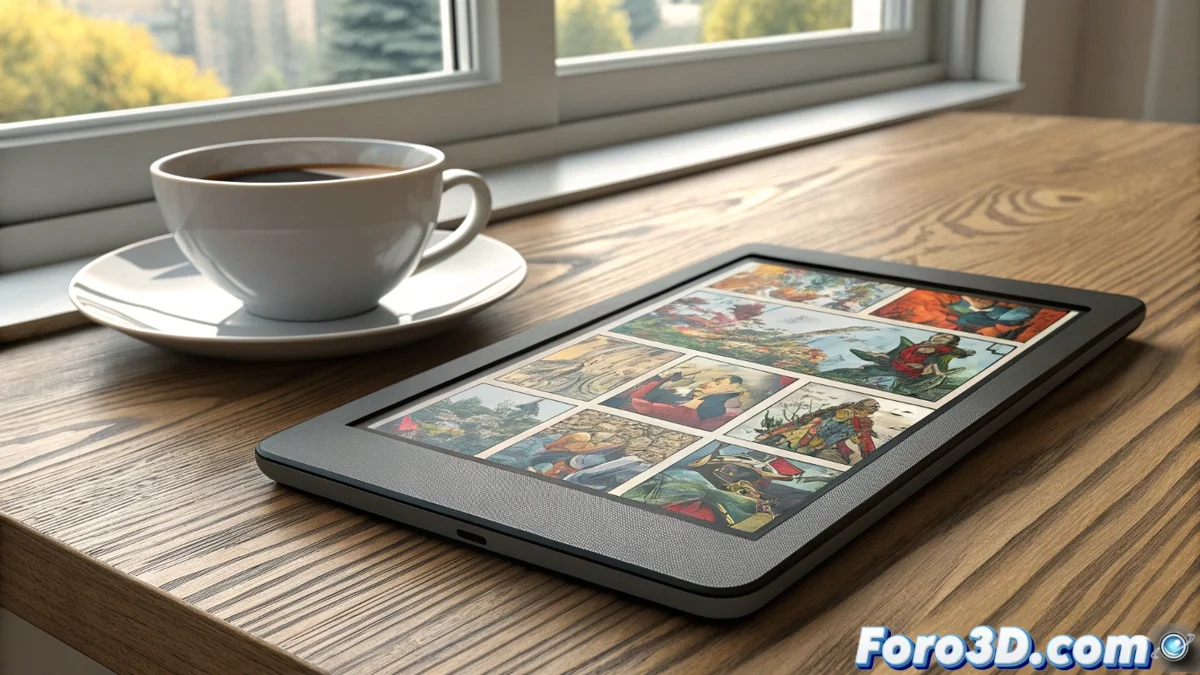
Kaleido 3: the new generation of color e-ink
The Kaleido 3 technology marks a step forward in the development of reflective displays. This system integrates color into the classic e-ink without giving up its main virtue: an almost zero power consumption. Its operation is based on superimposing a layer of filters over a monochromatic panel, a method that opens new possibilities for devices that prioritize autonomy and readability. 📘
The mechanism behind the color
The core of this technology is a traditional high-resolution e-ink panel in grayscale. On this substrate, a sheet with a matrix of RGB filters (red, green, and blue) is precisely placed. Each trio of these filters defines a full-color pixel. Ambient light reflects off the ink microparticles and passes through these filters, which act as a mosaic to mix tones.
Key features of the system:- Displays a palette of thousands of colors by controlling which ink particles move under each filter.
- Only requires energy to change the image, not to keep it fixed, extending autonomy to weeks.
- Improves saturation and contrast compared to previous versions, although its appearance resembles paper printing more than an emissive screen.
Its value lies in offering color where it matters to read for hours, avoid eye strain, and not depend on a power outlet.
Where it is applied and its limits
The main use of Kaleido 3 is found in high-end e-book readers. Color transforms how we perceive comics, technical manuals, magazines, or educational books. It is also ideal for static digital signage indoors, such as informational posters or price tags in stores, where its readability under direct sunlight and low maintenance are decisive advantages.
Contexts where it excels and its limitations:- Enriches reading of graphic material on e-readers without straining the eyes or the battery.
- Optimal for displaying fixed information in public places with high lighting.
- Not designed to reproduce fluid video or match the color gamut of LCD or OLED screens.
- The image refresh time is still slower than on conventional screens.
A unique visual experience
Viewing content on a Kaleido 3 screen evokes the sensation of flipping through an old sticker album, with less vibrant colors but a distinctive analog charm. This technology does not seek to replace emissive screens, but to occupy its own space where low consumption, prolonged readability, and color incorporation are the factors that really matter. It represents a pragmatic evolution for a type of visualization that is already part of our daily life. 🖋️