In the world of digital art, few names resonate as powerfully as José Molfino. Known for his innovative simulations and ability to combine art and technology, Molfino has once again surprised with a project that redefines the limits of digital creation. This time, he has created an impressive digital forest, full of life and details, using advanced instancing and rendering techniques. The result is a scene that seems taken from a dream, but built with cutting-edge tools.
Instancing: The Magic Behind Massive Worlds
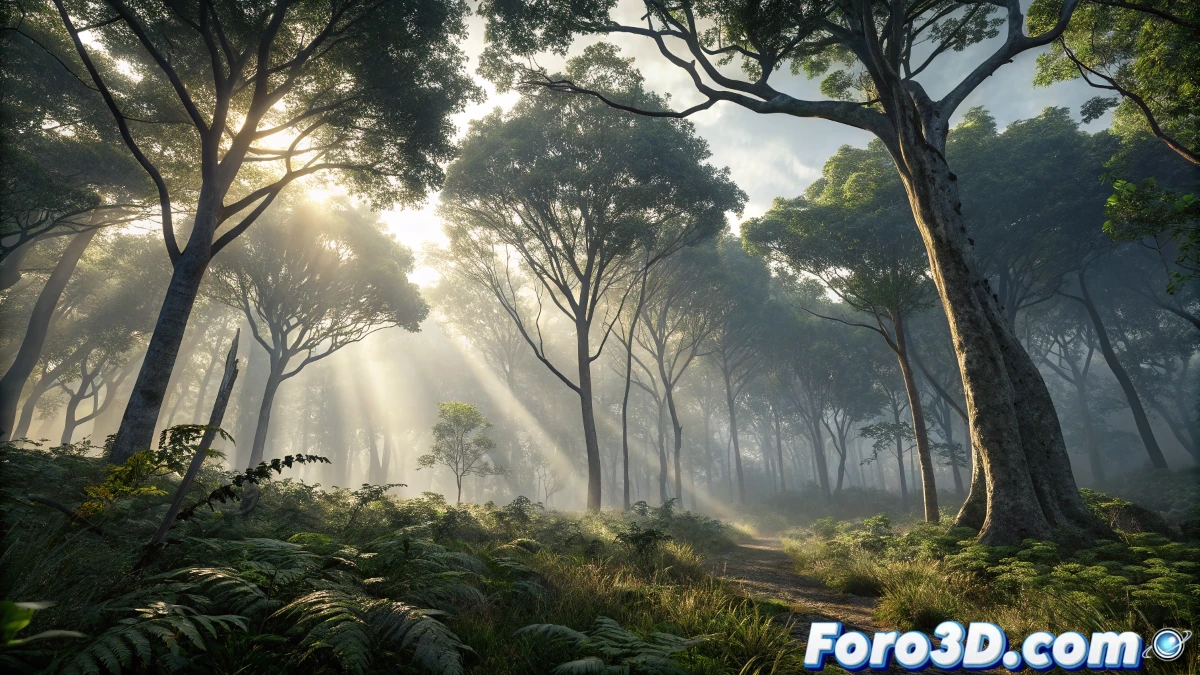
One of the pillars of this project is the instancing technique, which allows creating thousands of identical elements without overloading the system. In this case, Molfino has used this technique to generate a forest with 1,500 animated trees, each with 45,000 leaves, and 20,000 instanced plants. The key to this technique is that, although each element is unique in its position and movement, the system processes them efficiently, maintaining high performance without sacrificing visual quality.
"Instancing is like a magic trick for digital artists. It allows you to create massive worlds without your computer crashing."
Advantages of Instancing
- Efficiency: Reduces system workload.
- Scalability: Allows creating massive scenes with millions of elements.
- Quality: Maintains a high level of detail and realism.
Atmospheric Effects: Fog and Realism
To add a touch of realism to the scene, Molfino has incorporated fog and atmosphere effects using a VDB skybox. This component not only adds depth to the forest but also creates a mysterious and enveloping atmosphere. The fog disperses light naturally, giving the sensation that the forest is alive and in constant motion.
The Power of Fog in Digital Art
- Depth: Creates the illusion of distance and space.
- Atmosphere: Adds a touch of mystery and realism.
- Dynamism: Makes the scene seem more alive and organic.
Cutting-Edge Technology: Rendering and Hardware
Molfino's project stands out not only for its creativity but also for the use of top-tier technology. To render this scene, he has used the Redshift rendering engine, combined with the Houdini system and the Solaris compositing engine. All of this runs on a powerful NVIDIA GeForce RTX 4090, capable of processing each frame in approximately 2 minutes, which is impressive for a scene of this complexity.
Project Technical Details
- Rendering: Redshift and Houdini for maximum efficiency.
- Hardware: NVIDIA RTX 4090 with 10-11 GB of VRAM.
- Speed: 2 minutes per frame, a record time for complex scenes.
The Impact of Digital Art: Beyond the Limits
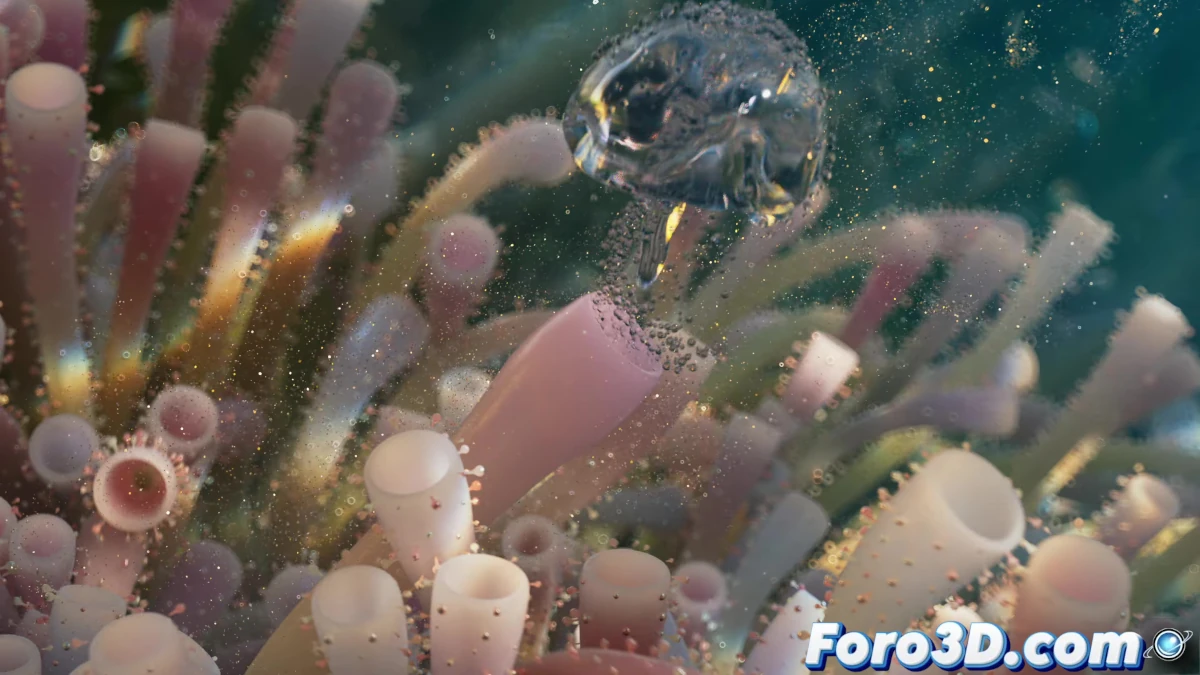
Molfino's work is not limited to forests. He has also created a short film inspired by real images of the ocean floor, using the same advanced tools. This project, made in Houdini, Redshift, and Solaris, demonstrates how digital art can transcend the traditional limits of animation, taking viewers to explore completely new worlds, both on the surface and in the ocean depths.
Exploring New Horizons
- Innovation: Use of advanced tools to create unique worlds.
- Inspiration: Projects that masterfully combine art and technology.
- Impact: Redefinition of what is possible in digital art.
"Digital art has no limits. Every project is an opportunity to explore new worlds and tell stories that were previously impossible."
With his talent and vision, José Molfino continues to inspire a new generation of digital artists, demonstrating that the combination of art and technology can create experiences that transcend the imaginable.