Jeff Lemire's Essex County Explores Memory and Solitude in Rural Canada
The work Essex County by author Jeff Lemire does not follow a straight path. This graphic trilogy intertwines three distinct stories set in the fields of Ontario, weaving a complex tapestry about what it means to belong to a family. An orphaned boy who finds refuge in superhero comics, two elderly brothers trapped in decades-old resentment, and a nurse tracing her lineage converge to paint a moving and universal portrait. 🏡
A Fragmented Narrative that Builds Meaning
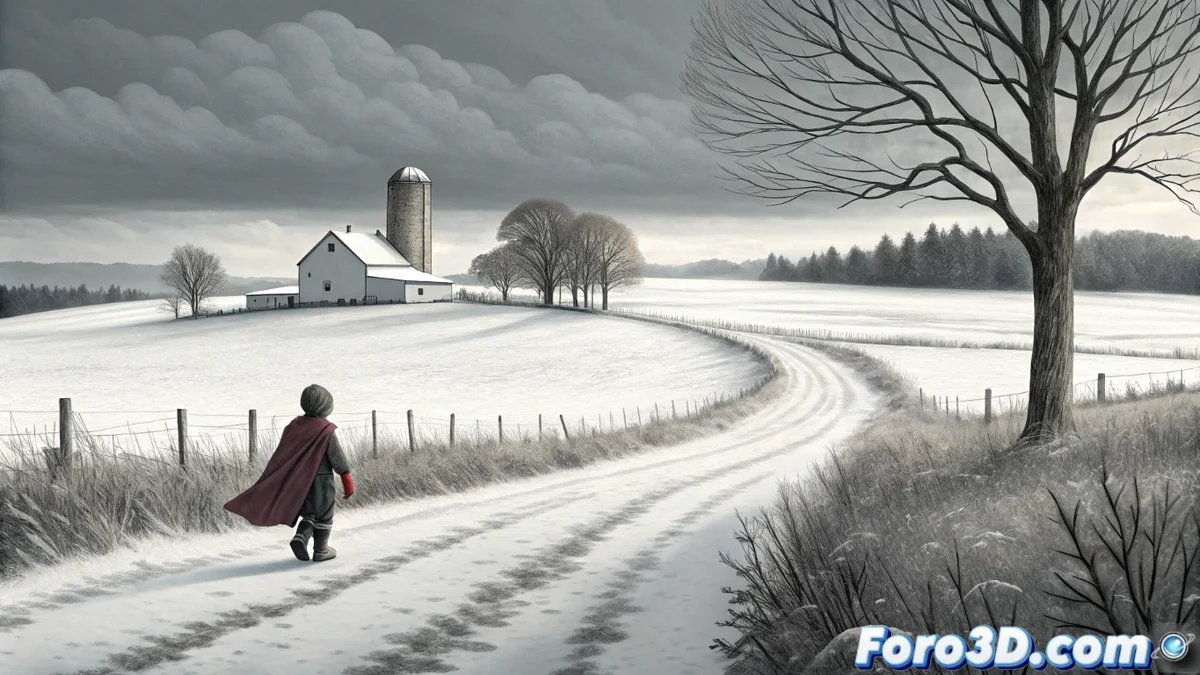
Lemire chooses not to tell a linear story. Instead, the power of Essex County lies in how it juxtaposes these seemingly disconnected fragments of life. The reader must piece them together, gradually discovering the invisible threads that connect the characters across time and space. The rural setting acts as a silent but omnipresent character, a space that isolates the protagonists in their pain, but also contains and defines their identity.
The three narrative pillars:- Lester: A boy who, after losing his mother, immerses himself in a world of superheroes to escape his loneliness.
- Lou and Vince: Two elderly brothers whose lives are marked by a tragic incident from the past that they have never been able to overcome.
- Anne: A nurse who returns to Essex County to investigate her family origins, seeking to fill a void in her personal history.
For those expecting constant action, here you will only find the sound of a hockey puck sliding across a frozen pond and the creak of the timbers in an old house, which can be just as intense.
The Emotional Stroke: A Graphic Style that Communicates Vulnerability
Lemire's visual style is fundamental to conveying the tone of the work. He uses an apparently rough stroke, with shaky lines and a minimalist approach to define figures and faces. This stylistic choice, far from being a flaw, intensifies the emotional expression of the characters, allowing their fragility and pain to be perceived immediately. The exclusive use of black and white, with ink washes that create deep shadows and earthy textures, establishes a melancholic and intimate atmosphere. The composition of the panels, often with wide white spaces, visually reflects the inner loneliness and the vastness of the surrounding landscape.
Key Elements of the Visual Language:- Expressive Lines: Loose and shaky strokes that prioritize emotion over photographic realism.
- Atmospheric Composition: Use of negative space and open shots to evoke loneliness and emptiness.
- Ink Textures: Washes and stains that give depth and a tactile sensation to the rural environment.
Echoes of the Past: Memory, Forgetting, and Recurring Symbols
The central themes of the trilogy revolve around how family identity is built and distorted. Lemire examines memory as something fragile and subjective; his characters not only remember, but also choose to forget, and must reconcile with both actions. The solitude they explore is not merely physical, but an emotional disconnection that can persist even within the family. To tie these ideas together, the author employs a system of powerful symbols—a hockey helmet, a farm silo, a sketchbook—that appear in the different stories, creating a web of meanings that spans generations and connects the destinies of all the characters. 📖