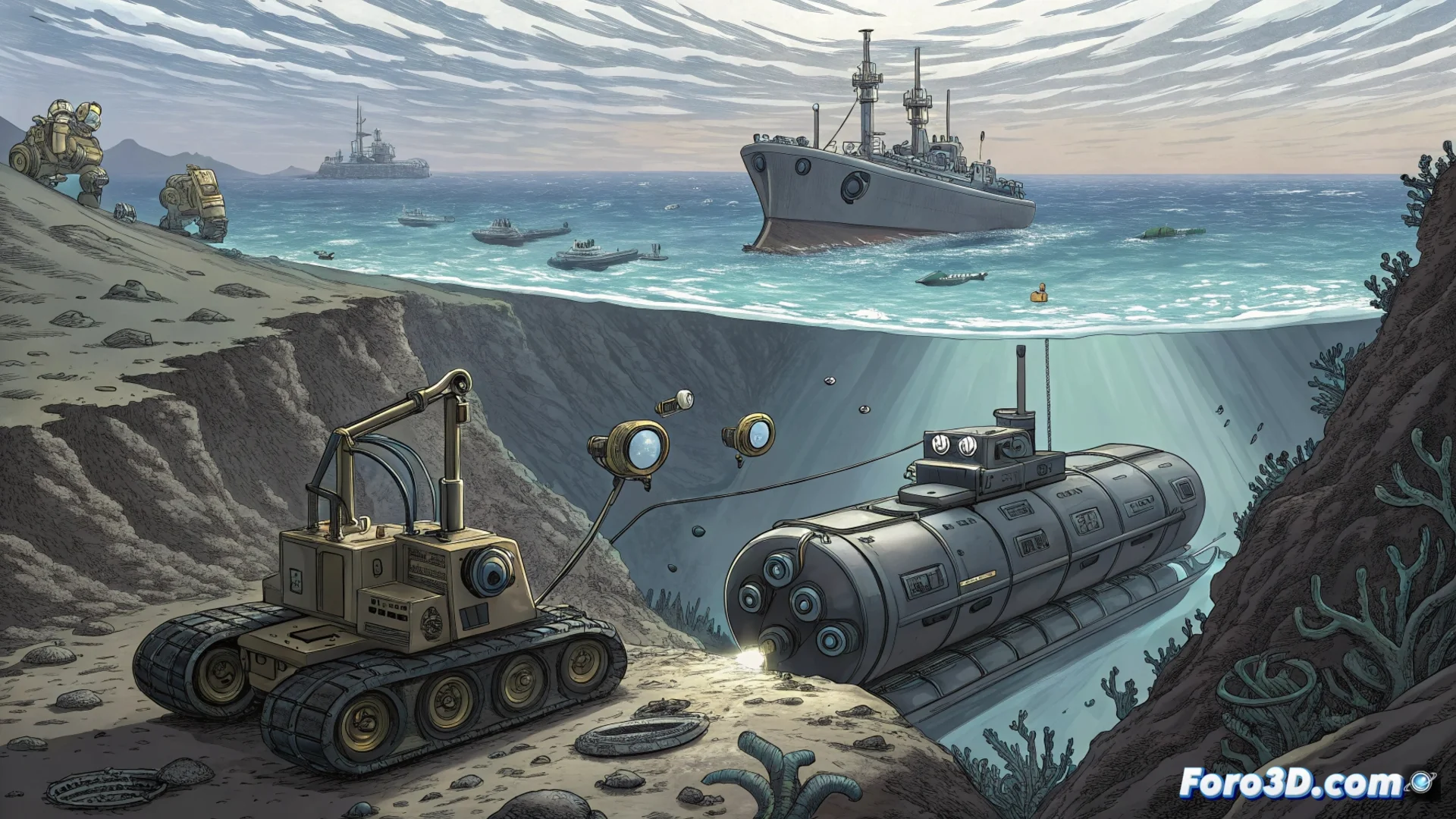
Japan Seeks Rare Earths in the Deep Ocean to Compete with China
The country has begun an operation to obtain critical minerals from the seabed, in areas exceeding six thousand meters in depth. This action responds to an urgent need: to reduce its almost total reliance on purchasing these materials from China, which controls most of the world market. These elements are indispensable for manufacturing high-tech products, from mobile phones to electric cars and defense systems. Finding alternative suppliers is now a security priority, and Japan is advancing with a technologically complex plan. 🌊
The Technology to Reach the Seafloor
The exploration focuses on a vast area of the Pacific, where nodules containing valuable metals like dysprosium and terbium exist. To reach them, scientific ships with high-capacity drilling equipment are used, designed to withstand enormous pressures. The challenge is not only technical but also ecological, because extracting resources from these sensitive habitats requires developing techniques that minimize environmental damage. Achieving this project could change the global landscape of strategic resources.
Key Details of the Mission:- Location: Polymetallic nodule-rich zone in the Pacific Ocean.
- Technology: Latest-generation drills operated from specialized vessels.
- Challenge: Operating under extreme pressures and protecting vulnerable marine ecosystems.
The deep ocean is shaping up as the next frontier for mining, with all the diplomatic tensions that entails.
Consequences for Industry and International Relations
If Japan succeeds in creating a functional supply chain from the ocean, it would reduce Chinese control and help stabilize the costs of these materials. Japanese companies in sectors like electronics and automotive, which need a steady supply flow, would secure their long-term operations. On a global scale, this pursuit increases rivalry for seabed resources, a region where several powers have already requested exploration permits.
Main Impacts:- Market: Possible stabilization of rare earth prices by breaking a monopoly.
- Industry: Greater supply security for advanced technology manufacturers.
- Geopolitics: Intensification of competition and possible disputes over rights in international waters.
The High Cost of Exploring the Abyss
For now, the only certainty is the immense expense required to drill to such depths, a cost that far exceeds that of any traditional mining operation. This investment reflects the strategic value that countries place on these minerals and their determination to secure their own sources, even in the planet's most hostile environments. 💎