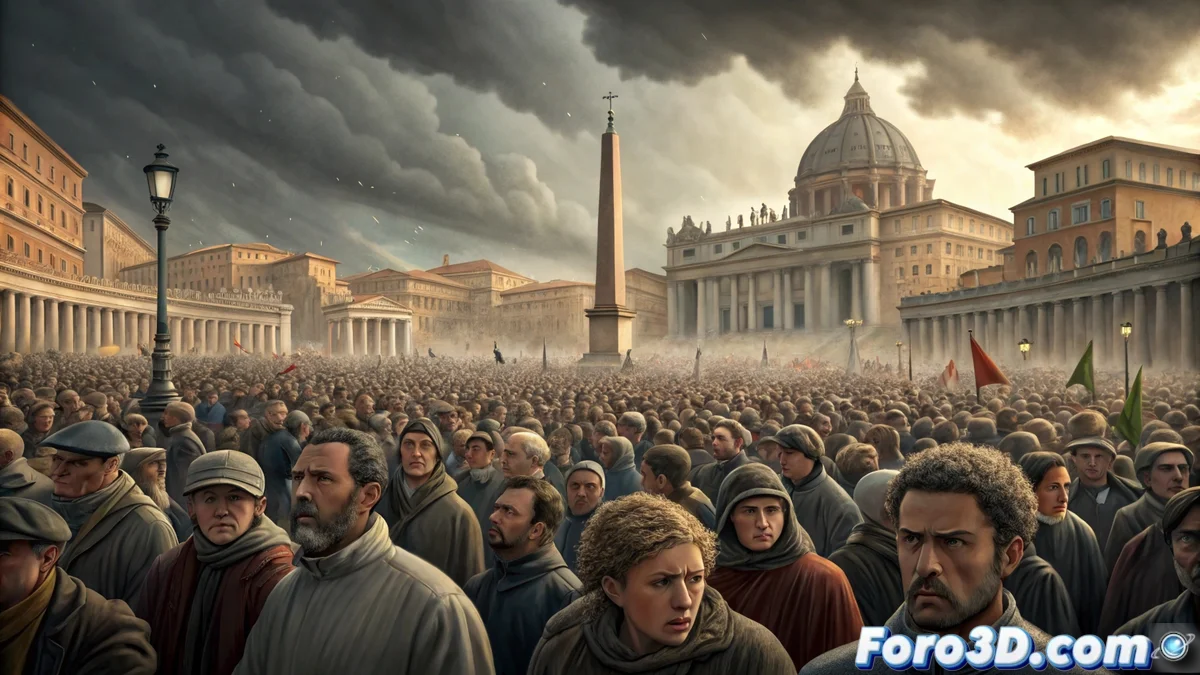
Italy Mobilizes: National Strike Challenges Meloni's Policies
The streets of Italy's major cities are the stage for massive social discontent. Citizens and unions unite in a general strike on December 12, 2025, to protest against the economic and social guidelines of the government led by Giorgia Meloni. This movement exerts direct citizen pressure on an executive that perceives the erosion of its political support base. 🏛️
The Opposition Finds Its Moment According to the Classic Strategy
In this context, the principles of Sun Tzu's The Art of War gain relevance. The work states that multiplying opportunities where there is a disparity of forces can lead to victory. A government that overlooks the demands of a substantial part of the population automatically generates points of tension that the opposition can exploit. Adapting their forces to these social fractures allows them to seek decisive strategic advantages.
Factors Defining the Current Situation:- Unitary Mobilization: Unions and various social sectors converge in a coordinated national protest.
- Concrete Demands: Protesters demand changes to the fiscal and welfare policies promoted by the executive.
- Perceptible Weakening: Meloni's ability to advance her agenda is compromised by the loss of street support.
“Opportunities multiplied by disparity of forces lead to victory.” - Sun Tzu, The Art of War.
Consequences of Prolonged Political Wear
The national strike and ongoing protests not only express disagreement; they are an active factor that alters the balance of power. A weakening government must negotiate from a less solid position, which often forces political concessions. If social pressure persists, it can accelerate profound changes in policy orientation or even in the composition of power.
Immediate and Medium-Term Effects:- Blocked Agenda: The ability to enact legislative reforms is significantly reduced.
- Forced Negotiation: The executive is compelled to dialogue and yield to some popular demands.
- Legitimacy Crisis: The disconnection between the government and the street questions the representativeness of its decisions.
Governing Means Listening, Not Just Deciding
This scenario underscores a fundamental lesson that some governments seem to forget: governing effectively requires perceiving the social pulse. The act of legislating without considering the voice of the population generates resistances that can become unsustainable. Perhaps the true art of politics lies in establishing effective listening channels, beyond the walls of offices, so that the message from the square can permeate state decisions. 🗣️