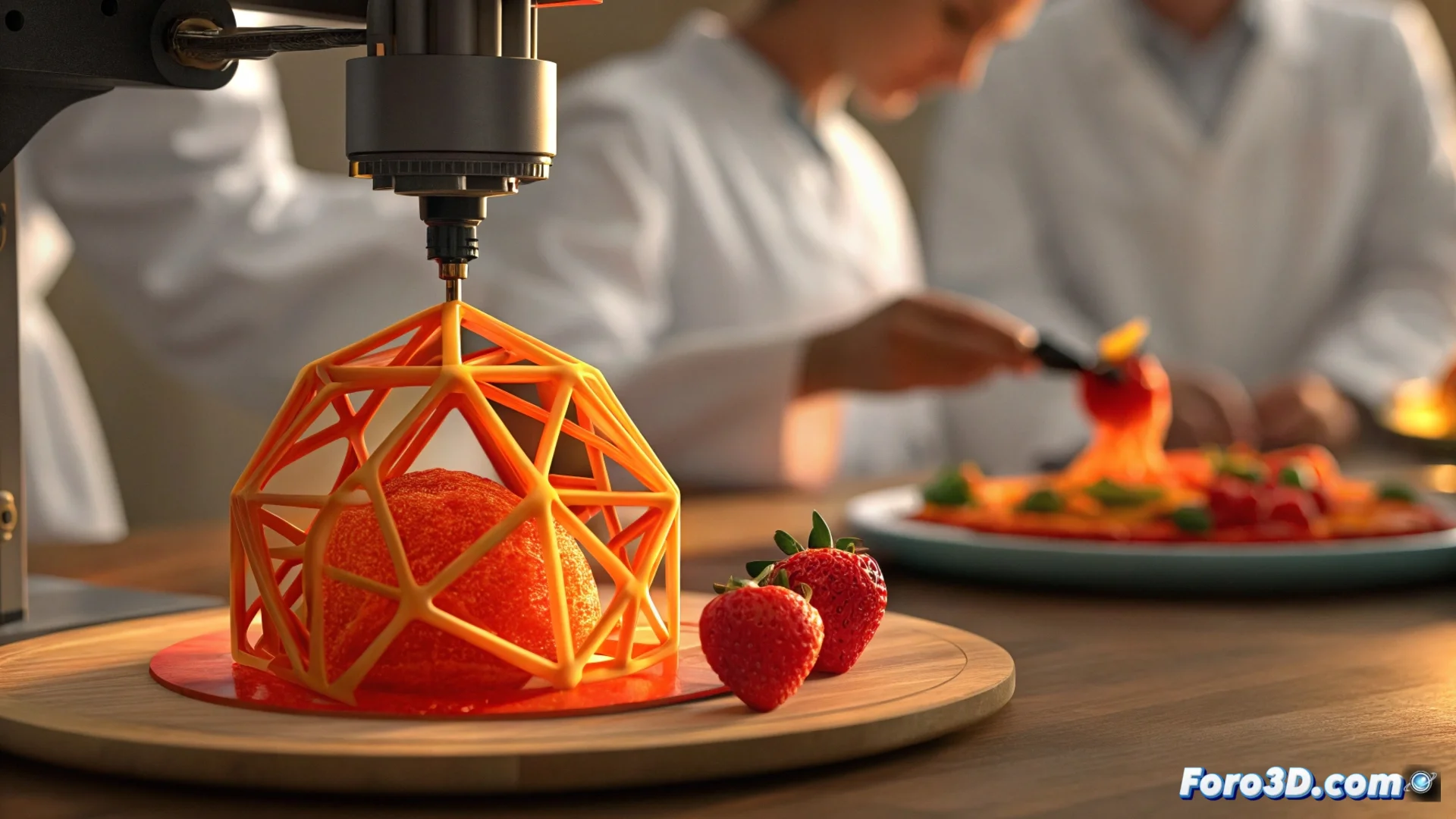
Italian Researchers Manufacture Food with 3D Printing and Vegetable Waste
Scientists in Italy have devised an innovative process that uses 3D printers to generate edible products. The key raw material is vegetable waste that the food industry usually discards, giving it a second life. This approach not only proposes a solution to waste, but also opens the door to designing foods with unique shapes and properties. 🍓
From Waste to Edible Bioink
The method is based on processing fruit remnants, such as peels or unused pulps, to obtain a bioink suitable for printing. This substance is enriched with live plant cells, which allows controlling parameters such as texture and nutritional profile of the final result. The technique fuses bio-printing concepts with the principles of the circular economy, where waste is transformed into a valuable resource.
Key advantages of the process:- Reduce waste: Utilizes agricultural byproducts that would otherwise be lost.
- Customize food: Allows designing specific textures and shapes, ideal for special dietary needs.
- Explore nutrition: Facilitates experimenting with and adjusting nutrient content in the printed product.
This system turns leftovers into the starting point for creating something new and nutritious, closing the resource cycle.
Practical Applications and Future Prospects
The possibilities of this technology are vast. It can be used to manufacture foods with modified textures, greatly helpful for people with chewing or swallowing difficulties. In the field of avant-garde gastronomy, chefs could experiment with flavors and designs impossible to achieve with traditional methods. In the long term, the system could be used to produce provisions in isolated or extreme environments, such as long-duration space missions. 🚀
Sectors that could benefit:- Health and clinical nutrition: Creation of personalized diets with safe textures.
- High cuisine: Development of innovative presentations and culinary experiences.
- Logistics and exploration: Production of compact and nutritious food for remote bases.
The Future of Food Lies in Design
The researchers continue working to optimize the bioink formulas and scale the process to make it viable on a larger volume. This advance suggests a future where designing and producing food will be creative and intentional acts, far from the traditional concept. The idea of not playing with food could become obsolete when technology makes designing it a fundamental part of its creation. The potential to make food production more sustainable and adaptable is considerable.