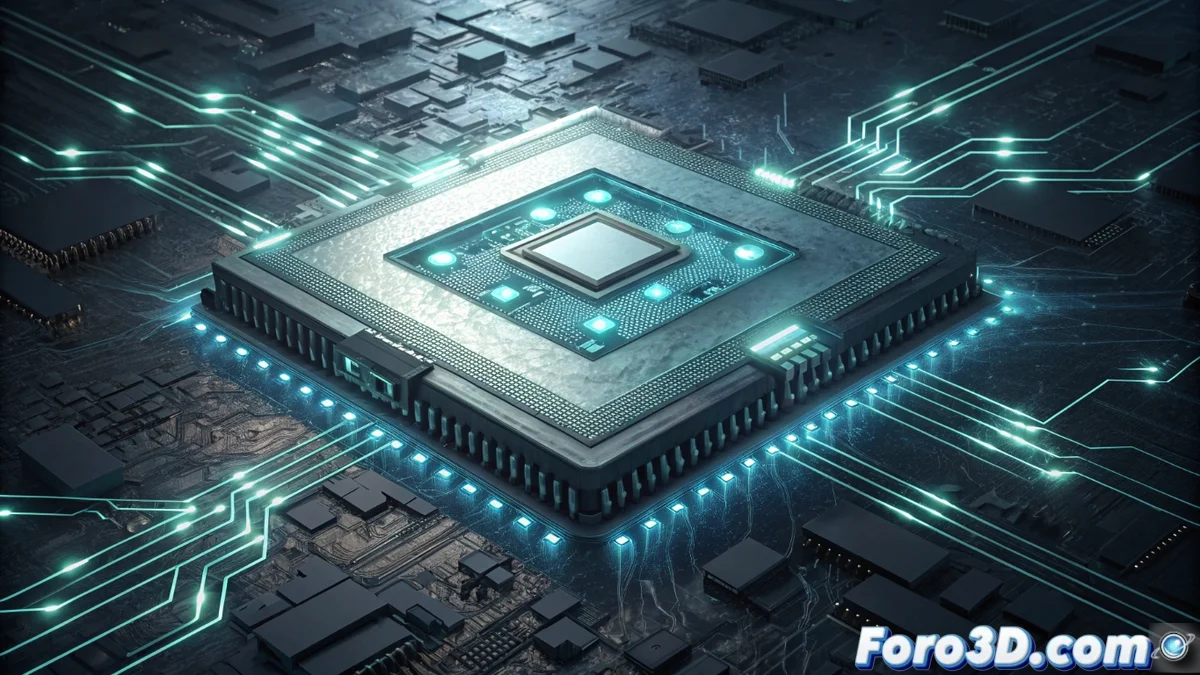
RISC-V: The Open-Source Hardware Revolution
In the processor design landscape, RISC-V emerges as a disruptive force by being a fully open instruction set architecture (ISA). Unlike dominant and closed options like x86 or ARM, this initiative frees engineers and companies from costly and restrictive licenses, opening a new paradigm of collaborative innovation. 🚀
Fundamental Advantages of the Open Architecture
The essence of RISC-V lies in its inherent simplicity and modular design. This philosophy allows unprecedented scalability, adapting from tiny microcontrollers to powerful supercomputing units. By eliminating intellectual property barriers, production costs are drastically reduced, and the development cycle is accelerated, fostering global collaboration that transcends borders.
Key Benefits for the Industry:- Design Freedom: Allows creating custom chips without depending on a single supplier, driving specialization.
- Cost Reduction: Eliminates license royalties, a crucial factor for startups and research projects.
- Security and Transparency: Being open, its design can be audited by anyone, promoting more reliable systems.
RISC-V is like the guest who arrives at the hardware party with open doors and the rules of the game for everyone, while others keep their secrets under lock and key.
Fields of Application and Future Impact
The versatility of RISC-V materializes in a surprising range of applications. It is the core of millions of embedded systems in the Internet of Things (IoT), powers accelerators for artificial intelligence and machine learning, and is projected as a serious alternative in high-performance computing (HPC). This democratizing ecosystem allows emerging companies to compete in a field that was previously reserved for giants with large budgets.
Growing Areas of Implementation:- Consumer Electronics and IoT: Wearable devices, smart sensors, and gadgets with extreme energy efficiency requirements.
- Specialized Computing: Accelerators for AI, signal processing, and cryptography, where customization is key.
- Data Infrastructure: Developments in servers and storage, seeking greater efficiency and supply chain control.
A New Competitor in the Ecosystem
Although RISC-V is relatively new compared to established architectures, its growth is exponential. It represents more than a technical alternative; it is a movement toward technological sovereignty and collective innovation. By offering a flexible and free base, it is redefining how hardware is conceived, developed, and commercialized, laying the foundations for a next generation of more diverse, efficient, and accessible devices. Its arrival marks a turning point in computing history. 💡