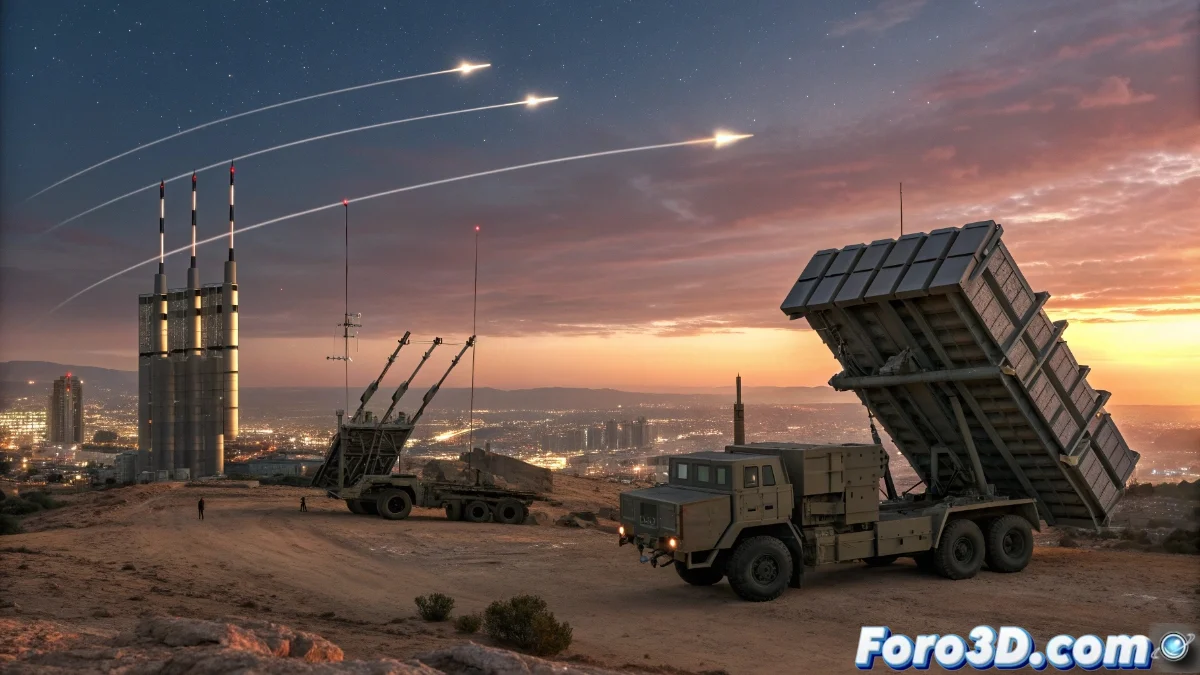
The Iron Dome System: Israeli Air Defense
Developed jointly by Rafael Advanced Defense Systems and Israel Aerospace Industries, the Iron Dome represents one of the world's most advanced defensive systems 🛡️. Specialized in neutralizing short-range rockets and artillery projectiles, this system operates through a sophisticated combination of technologies that allow it to discriminate between real threats and false targets.
System Components and Operation
The Iron Dome architecture integrates three fundamental elements that work in perfect synchronization. The EL/M-2084 radar detects and tracks incoming threats, while the battle management unit processes the data and calculates interception trajectories in real time. The missile launchers are activated selectively only against projectiles that threaten populated areas, optimizing defensive resources.
Main system elements:- Detection and tracking radar with 360-degree capability
- Command and control center with predictive algorithms
- Mobile launchers with Tamir missiles ready to fire
The effectiveness of Iron Dome lies in its ability to determine which projectiles pose a real danger and which will fall in unpopulated areas
Operational Configuration and Deployment
Each missile launcher has compact dimensions of approximately 3 meters in height by 2 meters in width, containing 20 Tamir missiles in hermetically sealed containers. These units are fully transportable by trucks and can operate autonomously once integrated into the defensive network.
Deployment characteristics:- Complete battery with 3-4 launchers, radar, and control center
- Defensive coverage of approximately 150 km² per battery
- Capacity to protect extensive urban areas simultaneously
Tamir Interceptor Missile
The Tamir missile, with its 3 meters in length and 90 kilograms in weight, incorporates cutting-edge technology to ensure precise interceptions. Equipped with maneuvering fins for high agility and a proximity warhead, it uses electro-optical sensors and passive radar for terminal guidance, allowing it to neutralize targets at distances between 4 and 70 kilometers.
Effectiveness and Strategic Considerations
The solid fuel propulsion system provides the necessary acceleration to reach Qassam rockets in less than 20 seconds from launch. The fragmentation explosion destroys the target without the need for direct impact, although its implementation generates debates about the cost-benefit ratio, given that each interception costs approximately $50,000 compared to handmade rockets costing $500 💥.