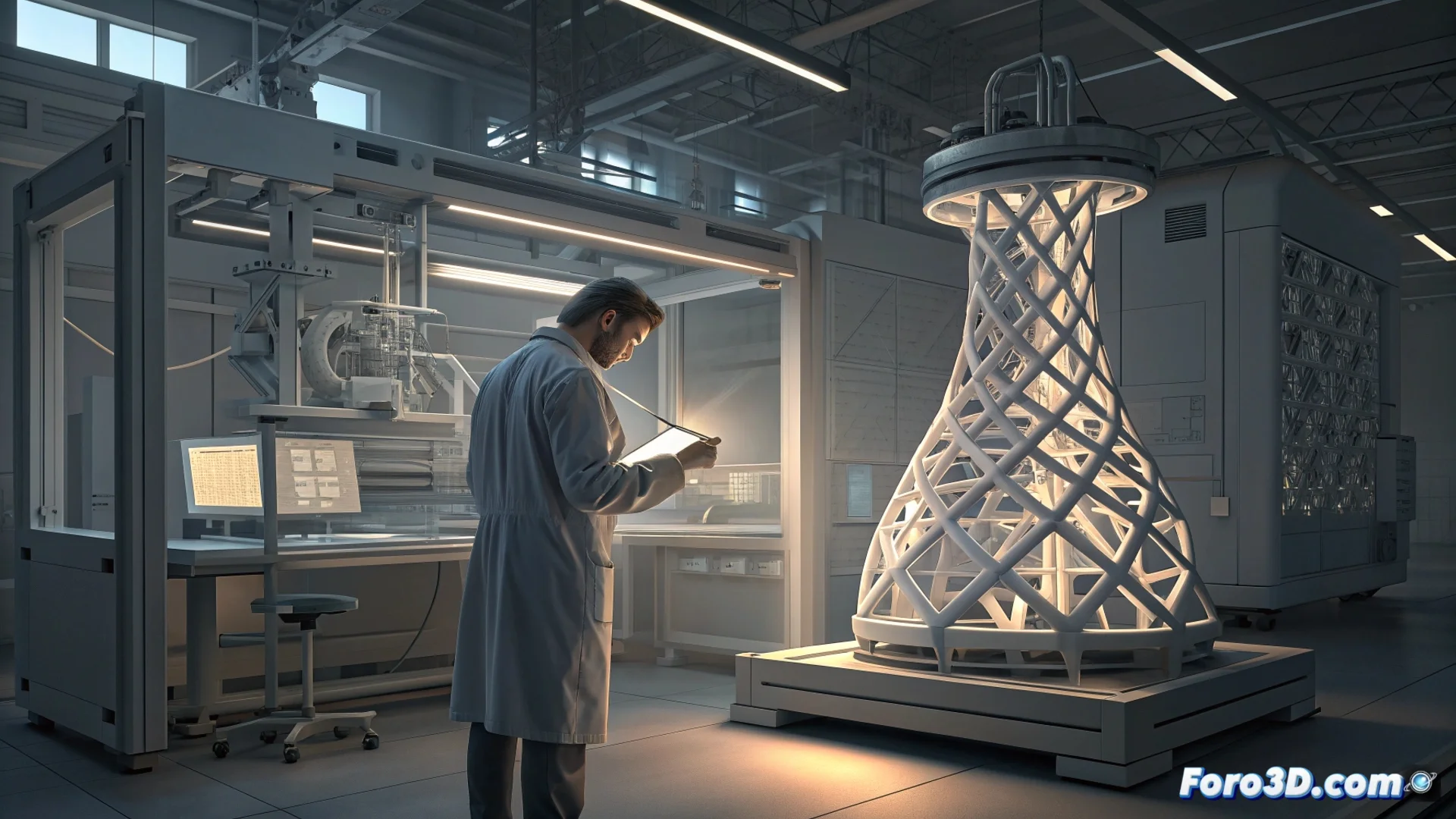
IREC Launches Merce Lab to Manufacture Hydrogen Technology with Ceramic 3D Printing
The Catalan Institute for Energy Research (IREC) has activated a new pilot facility called Merce Lab. This space is dedicated to using ceramic additive manufacturing techniques to produce key elements in hydrogen-related devices. The initiative is mainly funded by H2B2 under the European IPCEI program (Important Projects of Common European Interest) and brings together several companies and scientific institutions. 🚀
Additive Manufacturing Enables Complex Geometries
This method allows the generation of ceramic parts with porous structures and intricate designs that conventional manufacturing processes cannot achieve. These geometries are perfect for the internal components of electrolyzers and fuel cells, where it is crucial to maximize the area where chemical reactions occur. By adopting 3D printing, the laboratory can prototype and manufacture these parts more quickly and adaptably, significantly reducing development timelines for new devices.
Key Advantages of Ceramic 3D Printing in Merce Lab:- Ability to produce complex internal porous shapes that optimize the reaction surface.
- Greater speed and flexibility in prototyping, shortening technology development cycles.
- Possibility to explore innovative designs that were previously technically unfeasible.
The real challenge will be for these parts to withstand the pressure of making the energy transition happen on time.
Objective: Make Green Hydrogen Viable on a Large Scale
Merce Lab focuses its work on researching and perfecting both ceramic materials and printing parameters. The ultimate goal is to make the final devices more efficient, have a longer lifespan, and be more cost-effective to produce. By improving performance and reducing the cost of manufacturing these components, the project directly drives the feasibility of generating hydrogen through electrolysis with renewable energies on a large scale.
Expected Impacts of the Project:- Contribute to decarbonizing hard-to-electrify industrial and transportation sectors directly.
- Accelerate the commercial availability of key technologies for the hydrogen economy.
- Create a collaboration ecosystem between research and industry to innovate in materials.
A Step Toward the Energy Transition
This initiative represents a concrete advance in the race to develop clean energy alternatives. Although the idea of printing ceramics for hydrogen applications may seem advanced, the effort is directed at solving very specific engineering problems. The success of Merce Lab could be an important catalyst for green hydrogen to stop being a promise and become a massive industrial reality. 🔋