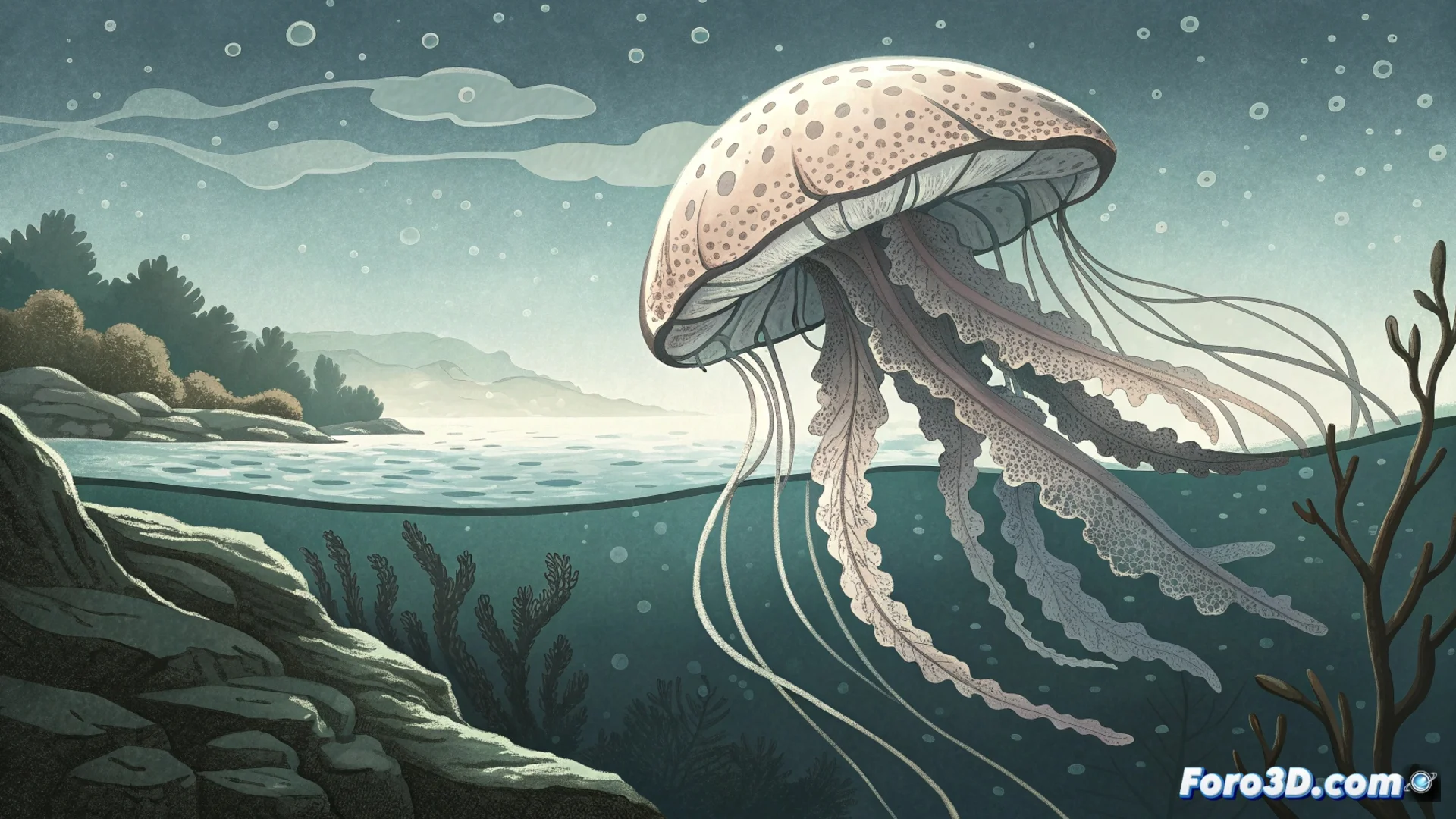
Inverted Jellyfish Sleep and Need to Recover Lost Sleep
Science has just revealed a fascinating discovery: inverted jellyfish (Cassiopea) experience a sleep cycle. What is extraordinary is that these beings completely lack a centralized brain. This discovery rethinks what we know about the universal need to rest 🧠.
Experimental Evidence of Rest in Jellyfish
To verify that it was not simply inactivity, scientists designed specific tests. They observed that at night, the frequency of their rhythmic pulsations –used for feeding– decreased noticeably. Additionally, when disturbing their nighttime environment, their reaction and reorientation time was significantly longer than during the day, showing a higher response threshold typical of sleep.
Key Indicators of Sleep State:- Reduction in Activity: Clear decrease in body pulsations at night.
- Slow Response: They react more slowly to external stimuli during the rest period.
- Sleep Rebound: If deprived of this state, the next day they show an imperative need to recover it.
The finding suggests that the need to sleep is a very ancient biological function that evolved before the centralized brain.
Evolutionary Implications of the Discovery
This behavior in an animal with a simple nervous system indicates that the need to sleep is ancestral. It probably arose in the early stages of complex animal life. Studying these mechanisms in jellyfish helps understand the bases of sleep that are conserved in more complex species, including humans.
Points Opened by This Research:- Origin of Sleep: What is the ultimate purpose of sleeping in the tree of life?
- Conserved Mechanisms: Allows investigation of fundamental sleep processes without the complexity of a brain.
- Biological Universality: Reinforces the idea that sleeping is not an invention of brain-bearing animals, but an essential function.
A Shared Biological Legacy
Morning laziness and the need to recover sleep are not exclusive to humans. They appear to be an evolutionary legacy that we share with creatures that don't even have a brain to complain. This study on Cassiopea jellyfish not only expands our knowledge of sleep but also connects us to a deeply rooted biological history 🌊.