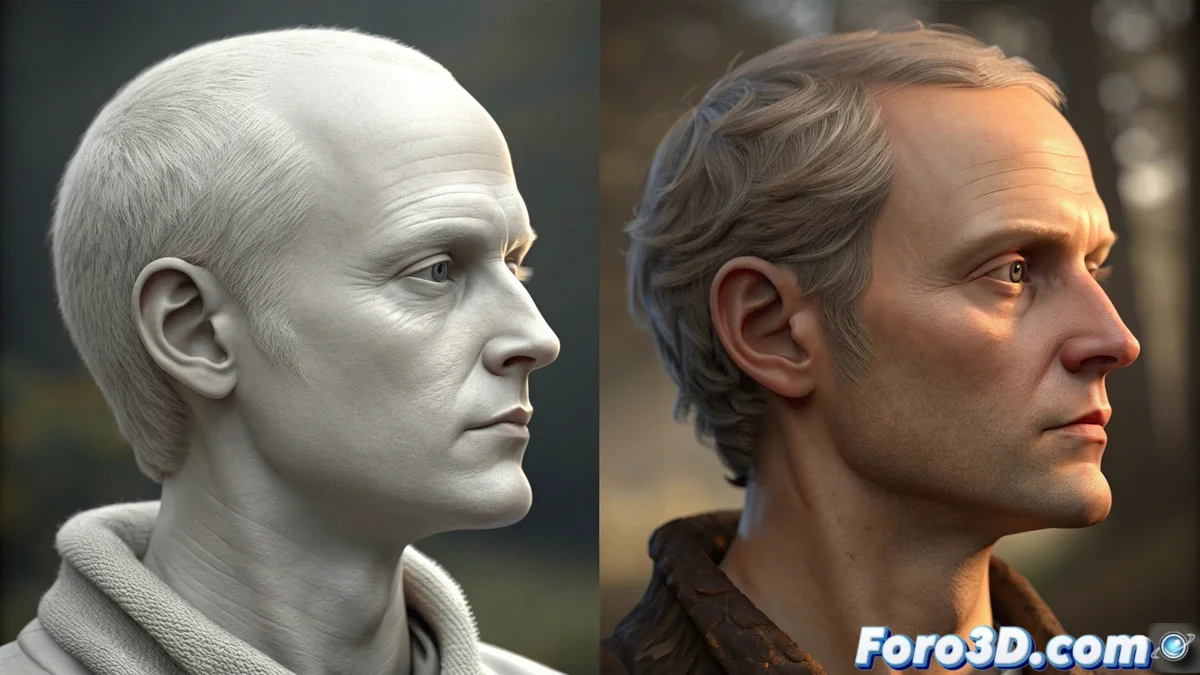
Internal Rendering in ZBrush vs 3D Coat: Work Philosophies
Two essential tools for digital sculpting, ZBrush and 3D Coat, include systems for visualizing models directly in their environment. However, their way of integrating rendering reflects opposing work philosophies, from immediacy to specialized control 🎨.
ZBrush BPR: Render Without Leaving the Canvas
ZBrush's BPR (Best Preview Render) operates natively within the space where sculpting takes place. This method allows adjusting lights, materials, and shadows interactively, without changing context or window. The system calculates effects like subsurface scattering and ambient occlusion through passes. It relies on a set of directional lights that the artist positions to evaluate volumes and details instantly.
Key Features of BPR Render:- Operates directly on the sculpting canvas, without separate modules.
- Processes render passes for effects like shadows and SSS quickly.
- Uses a simple directional lights system to control lighting.
In ZBrush, the BPR render serves to see the volume at the moment; it's an evaluation tool more than one for final presentation.
3D Coat: The Dedicated Render Room
3D Coat adopts a modular approach by separating the rendering phase into an independent space called the Render Room. This room is specifically designed to configure and process lighting with greater depth. It offers parameters and controls that resemble a traditional render engine more closely, allowing management of HDR environments, area lights, and global light properties.
Advantages of the Render Room in 3D Coat:- Specialized environment with advanced controls for global lighting and reflections.
- Support for HDR maps and area lights setup for greater realism.
- Workflow that can prioritize the search for perfect lighting.
Choice According to Workflow
The decision between one system and the other depends on the goal. ZBrush is ideal for those who need to verify sculpture details with quick lighting and continue sculpting. 3D Coat appeals to those seeking to develop a more elaborate presentation within the same software, even if it requires more setup time. Understanding this difference is key to optimizing any digital artist's pipeline 🛠️.