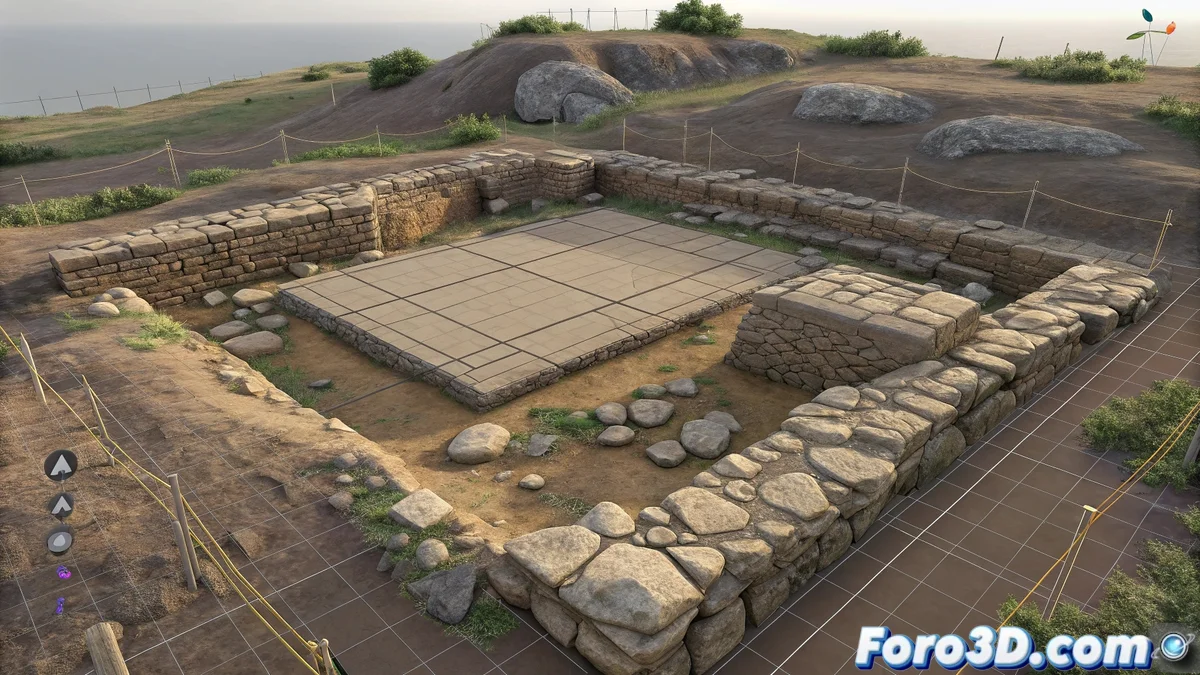
Deciphering Archaeological Mysteries through Unity 🗿
A team of archaeologists in Scotland has unearthed runes with symbols that do not match any known Viking or Celtic script, baffling experts. This mysterious discovery finds in Unity a perfect platform for its interactive recreation, allowing not only to visualize the site but to experience it in real time. From constructing the Scottish terrain to inserting eroded runes, Unity transforms the archaeological news into an immersive digital adventure.
Construction of Scottish Terrain with Unity Terrain
The process begins using Unity's Terrain system to sculpt a believable Scottish landscape. Importing heightmaps from Scottish regions or manually sculpting gentle hills and valleys establishes the topographic base. PBR textures of grass, soil, and exposed rock are applied in layers, using the texturing brush to vary densities and create natural transitions. Low vegetation assets—ferns, shrubs, and grasses—are distributed with the integrated vegetation system, adding authentic local flora to the environment. 🏴
Importation and Materials for Mysterious Runes
The runestones are modeled in external software like Blender or Maya, focusing on irregular shapes and eroded surfaces that suggest antiquity. Once imported into Unity, PBR materials are applied with normal maps that accentuate cracks and imperfections, and roughness maps that vary between time-polished areas and rough zones. The unknown symbols are carved into the geometry or added via displacement maps, ensuring they capture light dramatically under directional lighting.
A digital rune must look like it has waited centuries to be found; every shadow tells its patience.
Natural Lighting and Atmospheric Effects
Unity's Global Illumination system is configured to emulate the diffuse light characteristic of Scotland, with dynamic clouds casting moving shadows over the site. A soft Volumetric Light Fog is added to suggest ambient humidity and create visible light rays between trees and hills. Suspended dust particles, animated with simple shaders, add subtle movement to the air, reinforcing the sensation of a quiet but living place full of history.
Interactivity and Immersive Exploration
Unity's true strength lies in making the scene explorable:
- First-person controller to walk through the site
- Trigger zones that activate information when approaching runes
- Camera focus on symbols upon interaction
- Ambient sounds of wind and birds for auditory immersion
These features transform a static model into an educational and narrative experience.
Optimization for a Smooth Experience
To maintain high framerates during exploration, techniques such as the following are implemented:
- LOD groups for rune models and vegetation
- Occlusion culling to avoid rendering elements out of view
- Texture atlasing to reduce draw calls
- Light baking for critical static lighting
This ensures the experience runs smoothly even on modest hardware.
While archaeologists rack their brains deciphering millennial symbols, we rack ours with UV mapping so textures don't stretch on the stones. In the end, everyone has their runes to decipher—experts the ancient ones, us the digital ones. And if the real-time render looks good, maybe even the druids would approve. 😅