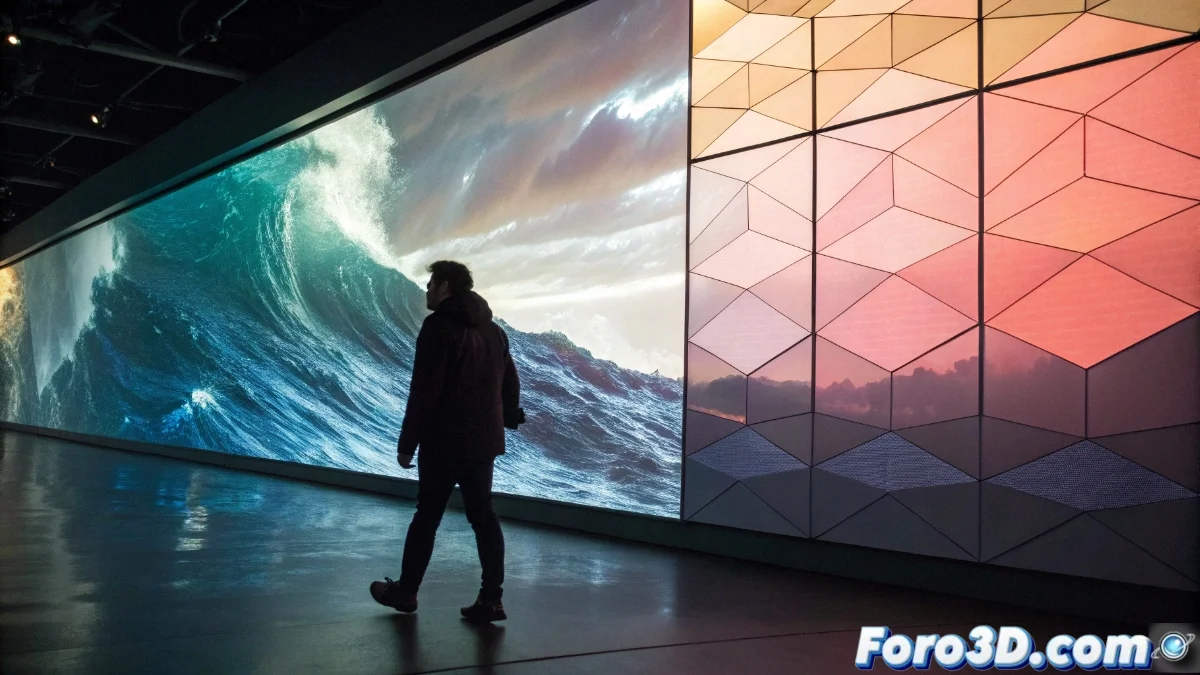
Interactive Materials: When Surfaces Come to Life 🎨
Interactive materials represent a revolution in the design of sensory experiences, where surfaces react dynamically to the proximity and gestures of the observer. These systems use eye-tracking and motion recognition technologies to instantly transform patterns, tones, and surface structures, establishing a constant dialogue between the user and the visual object. The implementation fuses depth sensors with advanced rendering engines that process visual data and produce immediate alterations in material appearance. ✨
Technologies Driving Dynamic Interaction
The technical infrastructure of these materials incorporates multiple specialized elements. Computer vision systems examine the user's location and perspective using infrared cameras or LiDAR sensors, while programmable shaders on GPUs compute surface deformations based on tracking data. Frameworks like OpenCV or machine learning libraries enable the interpretation of elaborate gestures and their conversion into adjustments of material properties such as reflectivity, roughness, or opacity. This processing layer interconnects with rendering engines like Unity or Unreal Engine through specific APIs that synchronize visual input with graphical output. 🚀
Key Technological Components:- Depth sensors and infrared cameras to capture movement and position
- GPU shaders that calculate surface modifications in milliseconds
- Machine learning frameworks to decode complex user gestures
The magic happens when the material interprets your nose as the visual epicenter and transforms the entire surface into a design that evokes an alpine topographic map.
Applications in Real Environments and Technical Challenges
These materials are deployed in interactive museums, experiential retail spaces, and artistic installations that seek to generate emotional connection through surfaces that appear to have a life of their own. Developers face challenges such as visual response latency, which must remain below 100 ms to achieve convincing immersion, and meticulous calibration of tracking systems for various lighting conditions and interaction distances. Computational resource optimization is vital, as real-time calculations of global illumination and dynamic reflections require considerable graphical processing power. 💻
Main Development Challenges:- Reducing latency below 100 ms for believable responses
- Precise calibration with lighting changes and variable distances
- Efficient resource management for real-time global illumination calculations
The Future of Material Interaction
Interactive materials continue to evolve toward more organic and responsive experiences, where the boundary between digital and physical progressively blurs. Overcoming current technical challenges will enable more expansive applications in retail, education, and entertainment, transforming any surface into a dynamic canvas that responds to our presence and gestures. The potential of these systems lies in their ability to create unique visual narratives that adapt in real-time to each human interaction. 🌟