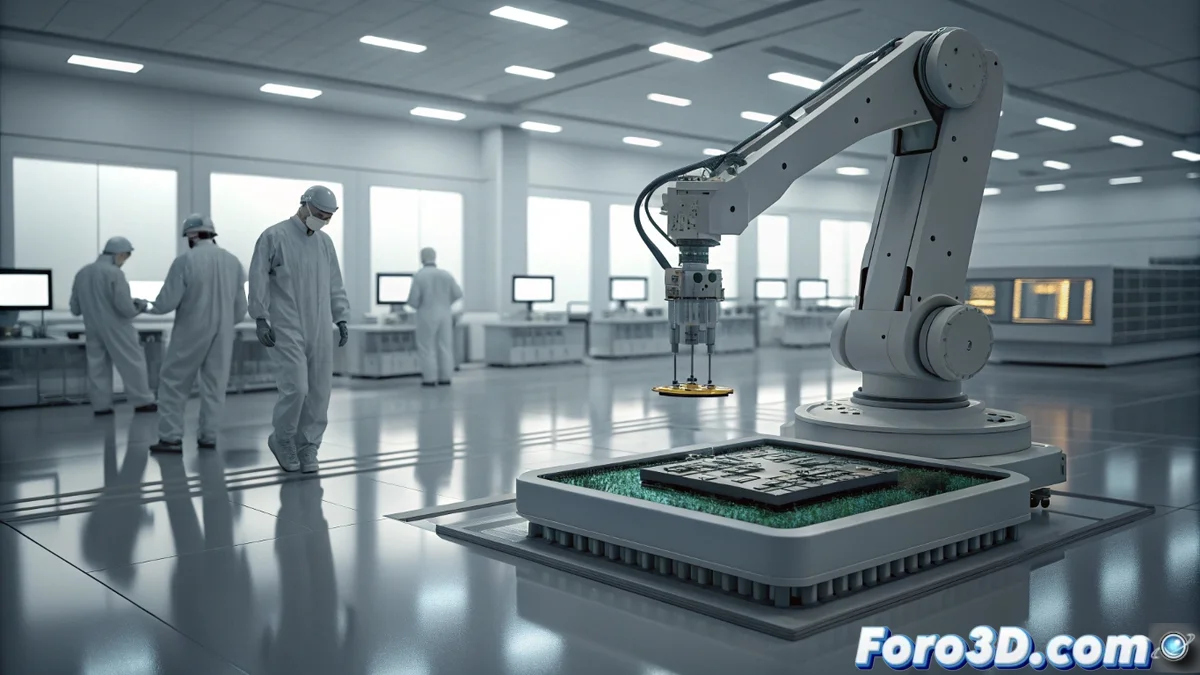
Intel Reconfigures Its Global Processor Testing and Assembly Network
The geography of semiconductor manufacturing is constantly evolving, and giants like Intel are no strangers to this tectonic shift. Traditionally, the company has distributed its critical testing and final assembly operations (known as backend) across several countries, creating an interdependent network. However, the winds of change are blowing strongly, driving a strategic reconfiguration that redefines where and how the final touches are given to its CPUs before reaching users. 🌍
A Global Board in Motion
Intel's production strategy has never been a static map. Its network, which historically included key plants in Malaysia, China, Costa Rica, and the Philippines, is undergoing significant adjustments. These changes are a direct response to pressures from the global supply chain, the pursuit of operational efficiency, and the need to maintain unparalleled quality standards in a fiercely competitive market. Cost and capacity optimization is the engine of this transformation.
Key Points of the Historic Restructuring:- Closure in the Philippines: In 2008, Intel made the strategic decision to cease its testing and assembly operations in the Philippines, relocating these capabilities to other locations in its network for better consolidation.
- Adjustment in Costa Rica: The facility in Costa Rica, another important pillar, faced a period of interruption in its activities. Although it later resumed operations, this episode underscores the fluid and sometimes volatile nature of global production planning.
- Consolidation of Capabilities: These movements are not random; they are part of an ongoing plan to rationalize operations, concentrating expertise and technology in larger-scale, higher-potential centers.
In the complex chess game of chip manufacturing, every move of a major piece redefines the entire supply chain board.
Malaysia: The New Investment Epicenter
While some locations see their role reduced, others emerge strongly. Intel's current focus has clearly settled on Malaysia. The company has announced a massive investment of 208 million dollars aimed at substantially expanding its operations base in the country. This financial bet is not symbolic; it is a testament to Intel's intention to establish Malaysia as its main nerve center for backend operations.
Implications of the Expansion in Malaysia:- Centralization of Expertise: Turning Malaysia into a high-capacity hub allows concentrating specialized engineering, quality control, and logistics, gaining efficiency and speed.
- Scalability for the Future: The investment lays the groundwork to handle higher production volumes and more advanced processor technologies, ensuring responsiveness to market demand.
- Geostrategic Advantage: Strengthening an already established presence in Southeast Asia, a crucial region in the semiconductor ecosystem, provides stability and logistical advantages.
The Future of Global Assembly
Intel's restructuring is a microcosm of broader trends in the global technology industry. Some countries win rounds of multi-million dollar investment and consolidate as indispensable players, while others must reassess their position and incentive policies to not be left out of the game. For Intel, this reconfiguration is not just about saving costs; it is a crucial move to strengthen its resilience, streamline its value chain, and ensure that the final journey of each processor, from silicon to system, is as efficient and reliable as possible. The game for supremacy in manufacturing continues, and the board has just been reordered. ♟️