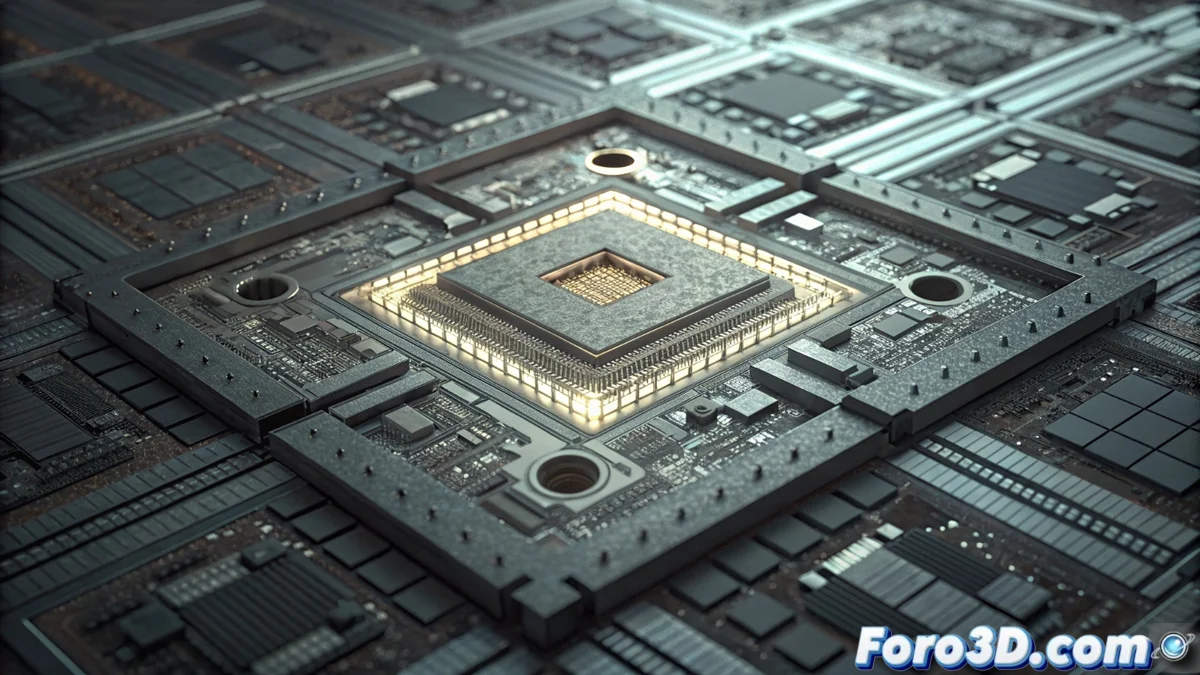
Intel Presents its Data Center GPU Max GPU with Ponte Vecchio Architecture
Intel has officially launched its Data Center GPU Max series, a product developed under the code name Ponte Vecchio. This launch marks the company's formal entry to compete in the data center GPU and supercomputing segment, a domain where NVIDIA and AMD have established a solid position. 🚀
An Innovative Modular Design
The Ponte Vecchio architecture stands out for using a chiplets configuration, which Intel calls tiles. This method allows assembling different silicon blocks, manufactured in different technological processes, into a single package. The goal is to optimize performance and energy efficiency by integrating specialized components for specific tasks.
Key Design Features:- Combines multiple tiles into a single package for superior performance.
- Prioritizes 64-bit floating-point (FP64) operations, essential for complex scientific simulations.
- Aims to improve efficiency by manufacturing each component in the most suitable process node.
Intel seeks with this complex mosaic of tiles to offer a powerful alternative in a market that demands ever greater processing power.
Focus on AI and Supercomputers
This GPU is specifically designed to process intensive workloads of high-performance computing (HPC) and to train large-scale artificial intelligence models. Its initial destination is elite supercomputing systems, such as the expected Aurora supercomputer at Argonne National Laboratory.
Main Applications:- Accelerate research to model the climate and predict meteorological phenomena.
- Simulate and discover new materials with advanced properties.
- Provide the high numerical precision (FP64) required by the most demanding engineering and physics simulations.
The Challenge of Integrating Chiplets
While Intel promises a performance leap, some experts are watching closely how this complex assembly of tiles will perform in practice. An imperfect assembly of this silicon puzzle could generate bottlenecks or leave performance gaps. The success of Ponte Vecchio will depend on its modular architecture achieving perfect cohesion to compete effectively in the data center accelerator market. 💡