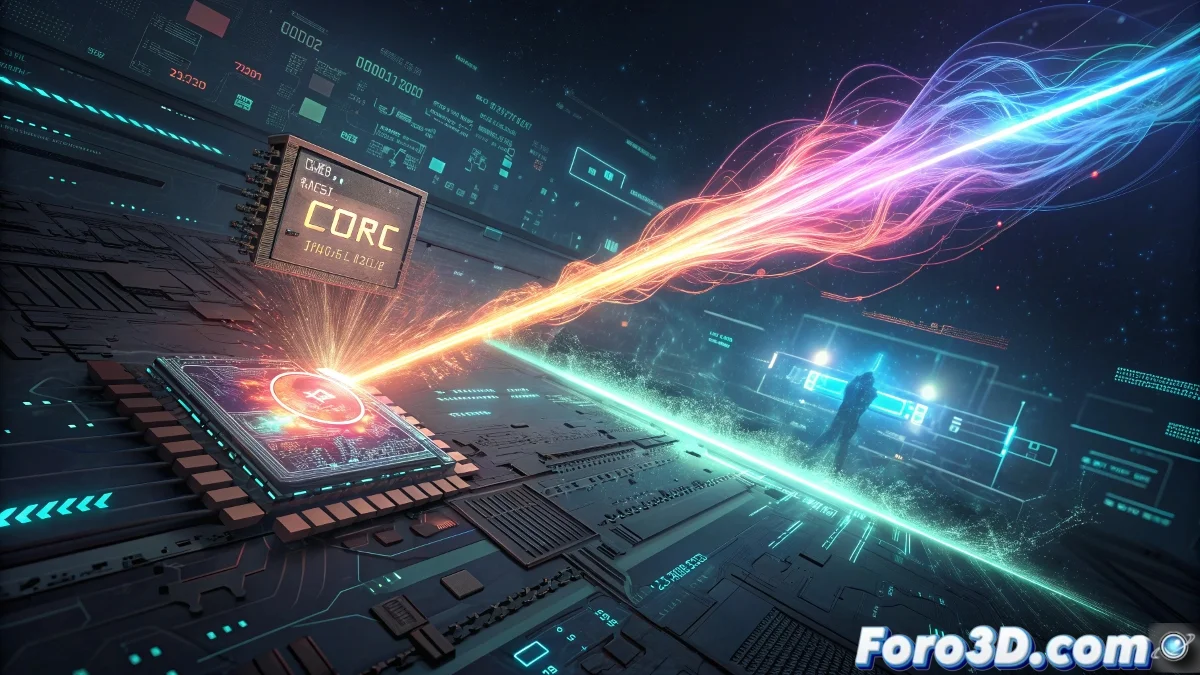
When Integrated Graphics Stop Being the Modest Option
Intel is radically redefining the concept of integrated graphics with its new Core Ultra X series, which brings the Xe3 architecture up to 12 dedicated graphics cores. This quantum leap in integrated visual processing power promises to close the gap that traditionally existed between discrete and integrated solutions. Intel's bet is clear: democratize mid-range graphics performance without the need for an additional GPU.
The most notable aspect of this evolution is how it is transforming expectations about what a processor with integrated graphics can achieve. Tasks that previously inevitably required a dedicated graphics card, such as 1080p gaming or light video rendering, now enter the realm of possibility with the integrated solution.
Twelve graphics cores are the new frontier for those who believed integrated meant limitation
Key Technical Features
- 12 Xe3 cores with latest-generation architecture
- Real-time ray tracing support via software
- High-bandwidth unified memory
- AV1 codecs for efficient encoding and decoding
Impact on Creative Workflow and Gaming
For content creators and indie developers, these additional graphics cores represent an unprecedented technological independence. The ability to work with 3D design applications, video editing, and compositing without relying on specialized hardware opens new possibilities for mobile professionals. The performance is sufficient for smooth previews and preliminary renders in many professional applications.
In the gaming realm, the improvement is even more evident. Competitive titles and well-optimized games can achieve playable frame rates on medium settings, eliminating the entry barrier for many casual gamers. The Xe3 architecture demonstrates impressive scalability when given sufficient dedicated resources.
Immediate Practical Applications
- 1080p gaming in popular titles and esports
- Efficient streaming without additional hardware
- Light workstations for design and content creation
- Compact systems with all-in-one performance
The evolution of integrated graphics represents one of the most significant developments in recent hardware. By bringing visual performance to levels that seemed impossible without a discrete GPU just a few years ago, Intel is forcing the entire industry to rethink what constitutes a basic versus an advanced configuration. This democratization of performance especially benefits users on tight budgets and professionals who prioritize mobility.
The future of integrated graphics is no longer an alternative, but a viable option
And while purists debate cores and architectures, end users simply enjoy gaming without needing a graphics card that costs more than their entire setup 🎮