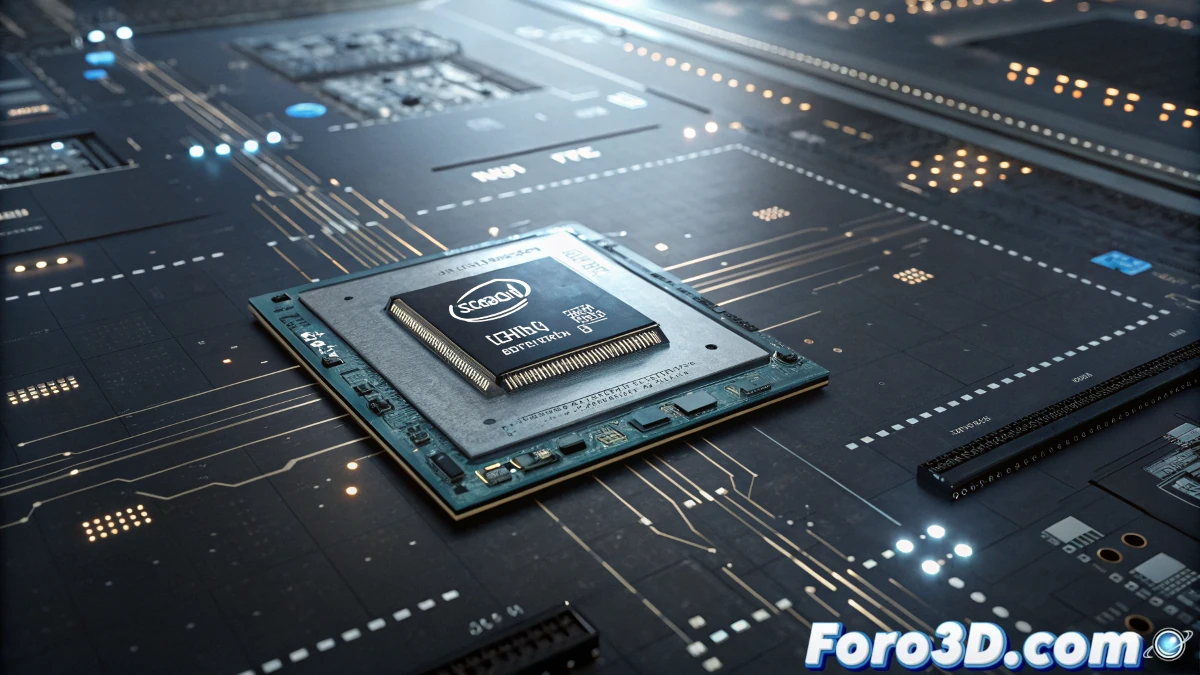
Semiconductor technology is advancing by leaps and bounds, and in this race, Intel has been working intensively to achieve new goals. The company faces significant challenges, mainly due to competition from TSMC, a giant in chip manufacturing. However, Intel has reasons to be optimistic thanks to its recent progress with the 18A node.
The Battle for Miniaturization: Process Nodes
The semiconductor industry is defined by manufacturers' ability to reduce the size of transistors. The smaller they are, the more transistors can fit on a chip, improving performance. Intel has been at the center of this battle, seeking to surpass its main competitor, TSMC, with more advanced nodes and higher density.
Recently, Intel has had to deal with significant setbacks in its development, especially with the case of Arrow Lake-S, a chip line that was originally going to use the Intel 20A node. However, the company failed to meet its expectations and had to resort to TSMC for its production, which raised certain doubts about its ability to lead the market.
The Intel 18A Node: The Bet on Density
Despite the setbacks, Intel has not fallen behind. The Intel 18A node represents a significant advance for the company. According to experts like Ian Cutress, Intel has achieved significant progress, as the 18A node has reached an SRAM density comparable to TSMC's 2 nm nodes, something that positions Intel more competitively.
Overcoming Barriers: How Does It Compare to TSMC?
In terms of performance, the 18A node has proven to be more efficient than previous nodes. It is estimated that its density has reached 38.1 Mb/mm² in high-density versions, which has positioned Intel well against TSMC, which has also made advances with its 2 nm node. This competition for transistor density has become one of the biggest challenges for both companies.
Regaining Ground: Intel's Future with the 18A Node
The 18A node could be the key for Intel to regain ground in the market. Thanks to its ability to offer chips with higher density, the company could surpass its rivals and reposition itself as a leader in the semiconductor field. This advance is not only promising for CPU performance but also for applications like video games, where Intel has historically been strong.
The success of the 18A node could also help the company regain the confidence of its investors and allow it to compete more effectively in the next-generation semiconductor market. With improvements in density and efficiency, Intel could mark the beginning of a new era full of opportunities and challenges.
Conclusions: A Future Full of Challenges and Possibilities
The path to leadership in the semiconductor market is not easy, but the Intel 18A node offers a solid foundation for the company to advance in the race. With a renewed focus on density and performance, Intel has the opportunity to strengthen its position and challenge the leadership of TSMC and other industry giants. Only time will tell if this new technology will be enough to return the throne to Intel.