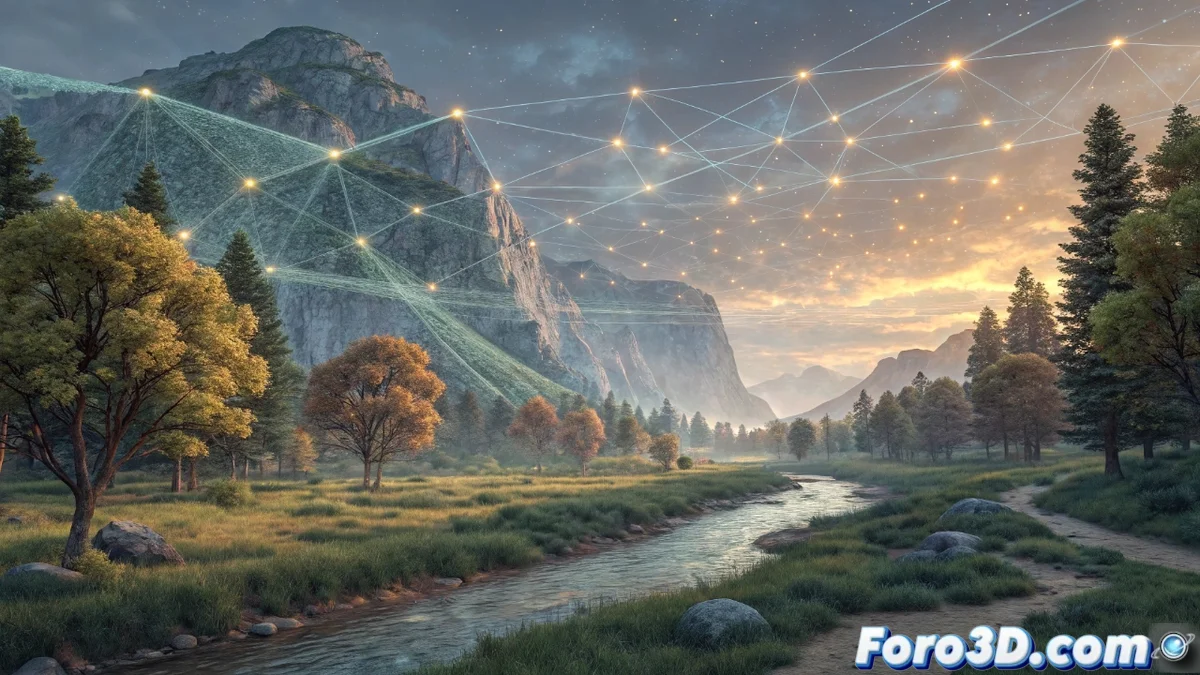
Integration of Traditional 3D Reconstruction with Machine Learning Frameworks
The technological convergence between classical three-dimensional reconstruction methods and modern artificial intelligence systems is revolutionizing the creation of digital models. 🚀
Fusion of Classical and Contemporary Methodologies
Established tools in the field of 3D reconstruction such as COLMAP, Meshroom, and Open3D generate fundamental geometric structures that constitute the perfect foundation for more sophisticated implementations. These initial geometries provide the structural scaffolding upon which machine learning algorithms can develop significantly more enriched representations.
Advantages of the integration:- Initial point clouds and polygonal meshes offer a solid and reliable geometric base
- AI systems build upon this fundamental structure to add layers of detail and realism
- The combination allows overcoming inherent limitations of both approaches separately
The true power of the system emerges when we incorporate knowledge distillation techniques to continuously update the model
Processing with Machine Learning Frameworks
Once the base geometry is established, the process advances toward training neural fields using specialized frameworks like PyTorch and JAX. These systems learn to encode the captured scene through continuous mathematical functions that represent not only the three-dimensional structure but also complex visual properties such as color, texture, and reflectance.
Key features of neural fields:- Ability to generate coherent views from any angular perspective
- Overcoming the limitations of conventional discrete representations
- Integral encoding of geometric and visual properties in a unified model
Continuous Evolution through Knowledge Distillation
The progressive improvement cycle is activated by incorporating knowledge distillation techniques that allow the model to be constantly updated as new captures arrive. This innovative approach enables the neural field to gradually refine its understanding of the scene, integrating additional information without requiring complete recomputation from scratch.
Reflection on the Evolution of Technical Challenges
It is particularly interesting to observe how concerns in the 3D community have transitioned from the insufficiency of polygons in traditional reconstructions to the adequacy of parameters in neural fields. This phenomenon demonstrates that certain fundamental challenges simply adopt new technological disguises while maintaining their conceptual essence. 🤔