Imagine being able to enjoy a steak or a chop, but without any animal having to be sacrificed. This future is already here thanks to a group of engineers at the Hebrew University of Jerusalem. They have created a revolutionary technology to produce meat that does not require animals, but is instead made from special materials that replicate the structure of meat, such as muscle and fat.
The Magic Behind 3D Meat
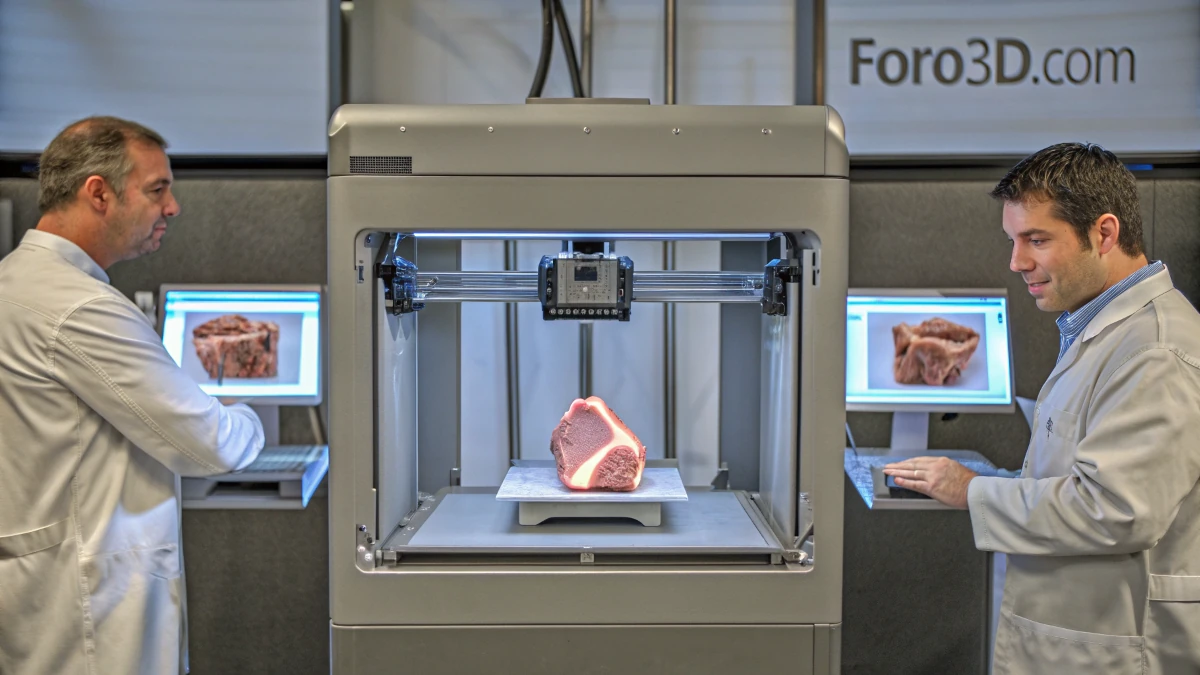
The process is very similar to that of 3D printers, but with a much more efficient approach for mass production. They have developed an injection molding system that allows creating complex cuts of meat, such as steaks and chops, in a more accessible and economical way than traditional 3D printers. This advance makes the process much more scalable and, most importantly, the price much lower.
The Impact of Livestock Farming on the Environment
Why is all this so important? Traditional livestock farming has a huge impact on the environment. Apart from the enormous amount of water needed, it also contributes to deforestation and pollution due to the greenhouse gases it produces. If we continue down this path, the planet will not be able to sustain the growing demand for meat expected in the coming decades.
Meat That Respects the Planet
The great thing about this new technology is that, being more efficient and environmentally friendly, it can greatly reduce the negative impact of livestock farming. Not only that, but it also respects animal welfare, as it does not require the sacrifice of any living being. In addition, alternatives can be created for all kinds of meat, not just beef, but also chicken, pork, and even seafood. Companies like Novameat have already managed to create 3D-printed vegetable steaks that closely resemble real meat.
The Future of Food: More Sustainable and Accessible
Although this technology is still in development, the potential of 3D meat is enormous. As the demand for sustainable food grows, solutions like these could offer a way to feed the world without depleting our resources. With a 3D-printed meat market that is growing rapidly, this type of technology is on its way to revolutionizing the food industry.
The 3D World Shaping the Future
This is just the beginning of what 3D can do for our food. From creating alternatives to meat to manufacturing more efficient and eco-friendly products, the world of three-dimensional design has a lot to contribute to this new chapter in the history of food. And, as good 3D enthusiasts, it's exciting to see how this technology will change the future of food and our planet.