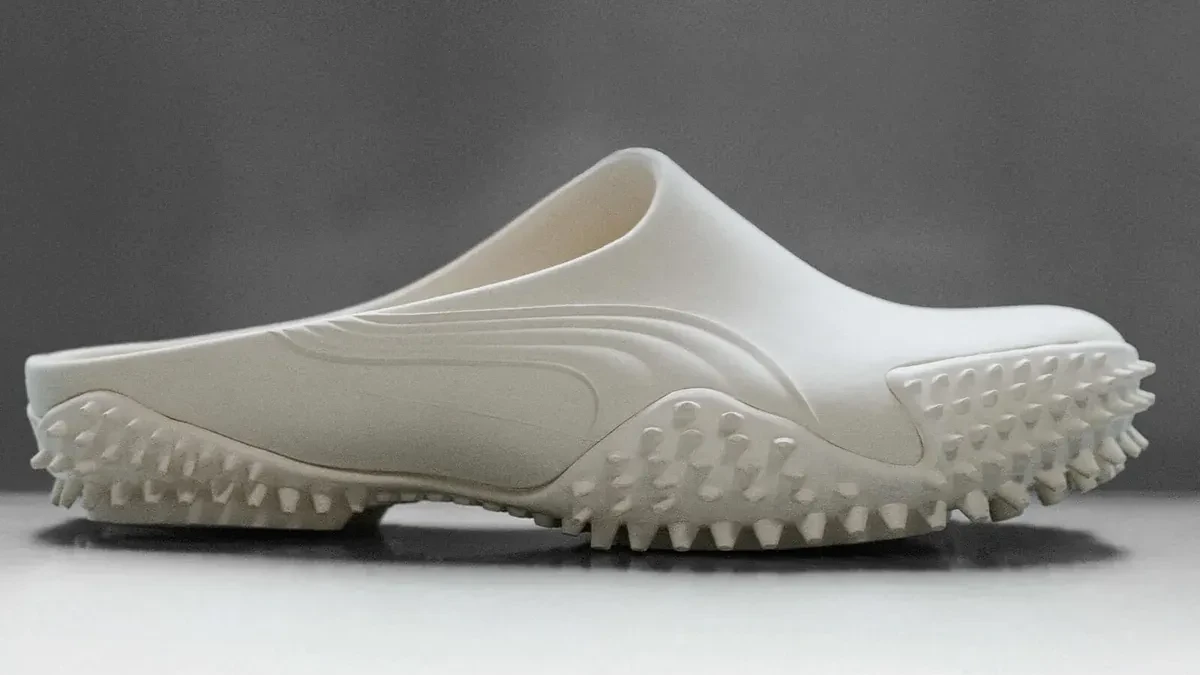
Puma has taken a significant step in footwear innovation with its latest collaboration with Louis-Gabriel Nouchi, presenting the Mostro Mule. This new version of the classic Mostro model not only stands out for its heel-less design and improved comfort, but also for its focus on advanced technology, specifically 3D printing.
3D Printing Technology in Footwear
The integration of 3D printing in this project reflects the growing trend among footwear brands to adopt cutting-edge technologies to improve both the design and functionality of their products. Although the Mostro Mule is not entirely manufactured using 3D printing, the influence of this technology is evident. The use of materials like molded EVA foam is an example of how Puma has managed to incorporate innovative production methods to optimize the structure and comfort of the footwear. 3D printing, in particular, allows for the efficient creation of complex and customized parts, improving personalization and reducing waste in manufacturing.
Advantages of 3D Printing in Footwear Manufacturing
- Customization: Allows for the efficient creation of customized parts, optimizing the fit.
- Sustainability: The technology reduces material waste during the production process.
- Efficient Production: Complex parts can be manufactured more quickly and with greater precision.
Inspiration from Previous Collaborations
The design of the Mostro Mule is also inspired by cutting-edge technologies used in previous collaborations, such as the one Puma did with rapper A$AP Rocky. On that occasion, the brand used Carbon Digital Light Synthesis 3D printing technology to create models with more precise and lightweight details. This advance in digital manufacturing allows Puma not only to create high-performance products, but also to explore new design forms that were previously not possible with traditional footwear production techniques.
The Impact of the Collaboration with A$AP Rocky
The collaboration with A$AP Rocky was a milestone in footwear innovation, thanks to the implementation of Carbon Digital Light Synthesis 3D printing technology. This approach allowed Puma to create more detailed, precise, and lightweight footwear, opening the door to new possibilities in sneaker design.
Sustainable Advantages of 3D Printing
Additionally, 3D printing in footwear manufacturing allows designers to experiment with more complex structures and textures, which is reflected in the unique lines of the Mostro Mule. This type of technological innovation offers great advantages in terms of sustainability, as 3D printing processes can reduce material usage and waste generation, which is crucial in the footwear industry.
Sustainability and Waste Reduction
3D printing methods allow for the production of only the necessary parts of the footwear, helping to minimize material waste and promote more environmentally responsible production practices.
Conclusion: The Future of Footwear and Technology
In summary, the collaboration between Puma and Louis-Gabriel Nouchi is not only an advance in footwear design, but also an example of how 3D printing is changing the way products are created. The Mostro Mule is a clear representation of how brands are leveraging emerging technologies to create more functional, sustainable footwear aligned with future trends.