Revolution in Metal Additive Manufacturing
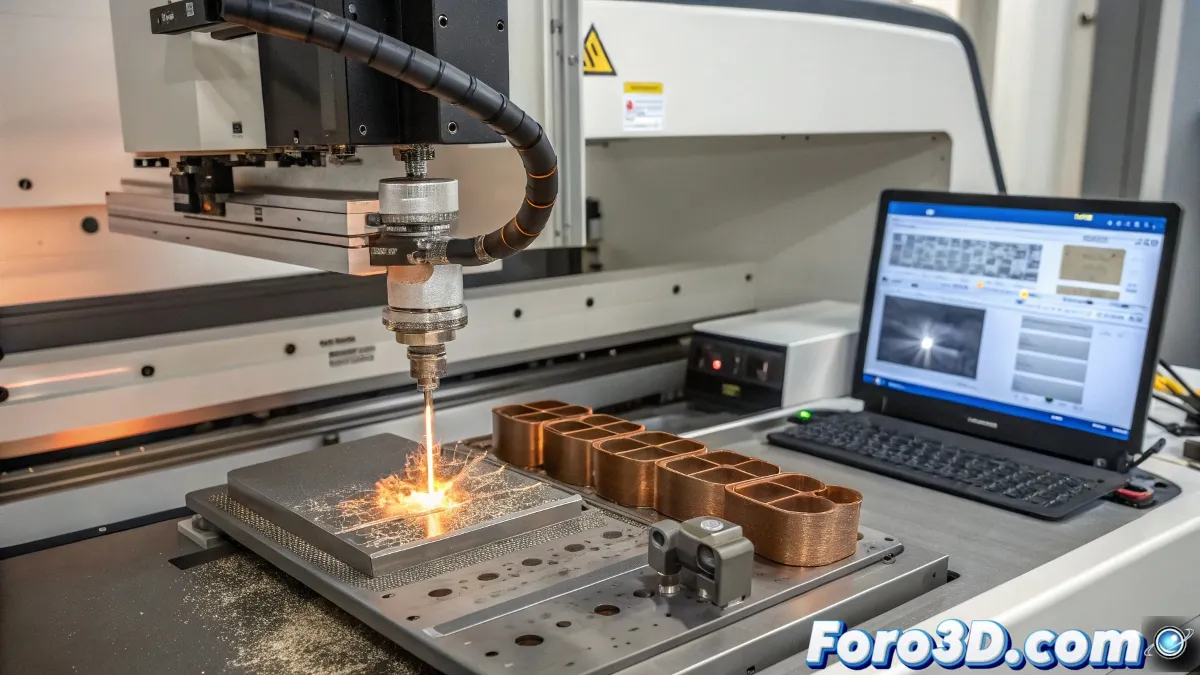
A research team at Penn State has developed a pioneering technique that allows combining different metals into a single piece using 3D printing. This breakthrough overcomes traditional manufacturing limitations, enabling the creation of structures with variable material properties in specific zones of the same component.
Selective Deposition Technology
The process, called multimaterial powder bed laser fusion, uses a precise metal powder distribution system. During experiments, researchers successfully integrated stainless steel and bronze into complex structures, demonstrating the method's viability for real industrial applications.
This technology allows us not only to create complex designs, but to precisely control where each material is placed
Potential Applications
The produced gyroid structures have unique characteristics that make them ideal for:
- High-efficiency heat exchangers
- Medical implants with zones of different biocompatibility
- Aerospace components with localized properties
- Industrial tools with differentiated areas
Advanced Quality Control
To ensure part integrity, the team implemented a verification system that includes:
- Computed tomography for microdefect detection
- Microstructural analysis of interfaces
- Chemical composition mapping
These methods allow adjusting parameters during manufacturing, significantly reducing defects.
Future Research Directions
Next objectives include incorporating alloys such as Inconel and copper, as well as scaling the process for industrial production. The development of real-time monitoring systems represents a key challenge to ensure process repeatability in production environments.
Industrial Impact
This technology could transform multiple sectors by enabling:
- Reduction of complex assemblies
- Optimization of material properties
- Customization of components
- Simplification of production chains
From turbines to medical prostheses, potential applications span virtually all fields of advanced engineering.