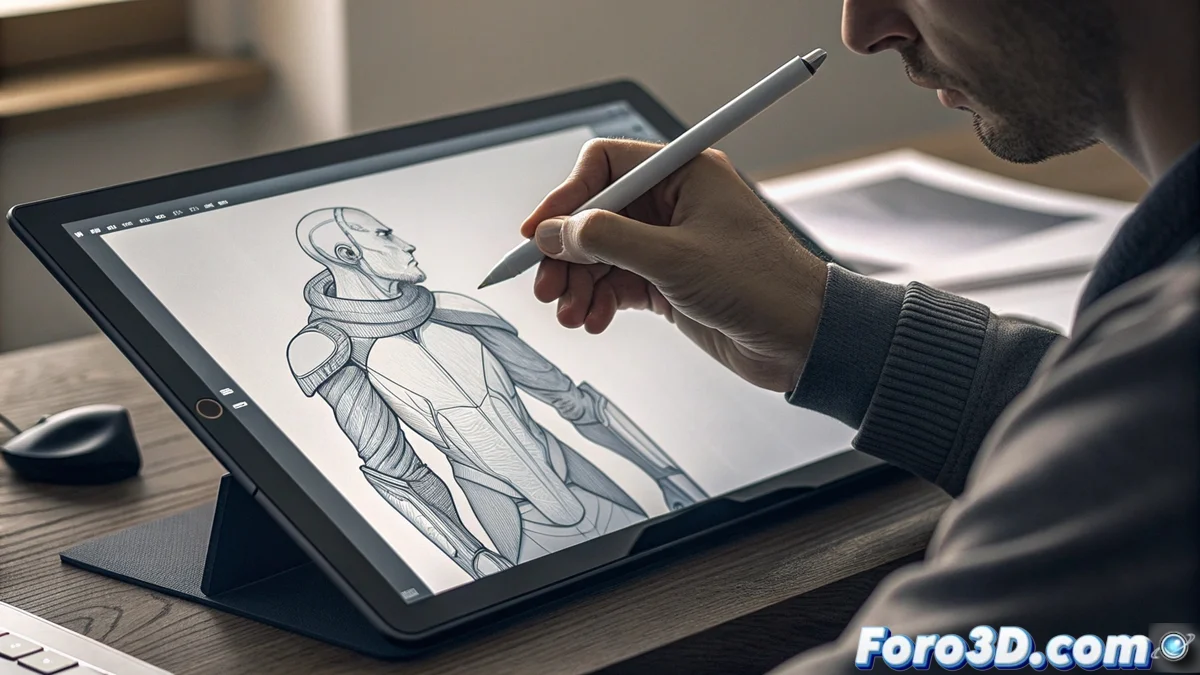
Refine Your Drawing with Iterative Tracings
This method for digital drawing is based on a cycle of progressive correction. You start with a quick sketch on a layer in your software. Then, you reduce its visibility and add a new layer on top of it. On this fresh layer, you trace over the previous drawing to polish imperfections and refine the shapes. This action is the heart of the process. 🎨
The Cycle of Constant Improvement
You must repeat this step between five and ten times. Each new tracing gives you the opportunity to adjust the anatomy, better define the volumes, and clean up the stroke. With each iteration, your illustration gains precision and structural solidity. The final layer only contains the definitive lines, while the previous ones document the evolution.
Key Advantages of the Method:- You build a drawing with a very solid and refined base.
- By overlapping layers, you avoid smudging the canvas and keep the work organized.
- It is ideal for artists who want to transform initial sketches into finished illustrations with sharp outlines.
Some creators compare this technique to an onion: it has multiple layers and, at times, frustration appears before reaching the perfect core.
Result of a Patient Process
The final product is a drawing with a neat construction. Patience during the repetitions is essential to achieve a professional-level finish. This system not only improves the result but also helps you better understand form and space.
To Apply the Technique Effectively:- Start with a loose sketch and don't worry about details.
- Focus on one type of correction per layer (e.g., anatomy, then clothing, then clean lines).
- Don't delete the old layers; use them as reference to see your progress.
Conclusion of the Method
The technique of iterative tracings is a powerful tool for refining your digital art. It transforms rough drawings into works with clear lines and a solid base, fostering an organized and methodical workflow. The key lies in conscious repetition and constant analysis at each step. ✏️