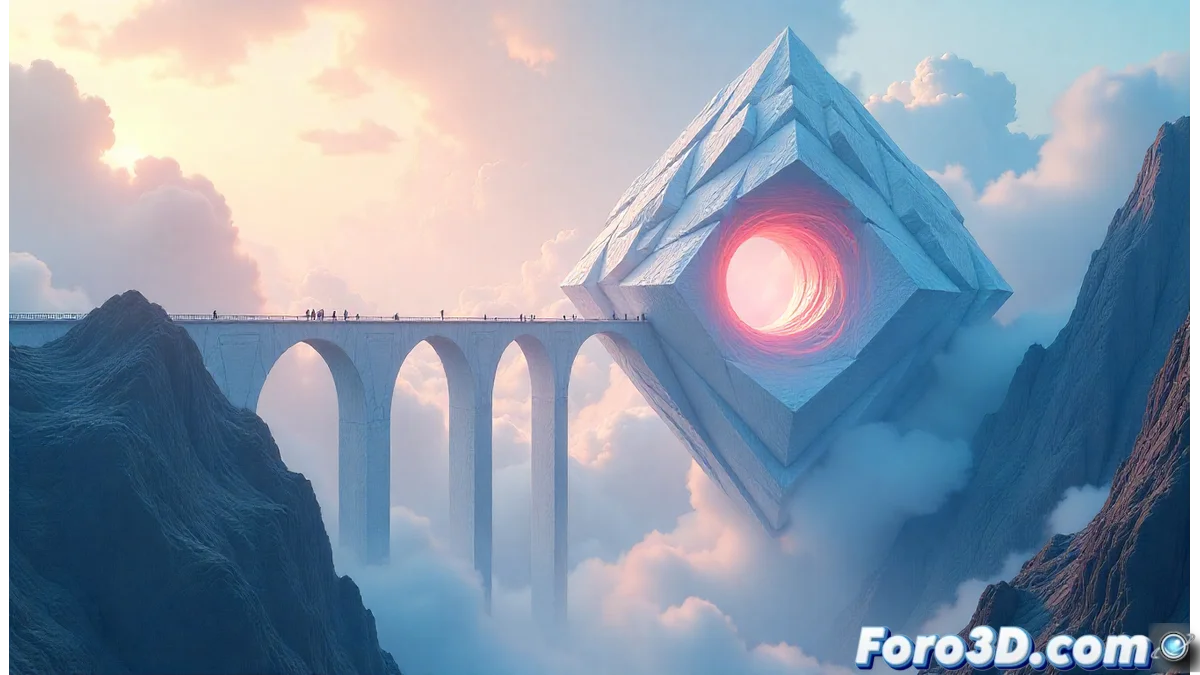
Impossible Architecture: When Design Defies Physical Reality
Impossible architecture constitutes a fascinating territory where spatial creativity transcends conventional physical limitations, generating structural proposals that openly contradict fundamental principles of engineering and gravity. 🏗️
Digital Tools to Materialize the Unimaginable
The development of these visionary structures has been made possible by the evolution of specialized software for three-dimensional modeling and advanced simulation. Programs like Blender, Houdini, and Unreal Engine allow the visualization of constructions that would be technically unfeasible in the material world, but which radically expand our understanding of habitable space.
Distinctive Characteristics of Impossible Architecture:- Non-Euclidean geometries that create seemingly infinite spaces
- Extreme cantilevers that defy gravitational laws without visible support
- Inclined planes and forced perspectives that confuse spatial perception
Impossible architecture does not seek to build the unbuildable, but to expand the boundaries of what is conceivable in spatial design
Artistic Roots and Contemporary Manifestations
This movement draws directly from surrealist traditions and optical art, reinterpreting pioneering concepts from creators like M.C. Escher in modern architectural contexts. The practical applications of these explorations materialize in ephemeral artistic installations, cinematic set designs, and virtual reality experiences where physical constraints can be temporarily suspended.
Practical Applications and Implementation Contexts:- Set designs for film productions and television series
- Temporary artistic installations in museums and galleries
- Virtual and augmented reality environments for immersive experiences
The Paradoxical Impact of Physical Limitations
In a fascinating conceptual irony, the very physical laws that these architectural proposals defy are precisely what make them so visually captivating. Gravity, by being so brazenly denied, ends up collaborating in the creation of compositions that could never exist without its presence being constantly challenged. This tension between the possible and the imagined generates a creative dialogue that enriches both architectural theory and the practice of contemporary spatial design. ✨