Ilúvatar CoreX Challenges Nvidia with New AI Accelerators
A new technology company based in China, Ilúvatar CoreX, has publicly announced its strategy to enter the competitive market of compute accelerators for artificial intelligence. According to reports from DigiTimes, the firm is preparing up to four generations of products with the clear objective of competing directly with the giant Nvidia. 🚀
The Tianshu Architecture as the Fundamental Pillar
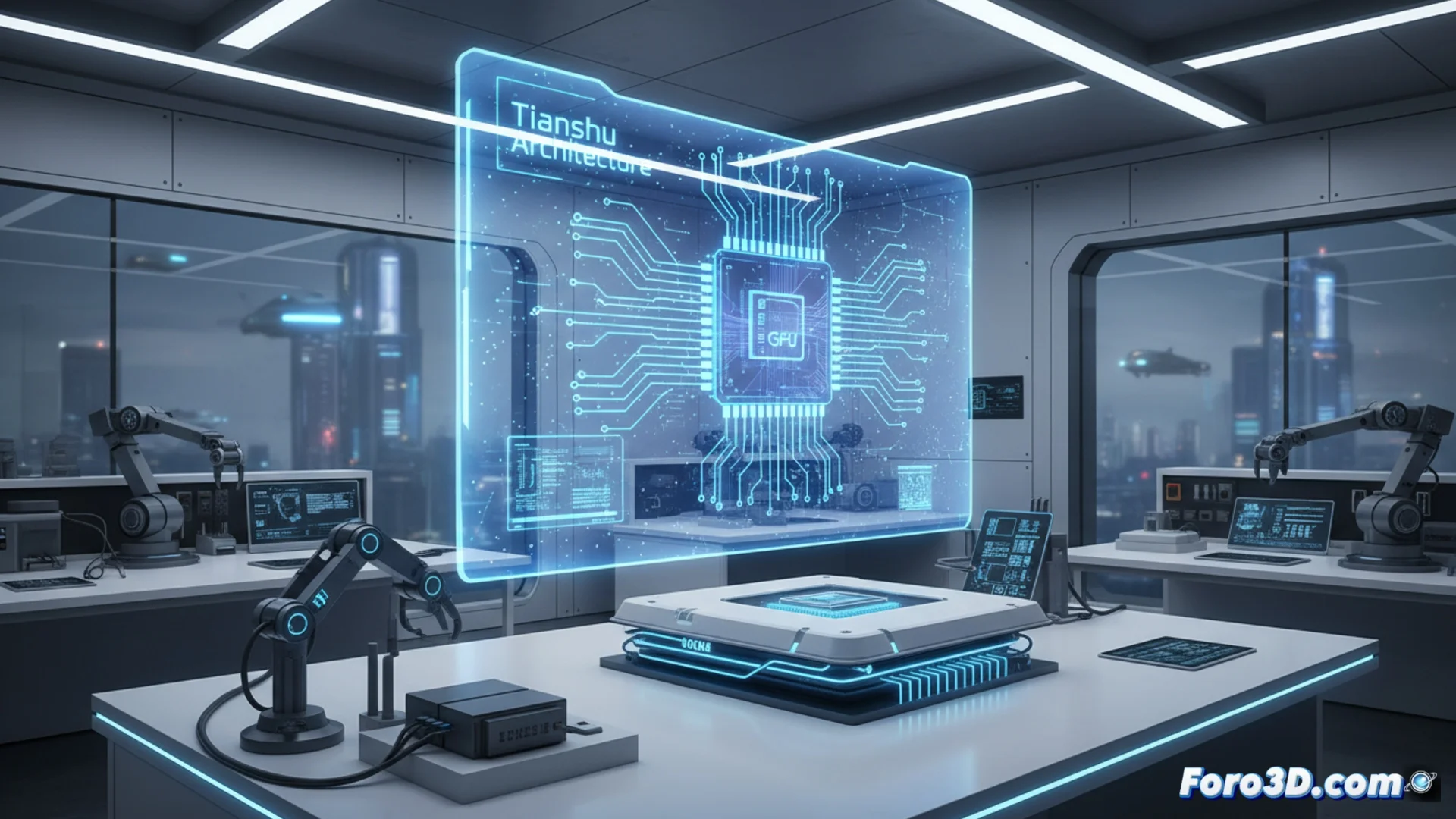
The heart of this ambitious initiative is an in-house design platform codenamed Tianshu. On this architecture, Ilúvatar CoreX builds all its hardware solutions. Although the company has not revealed detailed technical specifications, it emphasizes that its approach prioritizes energy efficiency and raw power to handle the complex workloads of modern AI. The move comes at a time when global demand for specialized hardware is growing exponentially and many organizations are seeking to diversify their suppliers to avoid depending on a few. 💡
Key Points of the Announcement:- The company claims that its devices will outperform Nvidia's Hopper generation accelerators, including the H200 model.
- Development focuses on offering a viable alternative to the products that currently dominate the sector.
- The plan encompasses a four-generation roadmap of products, indicating a long-term strategy.
Any new competitor must offer not only powerful hardware, but also tools and compatibility that make it easy for customers to migrate their projects.
The Major Obstacles in the Way
Promising superior performance is one thing, but materializing those plans and securing a significant market share represents a monumental challenge. Nvidia doesn't just sell hardware; it owns an extremely consolidated software ecosystem, with technologies like CUDA that are the de facto standard for millions of developers worldwide. To succeed, Ilúvatar CoreX needs to provide a set of tools, libraries, and support that allows companies to adapt their existing workflows without major complications. Final success will depend on its ability to execute a comprehensive hardware and software strategy. ⚙️
Main Challenges to Overcome:- The entry barrier posed by Nvidia's CUDA ecosystem and associated software.
- The need to demonstrate the promised performance in real-world, large-scale production environments.
- Gaining customer trust and achieving significant adoption in an already mature market.
Expectation versus Reality in the Tech Sector
Ilúvatar CoreX's announcement undoubtedly generates excitement and shows the dynamism of the artificial intelligence field. However, it also serves as a reminder that in the technology industry, announcements and promises often fly higher than the products that finally reach users and become established. The community will be watching to see if this Chinese startup can turn its Tianshu architecture into real and tangible competition for the current market leaders. 👁️