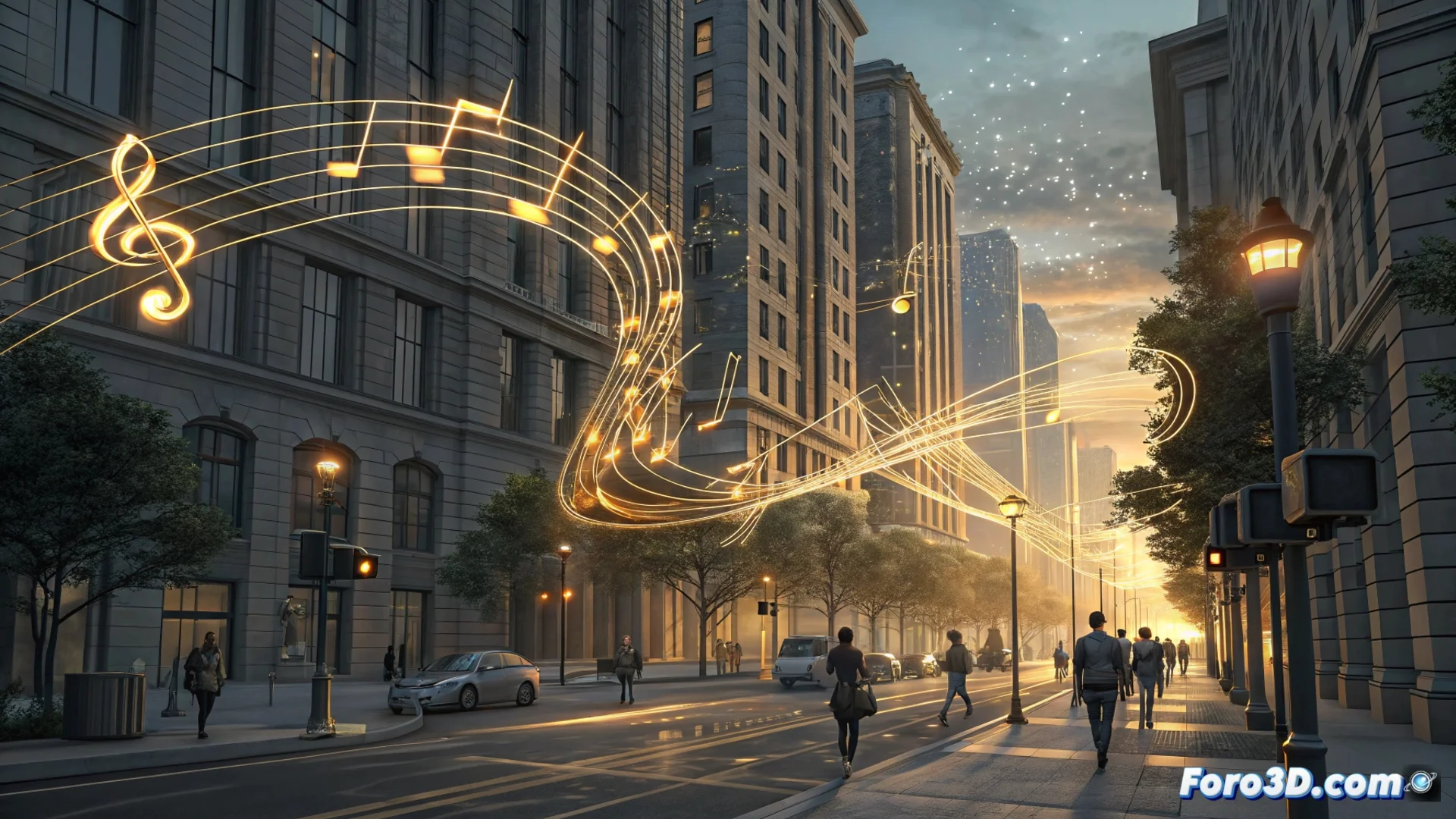
If Mozart Lived Today, He Would Design Urban Symphonies with City Data
What would happen if a genius like Wolfgang Amadeus Mozart had twenty-first-century technology at his disposal? Instead of an orchestra, he would orchestrate the entire city. His project, called Urban Symphonies, would be a smart network that processes the sound and activity of the streets to generate musical compositions that evolve in real time. 🎼
The City as a Living Digital Score
The system would be based on an extensive network of acoustic and motion sensors distributed throughout public spaces. These devices would capture ambient noise, vehicular traffic flow, and even human interactions in squares and parks. A musical algorithm, inspired by the formal structures that Mozart mastered, would process this raw data. It would not be limited to translating sound, but would interpret complex patterns and assign them musical value.
Key Components of the System:- Sensor Network: Microphones and counters that capture the sonic and motion pulse of the city.
- Compositional Algorithm: Software that analyzes the data, identifies rhythmic and melodic patterns, and structures them into a coherent composition.
- Real-Time Rendering Engine: Generates the musical piece on the spot, ensuring it never repeats exactly the same.
"They say that if Mozart heard a traffic jam horn, he would sample it for the tutti of a Baroque fugue."
Music as a Diagnosis of Urban Well-Being
The goal goes beyond the purely artistic. By listening to these data-generated symphonies, one can perceive the health status of the community. A chaotic and dissonant composition might indicate traffic congestion or high social stress. Conversely, a fluid and balanced harmony would suggest a healthy urban rhythm. This offers a novel diagnostic tool for urban planners and citizens, allowing them to understand the environment through a universal language: music.
Urban Patterns and Their Musical Translation:- Dense Traffic: Generates a powerful and constant rhythmic base, similar to a Baroque continuo.
- Conversations in a Park: Would modulate softer and more random melodies, creating counterpoints.
- Nightly Silence: Could be translated into minimalist passages or strategic pauses within the composition.
A Classical Legacy for the Future of Cities
This concept demonstrates that even apparently annoying noise has symphonic potential if properly orchestrated. The idea of Urban Symphonies turns the constant flow of data into a unique soundtrack for each moment, revealing the hidden poetry in the daily heartbeat of the metropolis. Music thus stands as a bridge between technology, art, and sociology, offering a deeply human way to connect with the space we inhabit. 🏙️🎹