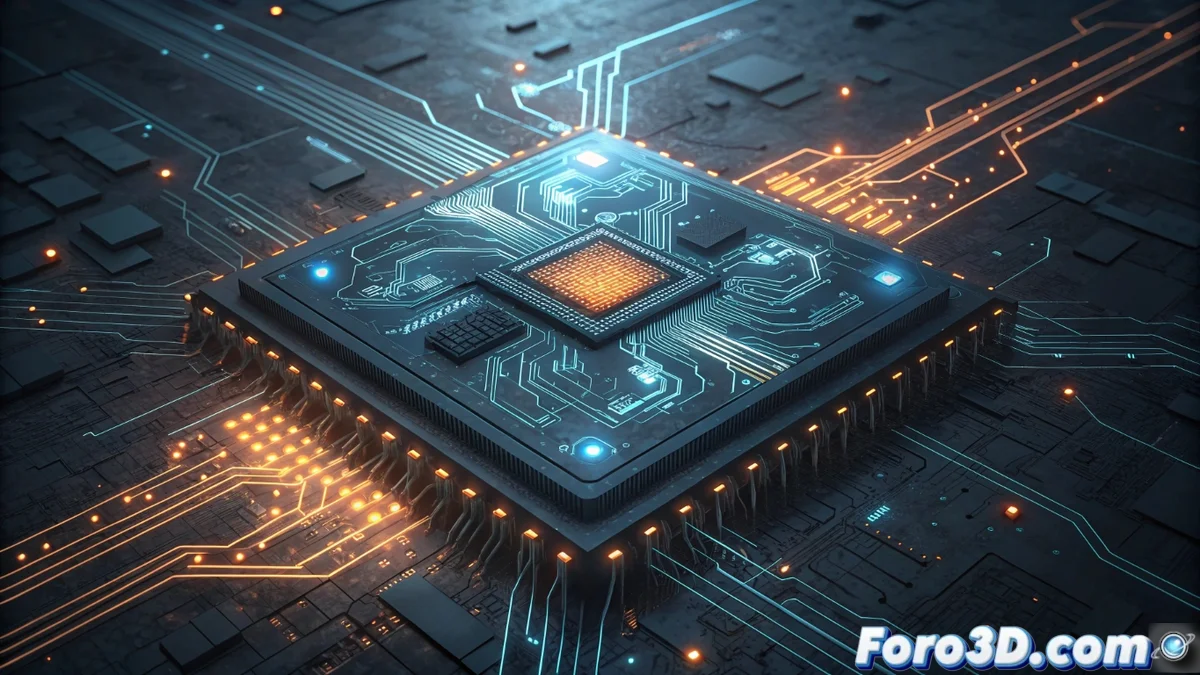
IBM NorthPole: The Neuromorphic Chip Redefining AI Efficiency
The AI hardware landscape is undergoing a transformative shift with the launch of the IBM NorthPole processor. This second-generation neuromorphic chip adopts a radical architectural approach, inspired by the efficiency of the human brain, to outpace traditional graphics processing unit (GPU) solutions. Its mission is clear: execute deep neural network inferences with unprecedented speed and energy savings, addressing the root bottlenecks of the ubiquitous Von Neumann architecture. 🧠⚡
Brain-Inspired Architecture: Beyond Von Neumann
NorthPole's revolutionary design is based on the principle of in-memory computing (or in-memory computing). In this architecture, processing operations and data storage occur in the same physical location, eliminating the costly need to constantly move information between RAM and the CPU/GPU. This mechanism emulates the operation of biological synapses, where communication is local and highly efficient. The chip integrates 256 analog computation cores, each with its own memory, interconnected in a mesh network that enables massive parallel data flow.
Key advantages of this design:- Drastic latency reduction: By minimizing data movement, response time is greatly accelerated.
- Minimal energy consumption: Efficiency skyrockets by avoiding data transfers, which are one of the main sources of energy expenditure in conventional chips.
- Autonomy for inference: Allows executing AI tasks, such as image recognition or natural language processing, agilely and on resource-limited devices.
The future of AI is not in thinking like humans, but in consuming like a succulent plant: high performance with very little water... or in this case, electricity.
Performance and Future Implications
IBM's tests are compelling: NorthPole proves to be up to 25 times more energy efficient than current GPUs in specific computer vision tasks, reaching the astonishing figure of trillions of operations per watt consumed. This quantum leap in efficiency is not just a lab number; it opens the door to revolutionary practical applications.
Areas of immediate impact:- Edge Computing: Bringing powerful AI to autonomous devices like sensors, smart cameras, and vehicles, without relying on the cloud.
- Sustainable Data Centers: Radically reducing the energy footprint of server farms running AI models, a critical factor both economically and environmentally.
- Ubiquitous and Fast AI: Laying the foundation for a new generation of hardware that integrates intelligent capabilities anywhere, instantly and efficiently.
A Prototype Toward a New Paradigm
Although it is currently a research prototype optimized primarily for the AI inference phase and not for model training, NorthPole's success is fundamental. It marks a turning point, demonstrating the viability of an alternative path to traditional computing. Its brain-inspired architecture lays the technological foundation for a future where artificial intelligence can be truly scalable, fast, and above all, sustainable. The message is clear: the next frontier in AI evolution will be played out in silicon, with designs prioritizing extreme efficiency. 🚀