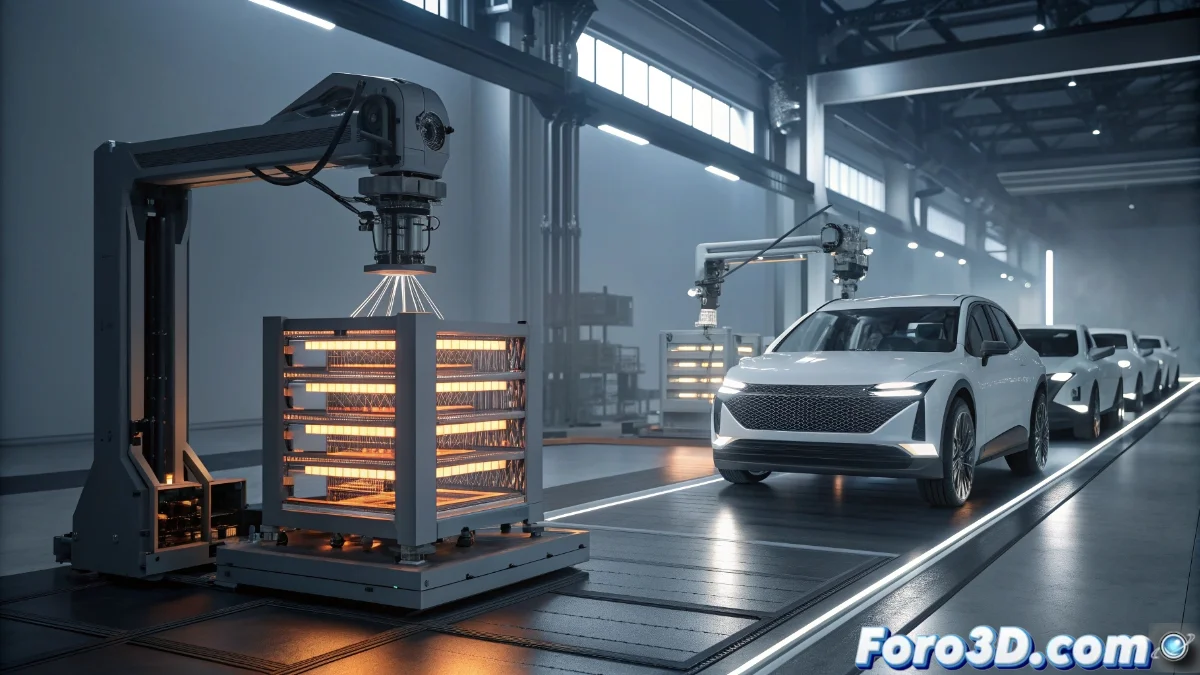
Hyundai Revolutionizes Automotive Industry with 3D Printing for Spare Parts and Electric Prototypes
Additive manufacturing is transforming the automotive industry, and Hyundai emerges as a pioneer by systematically integrating 3D printing into its production ecosystem. This technology not only solves historical logistical problems but also redefines vehicle development paradigms 🚗⚡.
Reinvention of Spare Parts Management
The Korean manufacturer has implemented on-demand production for components of old vehicles or limited series, eliminating the need to maintain costly physical inventories. This model optimizes the supply chain and significantly reduces the environmental impact associated with traditional storage.
Key benefits of the system:- Reduction of up to 70% in storage costs through just-in-time manufacturing
- Permanent availability of parts for historic models without planned obsolescence
- Minimization of waste through localized and on-specific-order production
3D printing allows us to keep the automotive heritage alive while advancing toward a sustainable future - Hyundai Innovation Department
Acceleration of Electric Vehicle Development
In the field of electric mobility, Hyundai uses rapid prototyping for critical components such as fuel cell stacks and BEV battery structures. This approach reduces development cycles from months to weeks, enabling iterative validations that perfect performance and safety.
Highlighted applications in electrification:- Complex geometries for fuel cell stacks with maximum thermal efficiency
- Lightweight structures with optimized topology for extended range in BEV
- Integrated cooling systems printed in a single multifunctional piece
Strategic Advantages in Sustainability
The ecological transition is enhanced through additive processes that consume up to 50% less energy than conventional subtractive manufacturing. Hyundai thus consolidates its leadership in clean technology while developing customized solutions that would be unfeasible with traditional methods 🌱🔧.