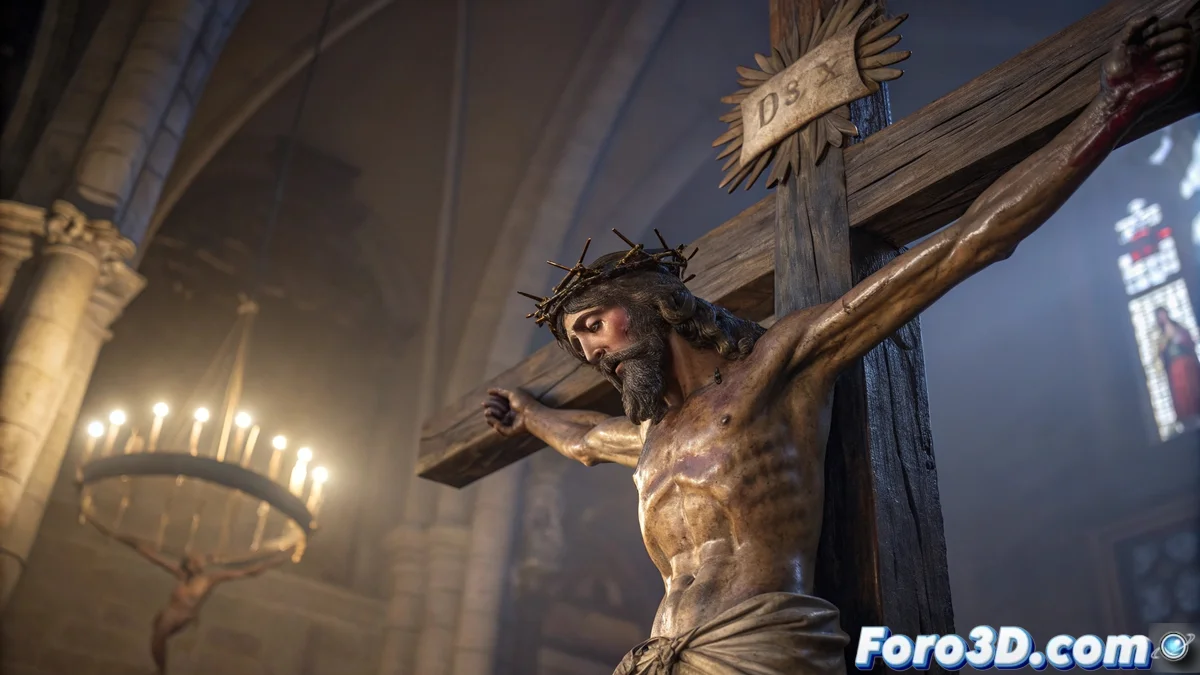
A Legend Carved in Wood and Mystery
In Burgos Cathedral, the Santísimo Cristo de Burgos is preserved, a religious image that has fascinated generations due to its hyperrealism and the legends surrounding it. Over the centuries, it has been speculated that the figure is made with tanned cowhide, and that it even retains real hair and nails that continue to grow miraculously. This aura of mystery makes it a fascinating challenge for digital artists seeking to capture its unique essence using 3D tools. ✝️
The Challenge of Spiritual Hyperrealism
Digitally recreating this iconic figure requires not only technical skill but also artistic sensitivity to convey its profound emotional impact. Blender provides the necessary tools to achieve an extraordinary level of realism, from skin texture simulation to the dramatic lighting that characterizes sacred spaces. The goal goes beyond anatomical precision: it is about capturing the spiritual presence that has made this sculpture an object of devotion for centuries.
Key Elements for an Authentic Recreation
Achieving a convincing representation of the Cristo de Burgos requires attention to specific details that contribute to its legendary realism.
- Expressive Anatomy: Capture the crucified pose with historical and emotional precision.
- Organic Textures: Skin with veins, pores, and the characteristic sallow tone.
- Natural Hair: Beard and hair with realistic, disheveled strands.
- Devotional Lighting: Warm light simulating candles and chapel ambiance.
Digitally recreating historical works of art allows preserving and studying their legacy with new technical perspectives.
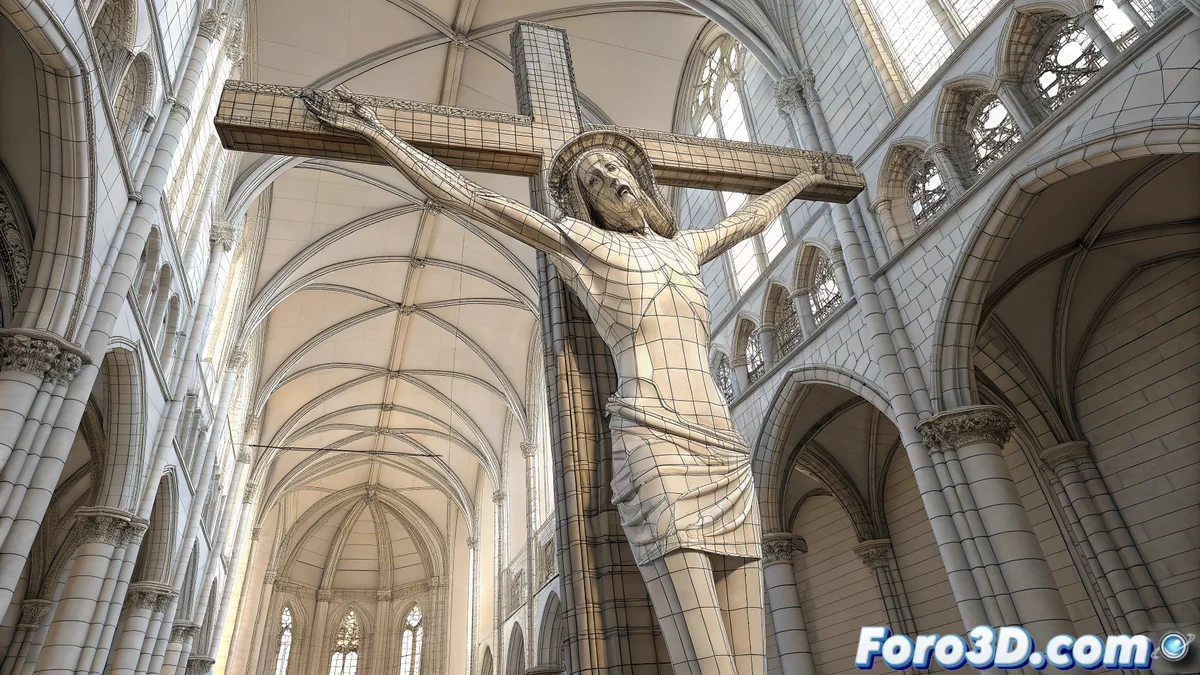
Technical Guide in Blender
Start by setting up the project in Blender, saving it as cristo_burgos.blend. Set units to meters to maintain realistic proportions and organize collections by elements: Body, Cross, Garments, Scene, Lighting. This structure will be essential when working with complex geometry and multiple materials. 🙏
Figure Modeling
Use a base human mesh in a crucified pose as a starting point. Refine the anatomy in Sculpt Mode, paying special attention to the hands, feet, and face, where the expression of pain and resignation is concentrated. Add nails to hands and feet, modeling the skin deformation around them for greater realism. The cross should have an aged wood texture with natural irregularities.
Hair System and Details
Implement Hair Particles to create the beard and hair, adjusting length, curvature, and disorder for a natural look. For the nails, model subtle geometry with slight curvature and small imperfections. Skin folds, especially on the torso and face, should show physical tension and the passage of time through detailed sculpting.
Materials and Textures
The skin material requires Subsurface Scattering to simulate how light penetrates human tissue slightly. Combine color, roughness, and normal maps based on real skin photographs, adjusting the tone to the characteristic sallow color of the Christ. The garments need fabric materials with gold embroidery, using PBR techniques for subtle reflections on silks and velvets.
Lighting and Atmosphere
Set up warm and directional lights that simulate the effect of candles in a sacred space. A main light from above will create dramatic shadows on the face and body, while soft secondary lights fill in details without losing contrast. Consider adding light volumes to simulate the incense-filled atmosphere typical of chapels. 🕯️
Render and Post-Production
Use the Cycles engine for the best quality in materials and lights. Enable Ambient Occlusion and carefully adjust Subsurface Scattering parameters for the skin. In the Compositor, slightly enhance contrast and add subtle vignetting to direct attention to the main figure. A touch of glow in the brightest areas will increase the mystical atmosphere.
While the legend speaks of nails and hair that continue to grow miraculously, 3D artists settle for our final render not corrupting when saved. Some miracles are more earthly than others. 😅