Hyperopia: Blurry Near Vision and Its Solutions
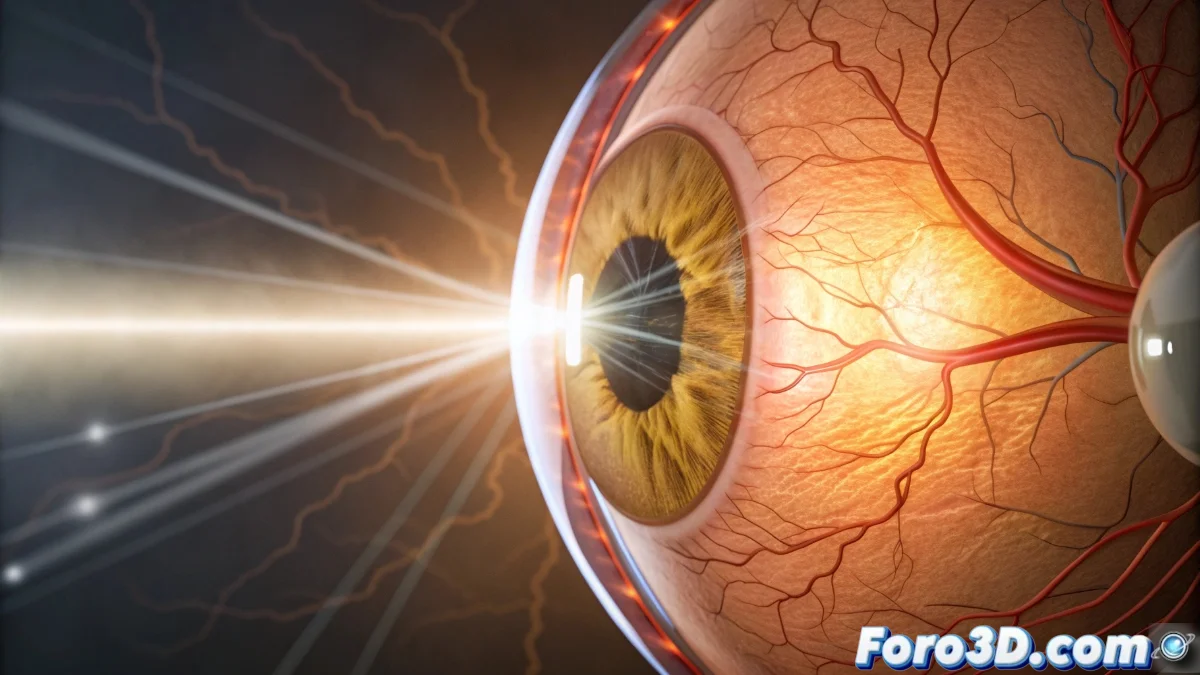
Hyperopia is a refractive anomaly where near vision appears out of focus while distant objects remain clear. This condition arises when the eyeball has a reduced length or the cornea and lens lack sufficient focusing power, causing light rays to converge behind the retina. The visual system attempts to compensate through crystalline accommodation, but this prolonged effort leads to significant discomfort 👁️🗨️.
Visual Mechanism and Symptomatic Manifestations
The ocular focusing process critically depends on corneal and lenticular refraction to project sharp images onto the retina. In hyperopia, the insufficient axial length or low dioptric power alters this mechanism, forcing individuals to squint to temporarily improve visual acuity in activities like reading or screen use. The characteristic symptoms include:
Common Manifestations:- Persistent difficulty maintaining focus on nearby objects
- Sensation of eye strain after extended periods of visual work
- Possible development of strabismus due to continuous muscle overload
Hyperopia allows precise admiration of distant landscapes, but turns reading small texts into a true optical challenge
Diagnostic Evaluation and Corrective Alternatives
Precise diagnosis requires a comprehensive ophthalmological examination that integrates visual acuity tests, retinoscopy, and refractive measurement with a phoropter. Specialists determine the necessary prescription in positive diopters to neutralize the defect. The compensation options include:
Correction Methods:- Glasses with converging lenses that redirect rays to the retina
- Contact lenses that provide visual sharpness at all distances
- Surgical interventions such as LASIK or intraocular implants to modify corneal curvature or add refractive power
Impact on Daily Life and Outlook
Although hyperopia facilitates distant vision, it greatly complicates everyday tasks like reviewing documents or handling small objects. Appropriate compensation through lenses or advanced procedures restores visual quality and prevents complications from constant eye strain, demonstrating that ophthalmic technology offers effective solutions for this refractive disorder 📚.