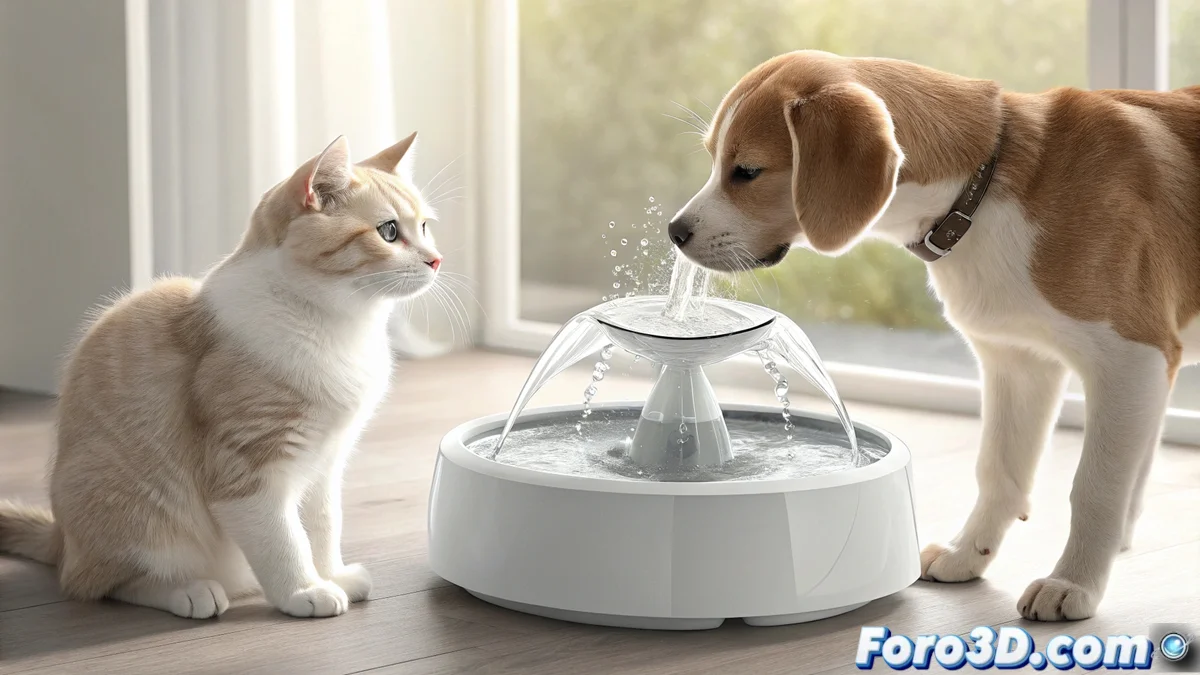
Hydration in Pets and How to Improve It with Water Fountains
Getting your dog or cat to drink the amount of water it needs is a basic part of caring for it. Clean and fresh water is essential for its body to process nutrients and regulate its temperature. When it's hot or after playing, they need to hydrate more. If they don't, they can suffer with their kidneys or urinary tract, which requires going to the vet. 🐾
Moving Water Attracts Animals More
Many pets perceive flowing water as fresher and more appealing. Pet fountains use this natural instinct. They have a pump that circulates the water and usually include a filter that traps hair, dust, or food remnants. This not only keeps the water clean longer, but the sound and constant movement invite the animal to approach and drink more frequently.
Key advantages of using a fountain:- The continuous flow encourages the pet to drink more often, improving its hydration.
- The built-in filter helps retain impurities, offering purer water.
- The circulation system prevents the water from stagnating and getting dirty quickly.
A cat staring fixedly at a dripping faucet can be the most eloquent critique of your static water bowl.
Strategies to Encourage Drinking Water
Offering water in an attractive and easy-to-find way is a simple way to avoid health problems. Placing several containers in different spots in the house, away from their food and noisy areas, makes it easier for them to drink when they're thirsty. Changing the water and washing the bowls at least twice a day ensures their freshness.
Practical actions for the owner:- Distribute several water points in the home, in quiet places.
- Renew the water and clean the containers at least twice a day.
- Observe your pet's habits closely to detect changes.
Observation and Prevention Are Essential
Watching how your animal drinks is crucial. If you notice it drinks very little or, on the contrary, an excessive amount, it's advisable to consult a veterinarian. This simple observation can help prevent serious complications in time. Keeping your pet well hydrated is one of the best ways to care for its long-term health. 💧