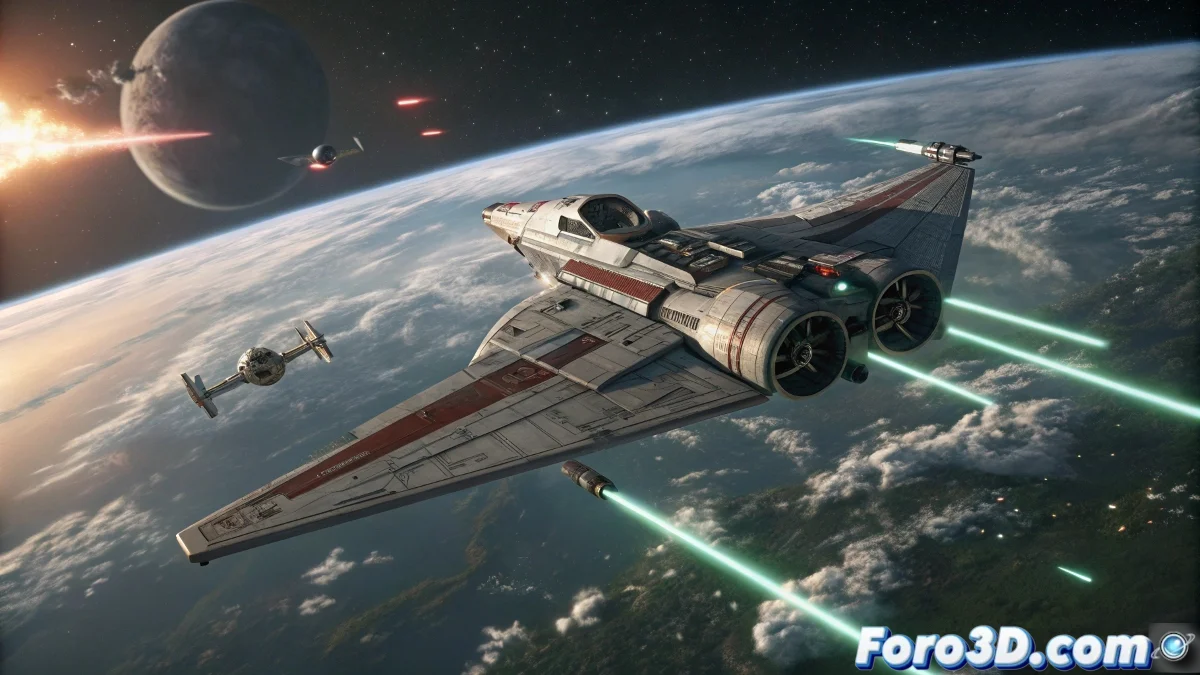
When the Force Needs a Little Digital Help
In the series Ahsoka, Hybride VFX proved that mastering the digital side of the Force requires both art and technology. Their 750 VFX shots don't seek to impress, but to make you believe that T-6 really flies and that the blasters always shone like that. 🌌✨
"Our job was to make Dave Filoni forget we were there" - Hybride Supervisor
The Recipe for a Believable Galaxy
The workflow combined:
- Unreal Engine for real-time previsualization
- StageCraft capturing in-camera lighting
- Terragen rendering planetary backgrounds in 16K
- Nuke integrating up to 200 layers per shot
Physics of a Stellar Fight
The details that make magic:
- Camera movements with calculated "errors" for realism
- Particles following zero-gravity patterns
- Blasters with light effects that interact with metals
- Holograms with the characteristic Star Wars glow
As one technician said: "We programmed more variations of stellar dust than stars in the galaxy". ⭐
When the Render Farm is a Mothership
Hybride solved unique challenges:
- Coordinating assets with other Lucasfilm studios
- Maintaining visual coherence between practical and digital effects
- Creating digital creatures that seem like they've always been there
- Optimizing renders for complex action sequences
The Light Side of VFX
The true achievement was:
- Making Rosario Dawson really seem to float in zero gravity
- Having ships move with the right weight in the vacuum
- Ensuring fans didn't argue about blaster physics
- Making the technology disappear behind the story
As a VFX padawan would summarize: "If in the end you only remember Ahsoka and not our compositing nodes, the Force was with us". Because in the Star Wars universe, the best effects are the ones you don't see, but that make you believe in jedis, spaceships, and that a good blaster at your side is never too much. 🎥⚡